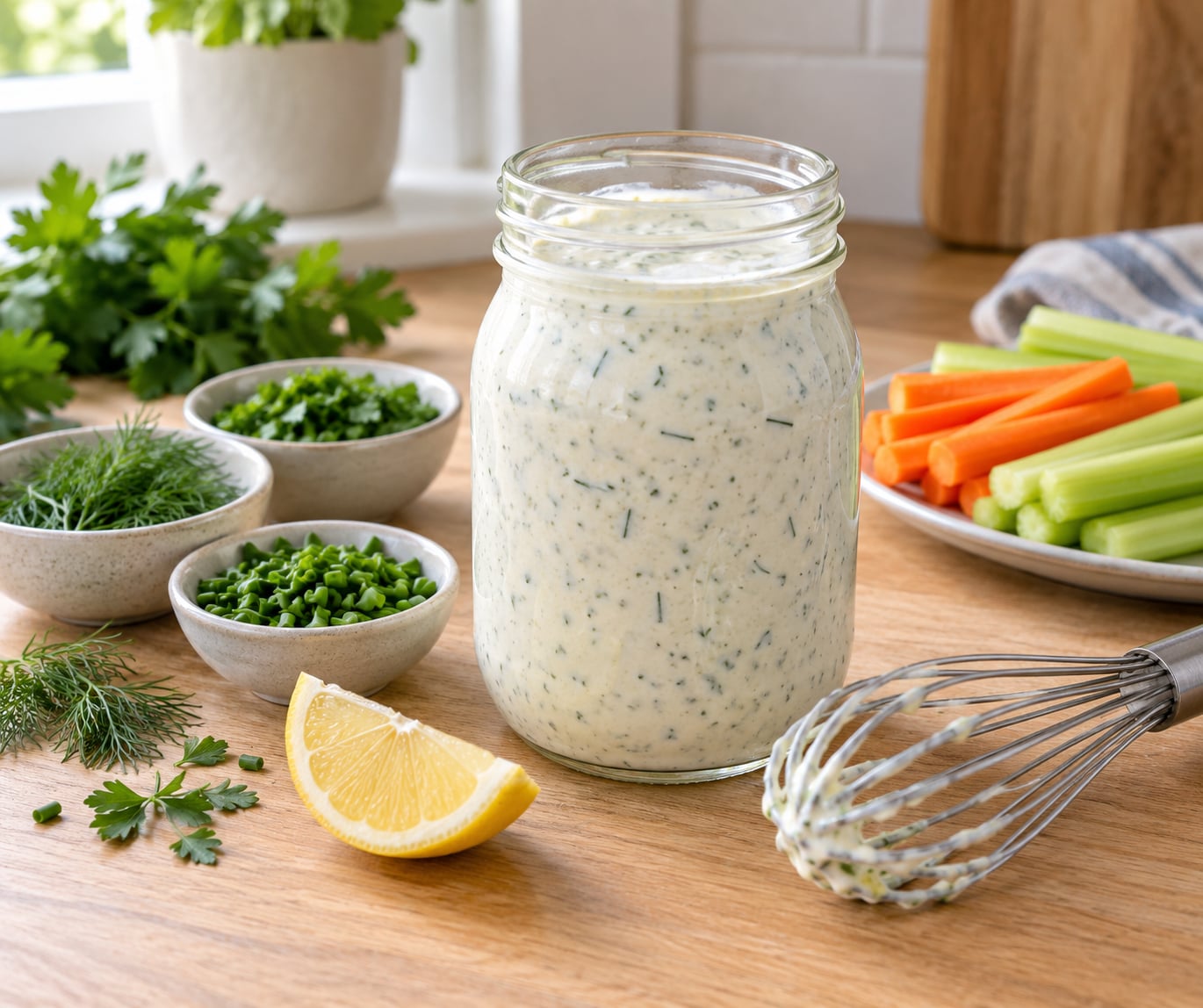
If you have never learned how to make ranch dressing from scratch, this is the version I make every week: a cool, creamy dressing built by whisking mayonnaise, sour cream and buttermilk with garlic, dill, parsley, chives and a little acid. No packet, no cooking, no blender required. Chill it for an hour and it firms up into the sort of restaurant-style ranch that clings to buffalo wings and lettuce instead of sliding off.
I make a batch roughly every other week, mostly because a jar in the fridge solves the wing-night problem permanently. The bottled stuff is mostly water and thickener, and the dry packets lean so hard on salt and MSG that one tablespoon tastes like three. A homemade jar costs a fraction of a bottle and you decide how garlicky it gets.
Table of Contents
- What You Need
- Step-by-Step: How to Make Ranch Dressing From Scratch
- 1. Mix the dried seasonings
- 2. Blend the creamy base
- 3. Add the seasonings and emulsify
- 4. Taste, adjust, and chill
- Common Mistakes
- How to Serve Homemade Ranch Dressing
- Frequently Asked Questions
- Can I make ranch dressing without sour cream?
- How can I make ranch dressing thicker?
- How long does homemade ranch dressing last in the refrigerator?
- What can I use instead of buttermilk or milk?
- Why is my homemade ranch dressing watery?
- Can I freeze homemade ranch dressing?
- Conclusion
What You Need
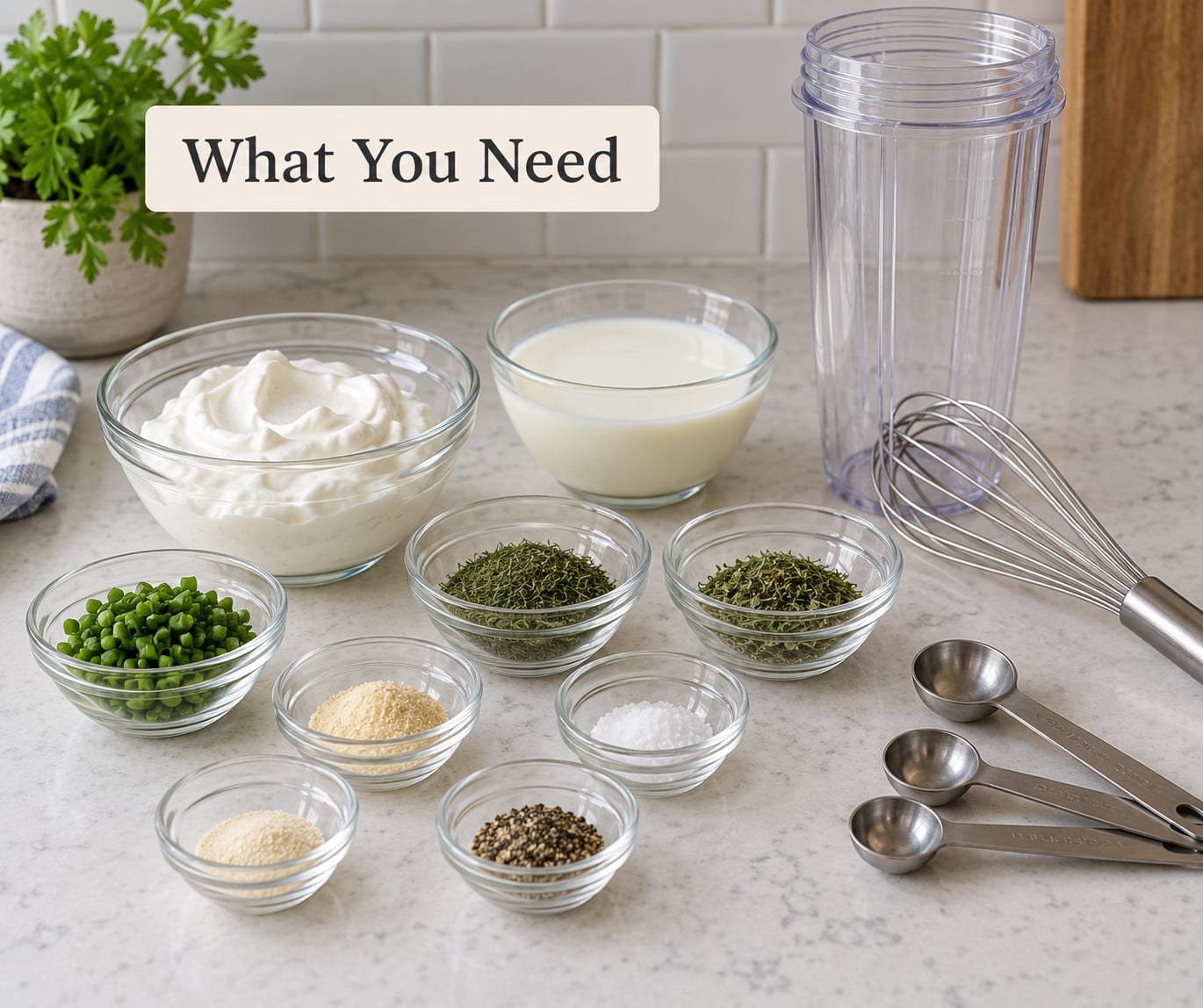
This list makes roughly 2 cups, enough for a big plate of wings and a bowl of carrots. Every item is either something you already have in the door of the fridge or a two-minute grocery run.
- 1 cup real mayonnaise (Duke’s or Hellmann’s, not Miracle Whip)
- 1/2 cup sour cream, full fat
- 1/2 cup buttermilk, cold
- 1 tablespoon fresh lemon juice or distilled white vinegar
- 1/4 cup fresh flat-leaf parsley, finely chopped
- 2 tablespoons fresh chives, snipped (or 2 teaspoons dried chives)
- 1 tablespoon fresh dill, chopped (or 1 teaspoon dried dill weed)
- 2 cloves fresh garlic, minced (or 1 teaspoon garlic powder)
- 1 teaspoon onion powder
- 1 teaspoon Worcestershire sauce
- 1/2 teaspoon kosher salt, plus more to taste
- 1/4 teaspoon black pepper
- A few drops of hot sauce, optional
A whisk does the whole job, and it is the tool I actually use. A blender bottle is faster if you make this often and you want the herbs broken down finer, but nothing else is required. A small food processor is the underrated option: pulse the herbs and garlic for a few seconds first and the finished dressing has a noticeably finer, more restaurant texture than anything you get whisking them in whole.
Each ingredient has one job. Mayonnaise supplies the body and emulsifies the whole thing so it stays stable. Sour cream adds fat and thickness, which is the part that makes restaurant ranch feel heavier than a bottle. Buttermilk loosens the base and brings the tang that a plain milk cannot fake. The vinegar or lemon gives the acidity that keeps it tasting bright, and the garlic plus herbs supply everything you actually smell when you open the jar.
Fresh herbs taste better and look better, but dried ones are completely fine in a pinch. Use roughly one-third the volume of fresh, so a tablespoon of fresh dill becomes about a teaspoon of dried.
| Herb | Fresh amount | Dried equivalent |
|---|---|---|
| Dill | 1 tablespoon | 1 teaspoon |
| Flat-leaf parsley | 1/4 cup | 1 tablespoon |
| Chives | 2 tablespoons | 2 teaspoons |
| Thyme or oregano | 1 teaspoon | 1/3 teaspoon |
Two swaps handle almost every missing ingredient. Full-fat Greek yogurt stands in for the sour cream and makes the dressing lighter and tangier, and it is the version my kids prefer. For buttermilk, stir 1 tablespoon of apple cider vinegar or white vinegar into 1 cup of whole milk, wait 5 to 10 minutes until it looks faintly curdled, and use that in place of the full half cup.
Step-by-Step: How to Make Ranch Dressing From Scratch
Total time is about 5 minutes of hands-on work plus 1 to 2 hours of chilling, and the yield is roughly 2 cups. Set everything out before you start, because the whole recipe moves faster than measuring the spoons.
1. Mix the dried seasonings
Combine the salt, black pepper, garlic powder, onion powder and dried herbs, if you are using them, in a small bowl. Stir them together so the salt does not sit in one clump, because that clump later turns into a pocket of overly salty dressing at the bottom of the jar.
Start with 1/2 teaspoon of the salt blend and hold the rest back. You can always add more at the end, but you cannot take it out. If you want a milder result, cut the garlic powder in half; if you want something more herb-heavy, bump the parsley and dill by a teaspoon and leave the onion alone.
2. Blend the creamy base
Whisk the mayonnaise, sour cream and about two-thirds of the buttermilk in a medium bowl until there are no streaks and the mixture looks uniformly white and glossy. This takes about 30 seconds. If it looks grainy or broken, let it sit a minute and whisk again rather than reaching for more liquid.
That is the emulsification step, and it is the reason ranch made from scratch does not split in the fridge the way some homemade dressings do. If your mix has gone stiff, whisk in cold buttermilk a tablespoon at a time until it coats the back of a spoon.
3. Add the seasonings and emulsify
Add the reserved seasoning blend, the parsley, chives, garlic, Worcestershire sauce and the lemon juice or vinegar. Whisk again until the herbs are evenly suspended and the dressing looks like it has a fine speckle running through it.
Taste on a piece of lettuce rather than on a fingertip, which is the single best habit for seasoning this. Lettuce carries the same mild flavor as a wing or a chip and tells you whether the salt is balanced against the dairy. Then add the remaining buttermilk in a slow drizzle, whisking as you go, until it ribbons off the whisk in a slow, thick stream.
4. Taste, adjust, and chill
Adjust the last of the salt, then pour the dressing into a jar or airtight container and refrigerate for at least 1 hour, 2 hours if you can wait. The herbs and garlic need that time to meld with the dairy, and the dressing thickens noticeably as it chills, which is why the people who complain about watery ranch usually added all their liquid at the start. Add it at the end instead.
Use this table to hit the consistency you need for whatever you are serving.
| Style | Base ratio | Target consistency |
|---|---|---|
| Salad dressing | 1 cup mayo, 1/4 cup sour cream, 3/4 cup buttermilk | Pourable, coats lettuce |
| Classic homemade | 1 cup mayo, 1/2 cup sour cream, 1/2 cup buttermilk | Thick drizzle, clings to a chip |
| Restaurant-style wing dip | 1 cup mayo, 1/2 cup sour cream, 1/4 cup buttermilk | Stays put on a sauced wing |
| Thick veggie dip | Any batch plus 2 to 4 tablespoons sour cream | Holds a carrot upright |
The difference between restaurant ranch and homemade is mostly dairy fat and buttermilk restraint, not a secret spice. Wings restaurants use a heavy sour cream load and a modest amount of buttermilk, which is exactly the third row above. Add hot sauce, smoked paprika or a minced pickled jalapeno for a spicy version, or fold in half a ripe avocado for a green ranch that is very good on cucumber slices.
Common Mistakes
The dressing is watery and slides off the food. Usually too much liquid, and usually added too early. Ranch thickens as it chills, so drizzle the buttermilk in at the very end and stop when it still looks a touch loose. If it has already thinned out, stir in sour cream or a spoonful of mayo rather than trying to correct it with more powder.
It is thick enough to stand up in a bowl. That is gluey, not dippy. Whisk in cold buttermilk or whole milk one tablespoon at a time. It will loosen again when you stir it, so give it a full minute before you add more.
It tastes aggressively garlicky on day two. Raw garlic sharpens as it sits in the fridge, which surprises most people. Either mash the cloves with a teaspoon of coarse salt into a paste so the flavor disperses instead of sitting in chunks, or use half the garlic and add the rest the next day. Garlic powder is the easy way out, since heat-stable powder does not build up.
The flavor is flat or the salt is off. Check the Worcestershire and the acid before adding more of either. A quarter teaspoon of extra vinegar rescues a batch that tastes heavy, and a pinch of sugar rounds out a batch that tastes sharp. Taste on lettuce, always.
Fresh herbs turned the dressing muddy green. Chop them fine and fold them in at the last moment rather than puréeing them. If you want the smooth restaurant texture, blitz the herbs with the garlic for a few seconds first.
It separated after a day or two. That is usually a sign the mix was under-emulsified or the base was too warm. Whisk hard for a full 30 seconds at the start, keep everything cold, and store the jar with the lid tight.
How to Serve Homemade Ranch Dressing
Think of this as a wing-night component rather than a salad afterthought. It is the dip for buffalo chicken, for onion rings and for a plate of breaded fries, and it takes about fifteen seconds of work to go from jar to wing tray. Any of the variations above also work cold on cucumber, sugar snap peas and bell pepper strips, which is what I put out first when people are still arriving.
For a drizzle, thin it with a little milk or buttermilk until it flows off the spoon; for a dip, add a couple of tablespoons of sour cream and let it sit. On pizza, spread it under the cheese so the crust bakes onto it. As a burger or sandwich spread, it pairs with fried chicken, roast beef and grilled vegetable sandwiches, and it makes a decent sandwich on its own with thick-sliced tomato and a little bacon.
Two habits keep it useful. Make it a day ahead so the flavor has time to settle, and keep a glass jar in the back of the fridge for salads and raw vegetables during the week. Dressing made from real dairy should be refrigerated the whole time, in a sealed container, and used within a week. If it smells sour, has a grainy film on the top, or you would not eat a spoonful of it, toss it rather than tasting again.
Frequently Asked Questions
Can I make ranch dressing without sour cream?
Yes. Use full-fat Greek yogurt in the same amount, which gives you the thickness and a cleaner tang, or lean on extra mayonnaise with a splash of cold milk to loosen it. The sour cream is what makes restaurant ranch feel heavy, so without it the dressing will be slightly lighter and less rich. Season the same way and chill for the full hour.
How can I make ranch dressing thicker?
Stir in sour cream, Greek yogurt or extra mayonnaise a tablespoon at a time, tasting as you go. If the dressing is loose rather than sticky, reduce the buttermilk next time instead. Remember that ranch firms up considerably during its first hour in the fridge, so hold back a little liquid now and add it after chilling if it ends up too stiff.
How long does homemade ranch dressing last in the refrigerator?
Plan on three to five days for the best flavor and texture, and use it within seven days. It contains raw dairy and fresh garlic, so it needs to stay refrigerated in a sealed container from the moment you make it. If you are doubling the batch, keep the extra portion in the freezer only if you can accept a softer, slightly separated dressing once it thaws.
What can I use instead of buttermilk or milk?
To make buttermilk at home, stir 1 tablespoon of apple cider vinegar or white vinegar into 1 cup of whole milk and let it stand 5 to 10 minutes, then use it in place of the buttermilk. Plain kefir works and adds even more tang. You can also use whole milk with a small splash of lemon juice, though the flavor will be a little flatter.
Why is my homemade ranch dressing watery?
Two reasons cover almost every case: too much liquid in the batch, or liquid added before the herbs and seasonings. Ranch thickens noticeably as it chills, so a dressing that looks loose in the bowl can set up correctly after an hour in the fridge. If it is still thin, fold in 2 tablespoons of sour cream rather than reaching for more powder or flour.
Can I freeze homemade ranch dressing?
You can, but expect the texture to change. Freezing breaks the emulsion, and thawed ranch often comes out grainy and slightly split, so whisk it hard after thawing and add a tablespoon of milk or sour cream to bring it back. Freezing works best for a large batch you will use within a month, not for a small jar you will want in a few days.
Conclusion
Measure the seasonings accurately, whisk the base smooth before anything else goes in, and add your liquid at the end so the dressing has room to thicken in the fridge. Start now by mixing the dry seasonings in a small bowl and getting your creamy base into a larger one. Five minutes of work, an hour of chilling, and you have a jar that handles wings, fries, raw vegetables and weeknight salads for the rest of the week.