Press a shallow thumbprint dimple into the center of each patty before it hits the heat, and it comes off the grill flat instead of domed. Beyond that, keep the beef cold, portion by weight, press gently to an even 3/4 inch, and chill the shaped patties for 15 to 30 minutes. Fifteen minutes of shaping plus a short chill gets you there.
The reason patties puff up is mostly physics. Heat drives moisture and fat toward the surface, the thin edges cook and contract first, and the middle has nowhere to go but up. A dimple gives that puff somewhere to go.
Table of Contents
- What You Need
- Step-by-Step: How to Form Burger Patties That Stay Flat
- 1. Keep the meat cold while you work
- 2. Mix the beef gently and season it lightly
- 3. Weigh equal portions for consistent thickness
- 4. Shape a gentle mound, then press it flat
- 5. Make a shallow center indentation
- 6. Chill the patties before cooking
- 7. Cook gently on a hot, well-seasoned surface
- Common Mistakes
- Frequently Asked Questions
- Do I need a burger press to form patties that stay flat?
- How thick should a burger patty be so it does not shrink or dome?
- Should I chill burger patties before grilling them?
- How do I keep hamburger patties from falling apart on the grill?
- What temperature should ground beef patties reach before serving?
- Conclusion
What You Need
The ingredient list is short. The equipment is the part people over-buy.
- Ground beef at 80/20 to 85/15. Any leaner and the patty dries out and crumbles; fattier and it shrinks hard and renders greasy.
- Salt. Do not reach for breadcrumbs or egg. Pure beef at this fat ratio binds on its own, and binders push you toward a meatball texture.
- Parchment or wax paper. Lays down cleanly, prevents sticking, and lets you stack patties.
- A kitchen scale. Equal weight is the single biggest upgrade to consistency. Guessing by eye gives you one thick patty and three thin ones.
- A flat-bottomed tool. The bottom of a heavy skillet or a saucepan works. Your hands are enough, honestly.
- A grill, griddle, or cast iron skillet. Preheated and seasoned.
Step-by-Step: How to Form Burger Patties That Stay Flat
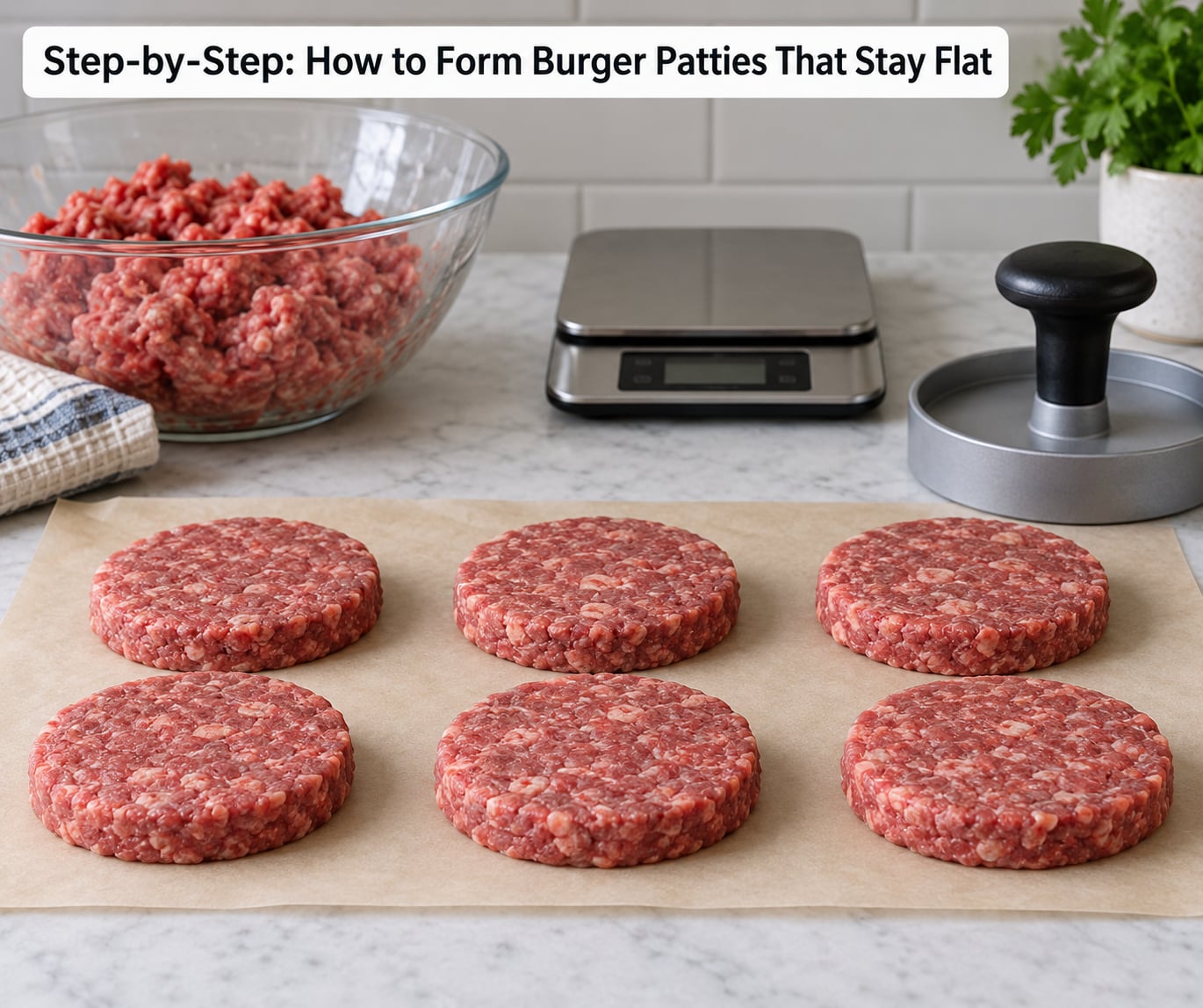
1. Keep the meat cold while you work
Cold ground beef firms up while you portion and shape it. Warm meat smears, sticks to your palms, and tears instead of holding a clean edge.
Put the bowl back in the fridge between batches. If the beef turns sticky and tacky on your hands, that is your signal, not the seasoning.
2. Mix the beef gently and season it lightly
Use your fingertips to spread the fat through the meat, nothing more. Overworking breaks the myosin proteins that bind ground beef together, and you get a dense, rubbery patty that chews like a tire.
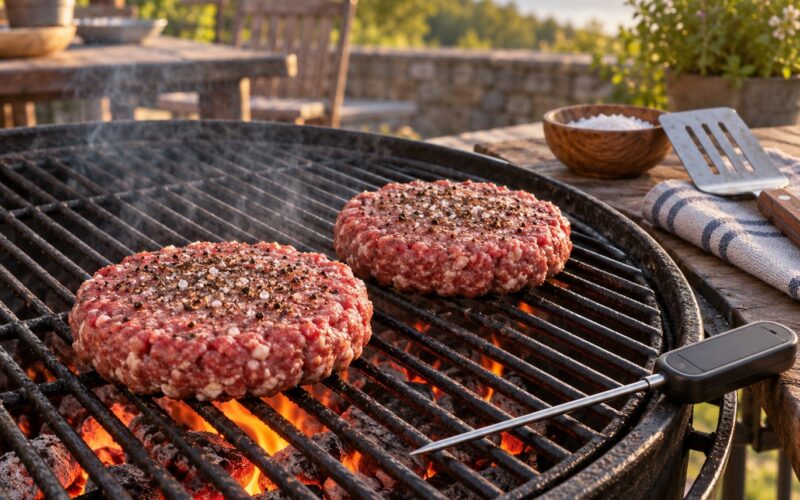
Season after shaping, on the outside only. Salt on the surface draws moisture out and helps the crust form; salt worked deep into the meat pulls water out before it ever reaches the grill. A thin sprinkle of salt and pepper right before cooking is plenty.
3. Weigh equal portions for consistent thickness
Set your scale and portion every patty to the same weight. Four ounces is a standard single burger, and going slightly heavier to six ounces suits a thicker bun or a hungry cook.
Equal weight means equal thickness, and equal thickness means everything finishes cooking at the same time. Uneven patties are the reason one burger is dry while the one next to it is still pink in the middle.
4. Shape a gentle mound, then press it flat
Loosely round the portion into a mound with a slightly domed center. Then press once or twice, palm down, until you have an even patty about 3/4 inch thick and slightly wider than your bun to account for shrink.
Two presses is plenty. Aggressive compaction squeezes out air and squeezes out the juices later, which is the fastest route to a dry burger.
5. Make a shallow center indentation
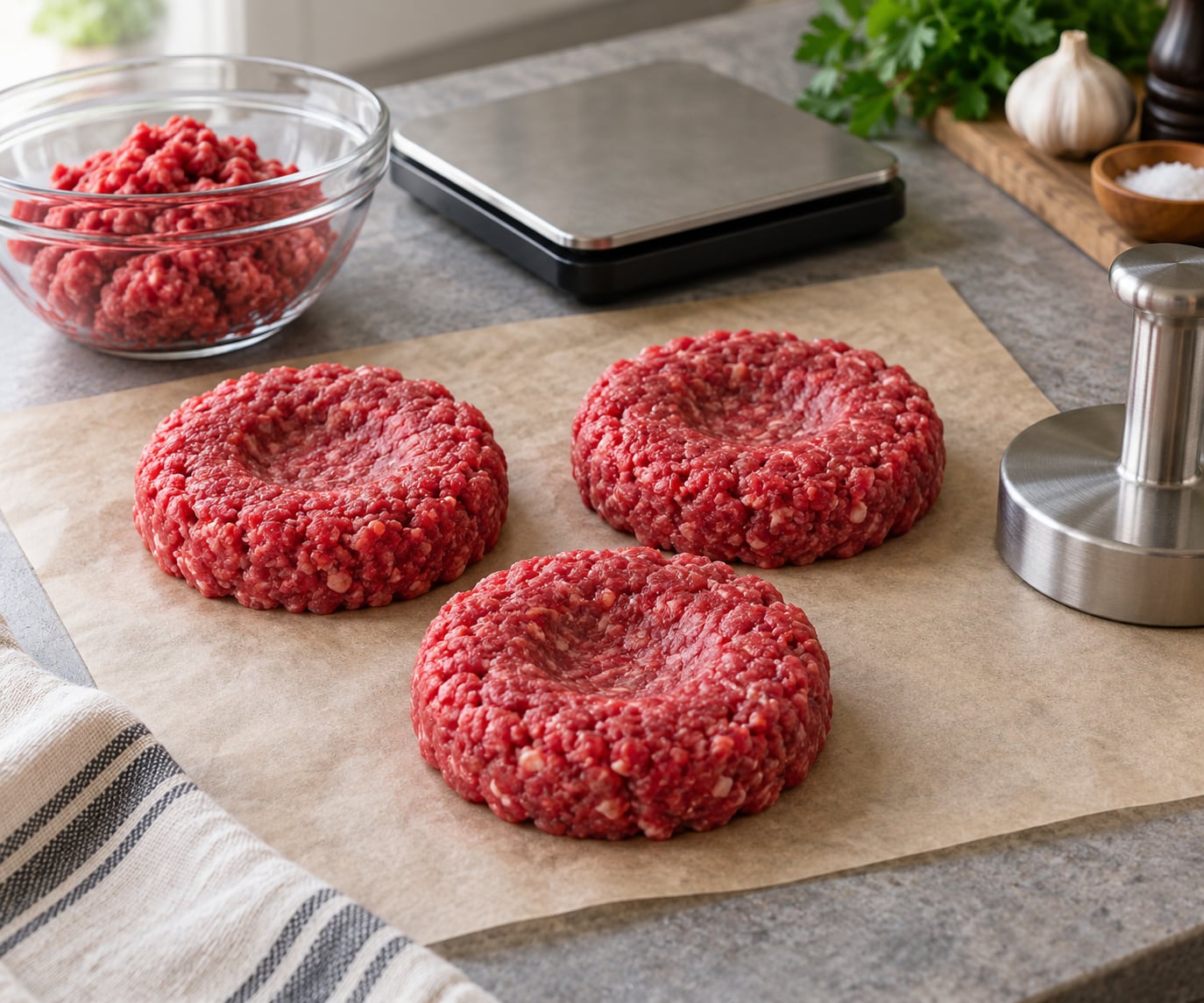
Press your thumb straight down into the center of the patty until you leave a dimple about 1/8 inch deep. The meat should be compressed, not torn through.
That dimple fills in as the patty cooks and absorbs the puff that would otherwise dome the center. A shallow well is enough. Press a deep crater and you have made a bun-shaped bowl whose edges curl up off the grill.
6. Chill the patties before cooking
Refrigerate the shaped patties for 15 to 30 minutes on the parchment. Chilled patties hold their shape when they land on hot grates, stick far less, and cook more evenly because the cold center does not hit the heat all at once.
This step is the one most people skip, and it is the one that makes the biggest visible difference. If you are making patties ahead for a cookout, this is also your storage window, covered in wax paper between layers.
7. Cook gently on a hot, well-seasoned surface
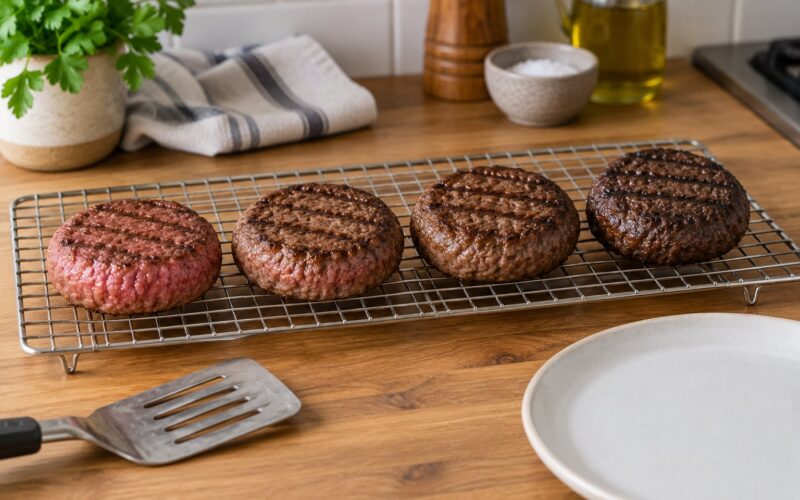
Preheat a grill to 400 to 450°F, or heat a cast iron skillet until water skitters across it. Lay the patties down away from you and leave them alone.
Flip once, halfway through, using a thin spatula or grill fork slid underneath rather than a flip that folds the patty in half. Do not press down. Do not press down again either. Pressing squeezes out the juices you came for and is the single most repeated mistake in home grilling.
Cook ground beef to a safe minimum internal temperature of 160°F (71°C), measured with an instant-read thermometer in the thickest part. Most restaurant-style burgers are pulled well before that, but 160°F is the USDA recommendation for ground beef.
Common Mistakes
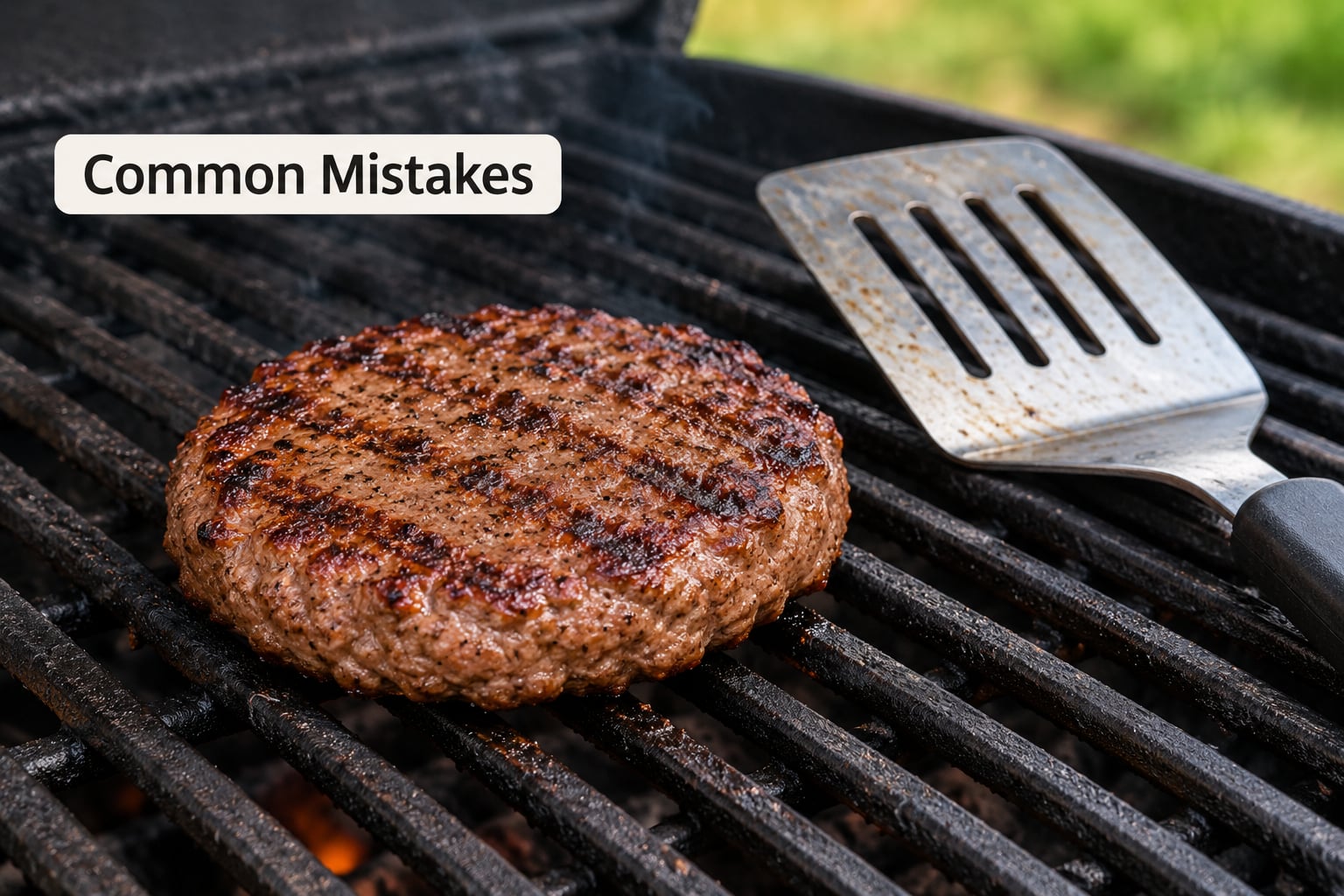
Almost every flat-patty complaint traces back to one of these. Match your symptom to the fix.
The center domes into a cone. You skipped the dimple, or the patty was too thick in the middle. Press a 1/8 inch thumbprint into the center and even the thickness out with a second press. Aim for 3/4 inch everywhere.
Edges curl up and the patty sits like a bowl. The rim is thinner than the center, so it cooks first and contracts. Fix the shape before cooking: press the edge down level with the middle, and do not press a deep well in the center that leaves a raised rim.
The patty shrinks and no longer fits the bun. Diameter and fat are the causes. Form each patty about a quarter inch wider than the bun, and remember that fattier grinds shrink more, not less. Cold meat plus a short chill limits it further.
It falls apart when you flip it. It was undercooked when you tried, or you handled it too much while forming. Give it more sear time before the first flip, and use a thin spatula slid underneath instead of a turning motion.
The patty is dry and chewy. Too much handling and too much pressing. Blend the beef with your fingertips, press the patty twice and no more, and resist the urge to flatten it on the grill.
Salty, tough patties that shrank a lot. Salt went in before shaping. Salt the formed patties just before they cook, and you get crust instead of a shrunken puck.
Frequently Asked Questions
Do I need a burger press to form patties that stay flat?
No. A press makes the job faster, not better, as long as your patties are even in thickness. Weigh each portion, press your palm down once or twice to 3/4 inch, and leave a 1/8 inch thumbprint in the center. Hands are enough. A heavy skillet or saucepan bottom works as a stand-in press if you like the extra weight.
How thick should a burger patty be so it does not shrink or dome?
Three-quarter inch is the sweet spot for a standard grill burger. Thin patties cook fast and dry out, while anything past an inch domes badly and the center overcooks before the edges finish. Form the patty slightly wider than your bun, because diameter and thickness together determine how much it shrinks.
Should I chill burger patties before grilling them?
Yes, for 15 to 30 minutes in the refrigerator. Cold patties keep their shape when they hit hot grates, stick far less, and cook more evenly because the center does not sear before the heat reaches it. Keep them on parchment and uncovered in the fridge, then season and cook straight from cold.
How do I keep hamburger patties from falling apart on the grill?
Skip the egg and breadcrumbs for pure beef at 80/20 to 85/15. It binds on its own if you handle it gently and keep the fat. Form patties with no cracks and pinch the seam closed. On the grill, wait longer before the first flip, then slide a thin spatula or grill fork underneath instead of flipping edge-first.
What temperature should ground beef patties reach before serving?
The USDA safe minimum internal temperature for ground beef is 160°F (71°C), checked in the thickest part with an instant-read thermometer. Many diners prefer burgers pulled earlier, when the center is still pink and the juices run clear, but that is a preference and carries a real food safety trade-off.
Conclusion
Cold meat, equal weights, two gentle presses, 1/8 inch dimple, 15 to 30 minutes in the fridge, and no spatula pressure on the grill. That is the whole method for learning how to form burger patties that stay flat.
For your next cook, put a scale on the counter and portion the beef before you preheat anything. Weighing four portions is a two-minute job, and it is the habit that fixes most of what follows.