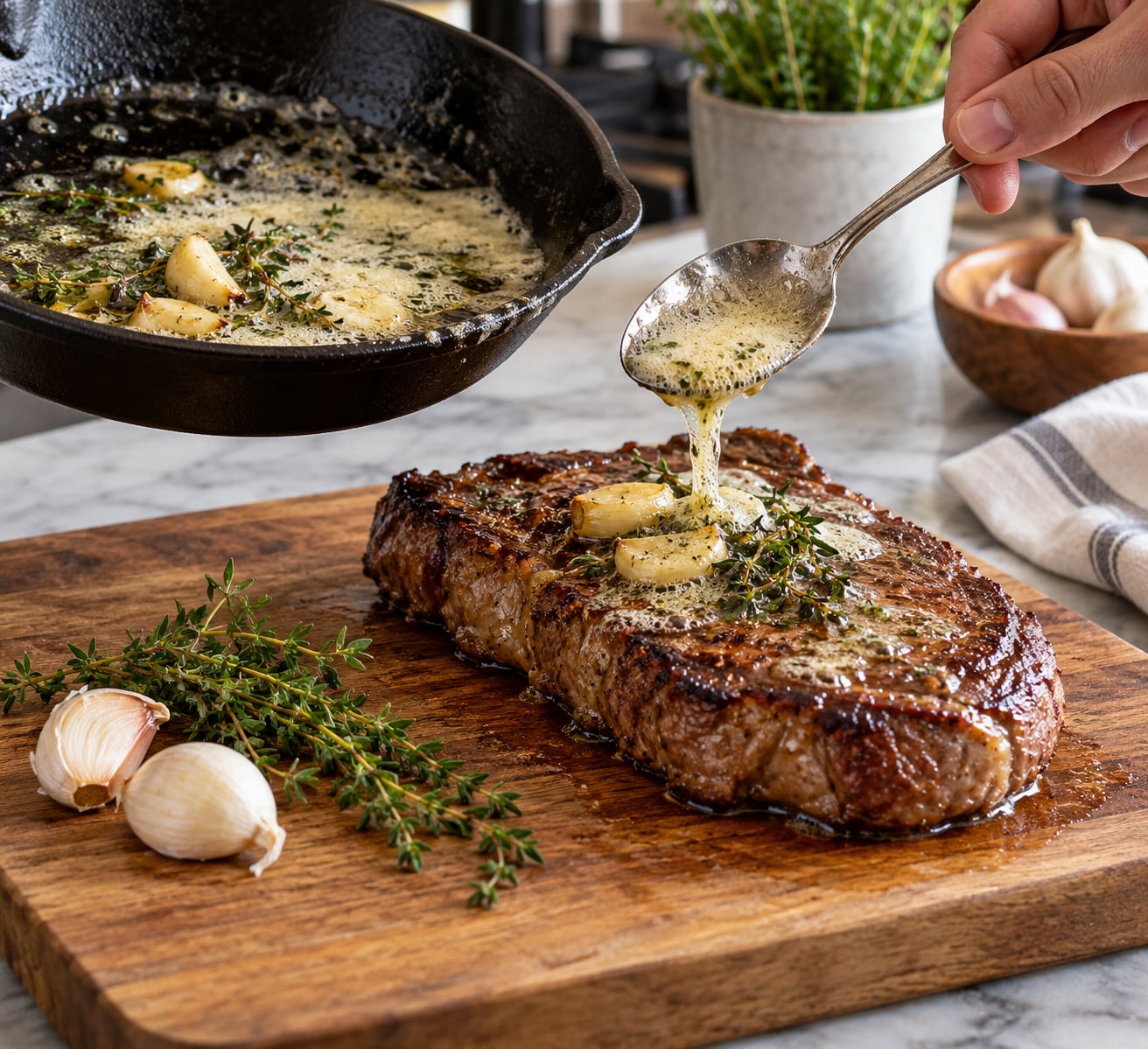
How to make garlic butter for steak takes about 15 minutes start to finish: melt a few tablespoons of unsalted butter with 4 to 6 minced garlic cloves and fresh herbs, spoon it over a seared steak, and baste until the sauce turns glossy. The whole thing happens in one cast iron skillet while the steak rests.
The part that trips people up isn’t the recipe, it’s the timing. Butter burns at a much lower temperature than a steak sears at, so the butter goes in last, after the heat comes down. Get that one detail right and everything else is forgiving.
Table of Contents
- What You Need
- Step-by-Step: How to Make Garlic Butter for Steak
- 1. Choose the right butter and steak
- 2. Mince or grate the garlic
- 3. Cook the butter gently
- 4. Add garlic and aromatics
- 5. Season and finish the sauce
- 6. Spoon it over the steak
- Common Mistakes
- The butter burned before the garlic went in
- The garlic turned dark or bitter
- The garlic turned to mush
- The sauce is too salty
- You sauced the steak before it rested
- How to Make Garlic Butter for Steak
- Frequently Asked Questions
- How do I make garlic butter with two ingredients?
- Do you put garlic butter on steak before or after cooking?
- How long does homemade garlic butter last in the fridge?
- Why does my garlic butter taste bitter?
- Is basting a steak with butter and garlic cheating?
- Can I make garlic butter ahead of time?
- Conclusion
What You Need
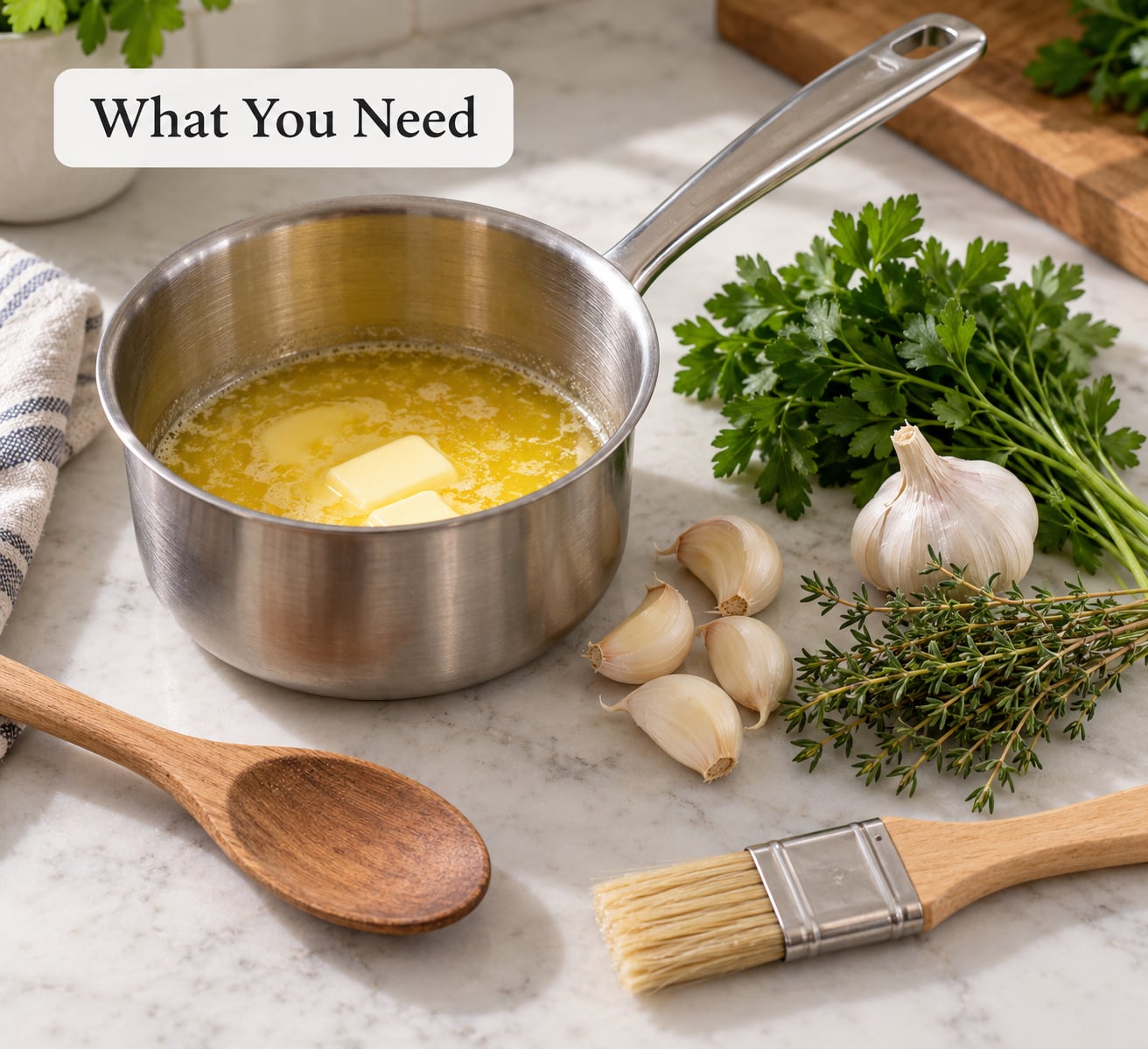
For one 1 to 1.5 lb steak you need 3 to 4 tbsp unsalted butter, divided, plus 4 to 6 garlic cloves minced fine. Have olive oil, kosher salt, and black pepper on the counter too.
- Butter: 3 to 4 tbsp unsalted butter, divided. Two tablespoons for the pan, the rest for basting.
- Garlic: 4 to 6 fresh cloves, minced or grated. Fresh beats garlic powder, which tastes flat after it sits in an open jar for a few months.
- Oil: 1 tbsp olive or avocado oil for the sear. Butter alone browns unevenly at searing heat.
- Seasoning: Kosher salt and coarse black pepper.
- Herbs (optional): A few sprigs of rosemary or thyme, or a tablespoon of chopped flat-leaf parsley.
- Equipment: A cast iron skillet or heavy stainless pan, a wooden spoon or silicone brush for basting, and an instant-read thermometer.
Unsalted butter gives you control over the seasoning. If you only have salted butter, use it and cut the added salt by half or leave it out entirely.
As a starting ratio, this is what I go with:
| Steak size | Butter | Garlic | Herbs |
|---|---|---|---|
| 1 steak, about 8 oz | 3 tbsp | 4 cloves | 1 sprig thyme |
| 1 steak, 1 to 1.5 lb | 4 tbsp | 5 to 6 cloves | 2 sprigs thyme or rosemary |
| Steak bites, about 1.5 lb of cubes | 6 tbsp | 6 cloves | 2 tbsp parsley |
| Two 8 oz steaks | 6 tbsp | 8 cloves | 3 sprigs thyme |
Cut and doneness are your call, but ribeye, New York strip, and top sirloin all take the sauce well. Filet mignon works too, and it needs less butter so the sauce doesn’t overwhelm a lean cut. Whatever you choose, whole cuts should hit 145°F (63°C) internal temperature at minimum for safety, and most cooks pull filet earlier than that on purpose and accept the trade-off knowingly.
Step-by-Step: How to Make Garlic Butter for Steak
1. Choose the right butter and steak
Pull the steak out of the fridge 30 to 45 minutes before cooking. A cold steak sears unevenly because the outside drops the pan temperature before the center catches up.
Pat it dry with paper towels and season both sides with kosher salt and pepper. Wet skin steams instead of browning, and you lose the crust that the butter sauce ends up clinging to.
2. Mince or grate the garlic
Smash each clove with the flat of a knife, peel it, and mince fine. A garlic press or a microplane works too and breaks the cloves down even more, which spreads the flavor instead of leaving you with hot garlic bites and cold butter between them.
Chunky garlic is the reason some people say they don’t like garlic in butter. Mince it small and the sauce tastes like garlic rather than like a bowl of garlicky fat.
3. Cook the butter gently
Heat a cast iron skillet over medium-high, add the olive oil, then lay the steak down and leave it alone for 3 to 4 minutes without moving it. Look for a deep brown crust before you flip.
Flip, cook 3 to 4 more minutes, then move the steak to a warm plate. Give the pan a minute to cool from searing heat, turn it down to medium-low, and only now add the butter.
You are looking for the butter to melt, foam, and smell like popcorn rather than toast. That is the cue it is ready for garlic. If it is hissing and darkening, pull it off the heat.
4. Add garlic and aromatics
Add 2 tablespoons of the butter along with the minced garlic and your herb sprigs. Stir constantly for 45 to 60 seconds, just until the garlic is fragrant and pale gold.
Garlic goes in after the butter and over gentler heat because it burns first. Pale gold is the target. Brown means it’s about to turn bitter, and by the time you taste bitterness the sauce is already ruined.
Tarragon is worth a caution. It darkens fast and turns unpleasant if it cooks more than a minute, so add it at the very end or leave it out.
5. Season and finish the sauce
Add a splash of the steak’s resting juices to the pan and swirl. The butter and the meat juices thicken into a light emulsion, which is the glossy sauce that makes the dish taste restaurant-made rather than greasy.
Season with salt and pepper now, then add a squeeze of lemon if you want brightness, or a teaspoon of Worcestershire-style soy sauce for depth. Off the heat, stir in the remaining butter so it melts into the sauce rather than sitting in a pool.
If the sauce looks thin, let the pan sit on low heat for another minute. If it looks thick and gluey, add a tablespoon of hot water or stock and swirl again.
6. Spoon it over the steak
Let the steak rest 5 to 7 minutes. That wait is not optional: it lets the juices redistribute, and it keeps the meat from overcooking while you finish the sauce.
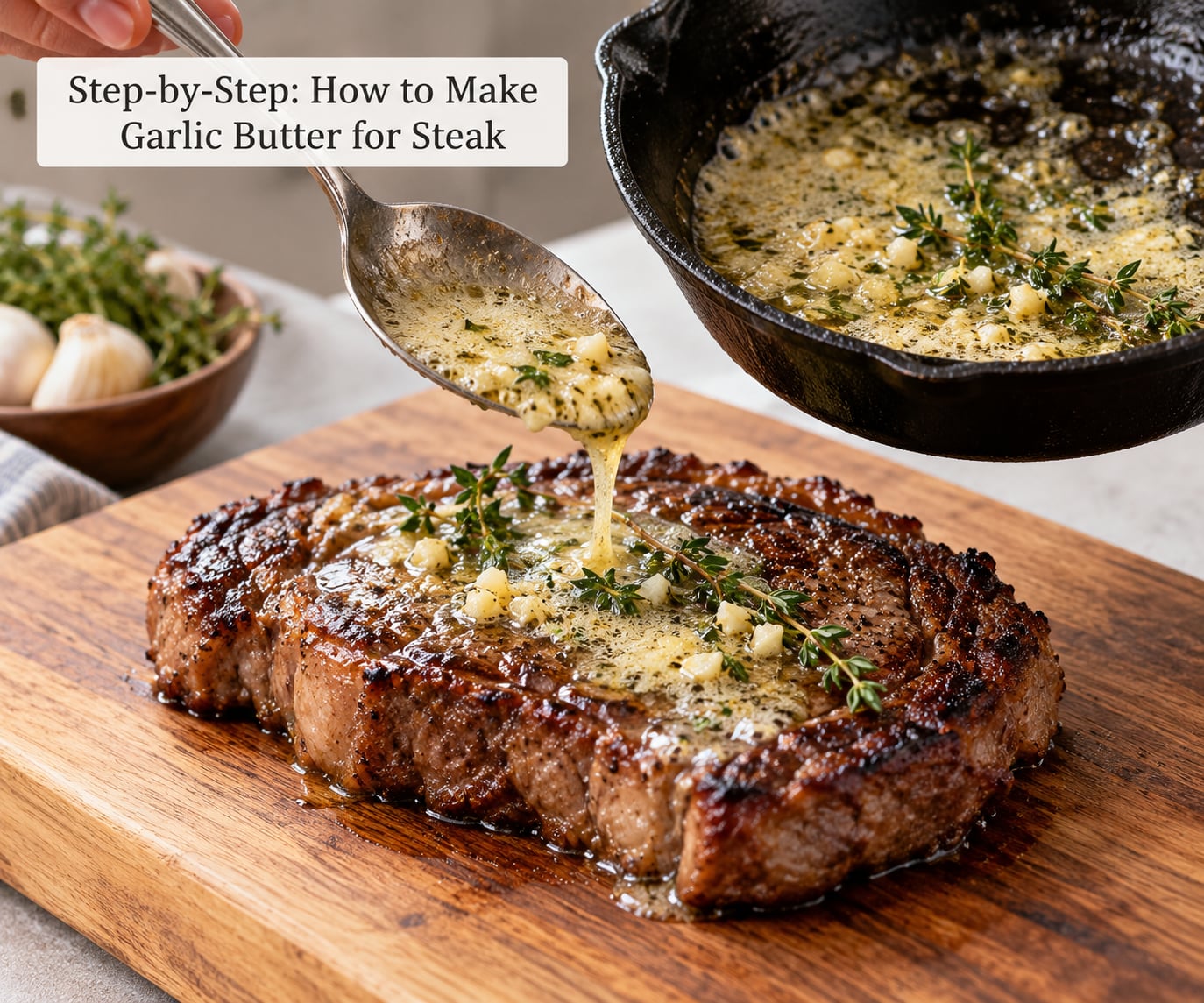
Slice against the grain if it’s a whole cut, then spoon the garlic butter over the slices, or set the whole steak on a warm plate and pour the sauce over the top. Tilt the pan and baste instead if you like: spoon the butter up and pour it over the meat 4 or 5 times so the surface stays glossy.
Use the leftover butter on something else in the same sitting. Spoon it over roasted potatoes, green beans, or corn on the cob, or toss it through steak bites for the last minute of cooking.
On a grill rather than a skillet, the logic holds. Sear over direct heat, move the steak to the cooler side or a rest area, turn the heat down, and add the butter in a small pan or a heatproof bowl set on the grate edge rather than right over the coals.
Common Mistakes
Almost every bad garlic butter steak I’ve served someone started with one of these five.
The butter burned before the garlic went in
Butter browns and then goes acrid fast, and once the milk solids are dark the whole pan tastes burnt no matter what you stir in. Drop the heat to medium-low and give the pan a full minute to cool down before the butter goes anywhere near it. If it’s already smoking, take the pan off the burner and start the sauce over in a clean bowl.
The garlic turned dark or bitter
Garlic burns well before butter does. Add it to butter that’s already foaming and keep stirring, staying under a minute. If it goes past golden into brown, scrape the pan and start over. It takes 20 seconds to redo and it saves the whole plate.
The garlic turned to mush
Pasty garlic means it sat in the pan too long or got crowded. Finely mince, use a larger pan surface, and keep it moving. A little lemon juice stirred in at the end also loosens a paste that has already formed.
The sauce is too salty
Salt concentrates as the butter reduces. The fix is volume, not more salt: whisk in a tablespoon of hot water or unsalted stock, or add more unsalted butter. If you’re using salted butter, that’s usually the whole cause.
You sauced the steak before it rested
Spooning hot butter onto a steak that hasn’t rested cooks the surface, tightens it, and pushes the juices out instead of holding them in. Rest first, sauce second. Even four minutes is better than none.
How to Make Garlic Butter for Steak
Once the base method is comfortable, the same technique handles four variations. Change the flavorings and the cut, not the timing.
| Variation | What changes | Prep | Best cut | Makes ahead? |
|---|---|---|---|---|
| Basic garlic butter | Butter, garlic, salt, pepper | 2 minutes | Ribeye, New York strip | Yes, 4 weeks frozen |
| Herb garlic butter | Add parsley, thyme, or chives off heat | 5 minutes | Top sirloin, filet | Yes, roll into a log |
| Spicy garlic butter | Add chili flakes, cayenne, or smoked paprika | 3 minutes | Ribeye, skirt steak | Yes |
| Blue cheese garlic butter | Mash 2 oz softened blue cheese into 5 tbsp butter, then fold in garlic | 8 minutes | Filet, strip steak | Yes, freezes well |
Basic garlic butter is the one above: two tablespoons in the pan, the rest spooned on. It’s the one to master first, because the rest are all modifications of it.
Herb garlic butter takes chopped flat-leaf parsley and thyme stirred through the sauce off the heat, so the herbs stay green. Roll the same mixture into a log, chill it, and slice a half-inch disc to drop onto a hot steak at the table. The compound butter route is the make-ahead version of the same flavor.
Spicy garlic butter gets a pinch of chili flakes or cayenne into the butter as it foams, or half a teaspoon of smoked paprika stirred in at the end. Add the flakes before the garlic so they toast rather than scorch.
Blue cheese garlic butter works best on a lean cut. Mash the cheese into softened butter first, then fold in two cloves of minced garlic. The salt from the blue cheese means you skip added salt entirely, and the sauce turns into something closer to a cheese fondue than a pan sauce.
A two-ingredient version is just butter and garlic if you want the bare minimum. Three tablespoons of butter and three cloves, minced, is the right amount for one 8 oz steak.
Frequently Asked Questions
How do I make garlic butter with two ingredients?
Melt 3 tablespoons of unsalted butter over medium-low heat, add 3 minced garlic cloves for an 8 oz steak, and stir for about 45 seconds until the garlic smells fragrant. Skip the herbs, salt, and lemon, and season the finished sauce at the table. Two ingredients is enough because the butter carries the flavor and the steak already has salt on it.
Do you put garlic butter on steak before or after cooking?
After. Sear and season the steak first, then lower the heat, add butter and garlic, and baste during the last minute or two. Putting garlic butter on before searing burns the butter and the garlic at searing heat. If you want the flavor deeper in the meat, brush the raw steak with melted butter before it hits the pan, but keep the garlic out of that step.
How long does homemade garlic butter last in the fridge?
Stored airtight in the refrigerator, homemade garlic butter keeps about 4 to 5 days, and a few days less if it has extra herbs or cheese mixed in. Freeze it in a log or an ice cube tray for 2 to 3 months and it holds well. Don’t leave it at room temperature for more than 2 hours, and toss anything that smells sour or has film on the surface.
Why does my garlic butter taste bitter?
Bitterness means one of two things: the butter browned past golden, or the garlic cooked past a minute. Both are heat problems, not ingredient problems. Next time, cool the pan a full minute after searing, use medium-low heat, and stir the garlic in only after the butter has foamed and started to smell like popcorn.
Is basting a steak with butter and garlic cheating?
No. Basting is standard technique in restaurant kitchens for good reason: it re-coats the surface with fat and aromatics while the meat finishes cooking, and it lets the butter pick up the browned bits in the pan. It adds flavor, not moisture, though. Resting the steak is what keeps the juices in, and no amount of basting replaces that step.
Can I make garlic butter ahead of time?
Yes, and it’s the easiest sauce to prepare in advance. Soften the butter, mix in minced garlic, salt, and chopped herbs, then roll it in parchment into a 1.5 inch log and refrigerate for 2 hours or overnight. Slice a disc and drop it onto a hot steak at the last second, or let a slice melt in the pan during the final minute of cooking.
Conclusion
Start with softened unsalted butter, finely minced garlic, and a heat that’s come down from searing. Add the garlic last, keep it under a minute, let the steak rest 5 to 7 minutes, then spoon the sauce over and season it in that final moment. That order is the whole recipe.