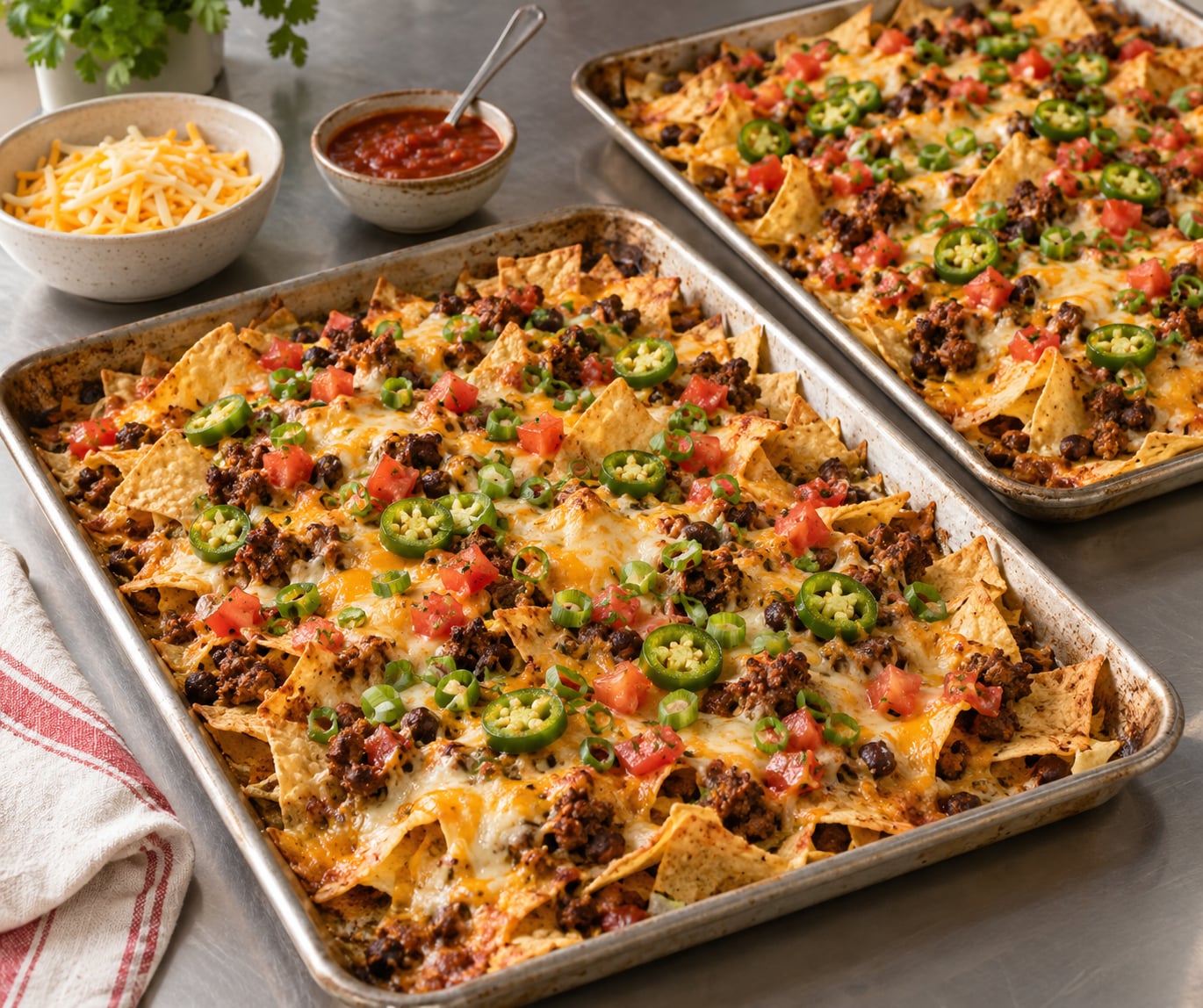
To layer nachos properly, spread the chips in one even layer on a lined baking sheet, add the heaviest toppings next, drizzle sauce lightly, blanket everything with shredded cheese, and add delicate toppings last. Cold toppings like sour cream and guacamole wait until the tray comes out of the oven. The whole build takes about 30 minutes and most of that is waiting.
Order matters more than quantity. Any wet ingredient that sits on chips before they hit heat traps steam, and a chip under a mound of salsa never gets hot enough to dry out. Layer in the wrong sequence and you get a tray that’s crisp on top and limp underneath.
Table of Contents
- What You Need
- How to Layer Nachos Properly, Step by Step
- Choose a Sturdy Base Layer
- Add the Heaviest Toppings First
- Add Sauce Sparingly
- Add Cheese and Delicate Toppings
- Finish and Bake or Serve
- How to Layer Nachos Properly at a Glance
- Common Mistakes
- Frequently Asked Questions
- Should cheese go on first or last when layering nachos?
- How many layers of nachos is too many?
- Why are my nachos soggy at the bottom?
- Are nachos better in the microwave or the oven?
- What kind of chips hold up best once loaded?
- Conclusion
What You Need
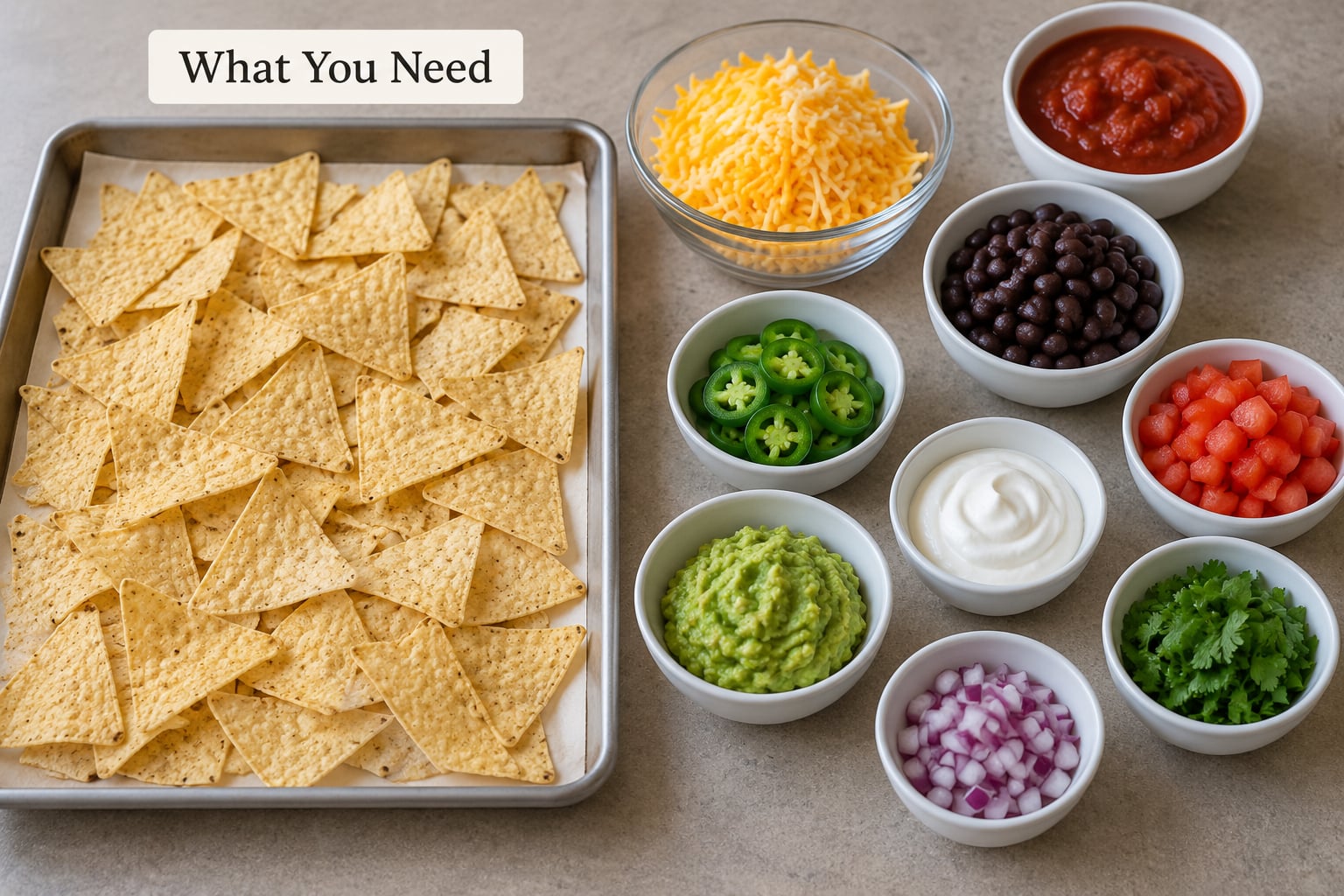
A rimmed baking sheet is the one piece of equipment you can’t skip. The raised edge stops melted cheese and bean liquid from running to the corners and frying onto the rack.
Line it with parchment paper, foil, or a silicone baking mat. Each has a trade-off worth knowing:
| Liner | Best for | Watch out for |
|---|---|---|
| Parchment paper | Crisp bottoms, clean cheese release | Wrinkles if you push chips around on it |
| Foil | Rising, better for takeaway trays | Cheese can weld to it and tear the bottom chip |
| Silicone mat | Repeat batches, high-temp broiling | Smooth surface lets cheese slide as it melts |
For chips, pick something thick enough to bear weight. Thick corn chips and sturdy restaurant-style rounds hold a scoop; thin, brittle nacho chips snap into fragments the moment you add beans. Break any large chips into rough two-inch pieces so each one is a single bite.
On the topping side, sort everything into two groups: dense toppings that can sit on chips and heat through, and delicate toppings that wilt or leak. Beans, cooked meat, roasted peppers, and corn go in the first group. Salsa, guacamole, sour cream, scallions, olives, and raw jalapenos go in the second.
For a standard half-sheet pan, roughly 8 to 10 ounces of chips and 2 cups of shredded cheese cover one tray evenly. More chips than that and you’ll be stacking to fill the pan, which is where sogginess starts.
How to Layer Nachos Properly, Step by Step
Choose a Sturdy Base Layer
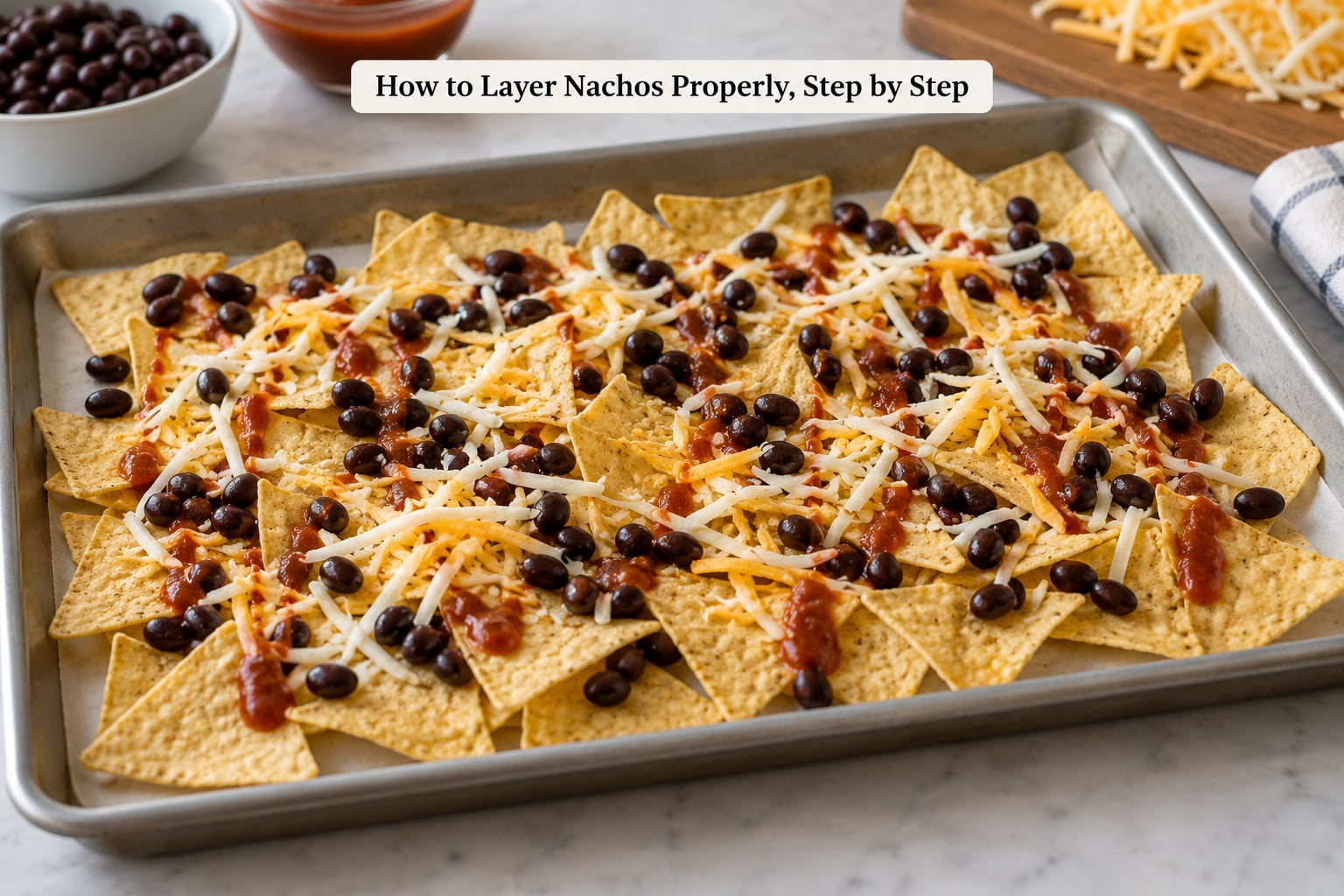
Spread chips across the sheet in a single layer where they touch and overlap a little, but never stack two deep. Leave no bare metal showing, because bare spots are the sad part of the tray, the chip that arrives with nothing on it.
Work from the center outward so you can nudge chips into gaps instead of shuffling them into piles. When you’re done, every square inch of the pan should read as chips.
Add the Heaviest Toppings First
Put dense toppings directly on that chip layer: refried or black beans, cooked and seasoned ground beef, shredded chicken, or roasted peppers. Anything you’d want browned goes here, while the chips underneath can still handle heat.
Cooked meat goes onto the tray hot. If you add room-temperature beef straight from the fridge, it steams the chips under it, and those chips never crisp. Brown ground beef to 160°F and drain the excess grease before it goes on the tray.
Spread toppings in a loose scatter rather than dumping them in one spot. You want each chip to have a chance at a bite’s worth of filling, not a pile in the middle with bare edges.
Add Sauce Sparingly
Drizzle salsa, verde, or cheese sauce in a thin zigzag across the whole tray, or spoon it in small dots you spread later. The goal is a light coat on every chip, not a pool in the low corners.
Sauce weight is the single biggest driver of soggy nachos. If it beads up in the tray instead of coating the chips, you’ve gone too heavy, and the answer is less sauce next time rather than more baking.
Add Cheese and Delicate Toppings
Shredded cheese goes on in an even blanket now. Cheese is the glue: once it melts, it welds chips to the fillings so a scoop carries the whole bite instead of sending toppings sliding back onto the plate.
Add a thin second tier of chips on top if the pan is small or the crowd is big, then cheese again. Two tiers is the practical limit for home ovens, and we’ll get into why further down. Keep the second tier sparse, or leave it out entirely and let the first layer spread across a wider pan instead.
Delicate toppings can go on now if you’re baking: sliced jalapenos, diced onions, diced olives, or roasted peppers. Dice everything smaller than the chip. A topping that overhangs its chip will slide off in the walk from the counter to the couch.
Finish and Bake or Serve
Bake at 375°F for 8 to 10 minutes until the cheese is fully melted and bubbling at the edges. For a faster, blistered top, finish under the broiler for 2 to 3 minutes with the tray on the middle rack, watching it the whole time.
Let the tray rest 3 to 5 minutes before serving. The cheese needs that time to set slightly, and a rested tray holds together on the pick instead of collapsing.
Now add the cold toppings: sour cream, guacamole, pico de gallo, salsa, and fresh scallions. Anything added before baking melts into a soup and turns the chips underneath it limp.
How to Layer Nachos Properly at a Glance
| Layer | What to add | How much | Why it matters |
|---|---|---|---|
| 1 | Chips in one even layer | 8 to 10 oz per half-sheet pan | Crisp base that supports everything above it |
| 2 | Dense toppings such as beans or cooked beef | About 2 cups spread loosely | Heat reaches them and their weight stays low on the chips |
| 3 | Sauce drizzled over | A few tablespoons per tray | Flavor without the pooled moisture that softens chips |
| 4 | Shredded cheese | About 2 cups per tray | Acts as glue so toppings lift with the chip |
| 5 | Optional second chip tier, then cheese again | Half the remaining chips | More loaded bites per scoop, with heat limits |
| 6 | Cold toppings after baking | As much as each guest wants | Stays cool and keeps the chips crisp |
Common Mistakes
Stacking chips too high. A tall pile of chips with cheese poured over the top is nacho lasagna, and you end up eating it with a fork. The fix is width instead of height: one full layer across the pan, or two tiers at most, and use a second pan if you need more volume.
Wet ingredients going on too early. Salsa, sour cream, and guacamole in the oven are a soggy tray waiting to happen. Hold every cold or wet topping until the tray is out and rested.
Overcrowding the tray. When chips overlap in deep piles, the heat never reaches the buried ones and the weight above crushes them. Spread chips to touch but not stack, and use a bigger pan before you stack.
Skipping a sturdy base. Thin chips shatter under beans and meat, and you end up scooping fragments. Choose thick corn chips for heavily loaded trays, and reserve thin restaurant-style chips for lighter toppings like cheese and jalapenos.
Toppings larger than the chip. Dice onions, peppers, and olives small. Anything that overhangs its chip falls off on the first bite, which is the fastest way to lose a table’s interest.
Believing three or four tiers work. Broiler heat only reaches the top. Everything underneath cooks at ambient oven temperature while weight and moisture press down on it, which is why deep stacks go soft. Two tiers is the safe ceiling at home.
Forgetting to drain the meat. Grease pooling under the chips steams them from below and guarantees a limp base. Brown the beef, drain it well, and season it with chili powder, cumin, and a pinch of salt before it hits the tray.
Frequently Asked Questions
Should cheese go on first or last when layering nachos?
Cheese goes on before the final toppings, not after. Shred it over the chips and dense fillings so it melts into a blanket that glues the layers together, then add delicate toppings like jalapenos before baking. A light second sprinkle after baking adds fresh flavor, but it will not melt without another trip under the heat.
How many layers of nachos is too many?
Two tiers is the practical limit for a home oven. Broiler heat only touches the top layer, so anything below cooks slowly while weight and trapped moisture soften the chips underneath. A third tier may brown on top while the bottom goes limp, which is exactly the soggy tray most people are trying to avoid.
Why are my nachos soggy at the bottom?
Three things cause it: sauce pooled too heavily, cold toppings added before baking, and too many layers for the heat to reach. A fourth cause is chips piled more than one deep, since buried chips steam each other. Use less sauce, hold back wet toppings until the end, and keep the build to one or two tiers on a wide pan.
Are nachos better in the microwave or the oven?
The oven wins on texture. A microwave melts the cheese quickly but leaves the chips soft and chewy because there is no dry heat to crisp them. A 375°F oven, or a short broil, melts the cheese and drives moisture out of the chips at the same time.
What kind of chips hold up best once loaded?
Thick corn chips hold up best under beans and meat because they bend rather than shatter. Restaurant-style thin chips work well for lighter loads like cheese, salsa, and jalapenos. Whatever you use, spread chips in one touching layer and skip any that look brittle or already cracked in the bag.
Conclusion
Start with one even layer of sturdy chips that covers the whole pan. Add beans or cooked meat next, sauce lightly, blanket it with shredded cheese, and keep the build to two tiers. Fresh salsa, sour cream, and guacamole go on after the tray leaves the oven. Follow that order and every scoop comes up loaded and still crisp.