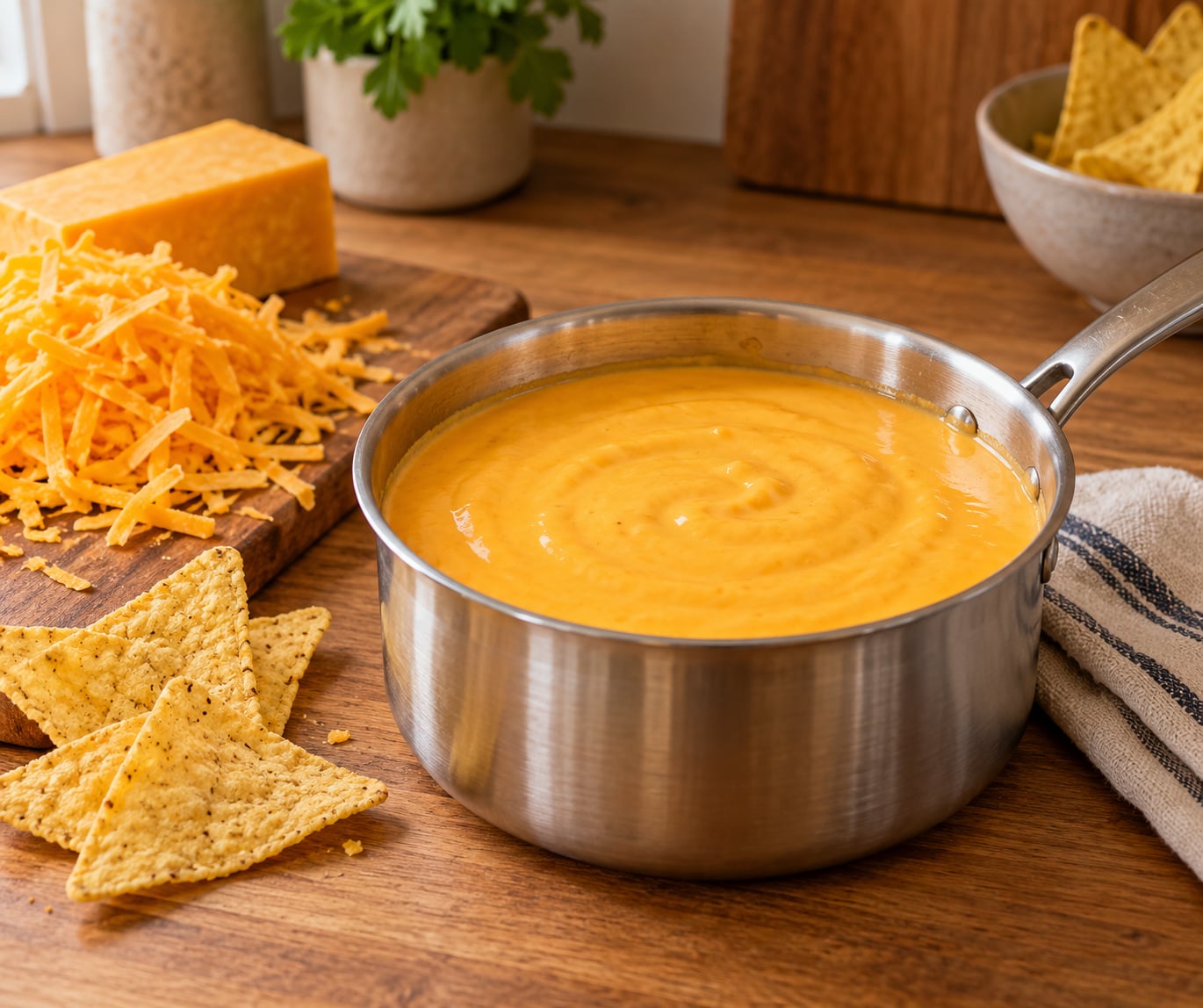
Nacho cheese sauce made from scratch is a seasoned cheese sauce built on a roux of butter and flour whisked with milk, into which freshly grated real cheese is stirred off the heat until smooth, then seasoned with salt and chili powder or cayenne. It takes about ten minutes, costs almost nothing, and pours like the concession stand stuff instead of tasting like it came from a jar.
No Velveeta, no processed cheese, no anti-caking agents. Just butter, flour, milk, and a block of good cheddar, grated yourself. The whole trick is that you never let the cheese meet high heat: the pan does its work, the residual heat finishes the melt, and you get a glossy sauce that coats a spoon instead of seizing into strings.
Table of Contents
- What You Need
- Ingredients
- Which Cheese Melts Best
- Step-by-Step: How to Make Nacho Cheese Sauce From Scratch
- How to Make Nacho Cheese Sauce From Scratch Step 1: Melt the Butter
- How to Make Nacho Cheese Sauce From Scratch Step 2: Make the Roux
- How to Make Nacho Cheese Sauce From Scratch Step 3: Add the Milk and Seasonings
- How to Make Nacho Cheese Sauce From Scratch Step 4: Melt the Cheese Slowly
- How to Make Nacho Cheese Sauce From Scratch Step 5: Finish and Serve
- Common Mistakes
- Grainy or oily sauce
- Lumpy sauce
- Too thin or too thick
- Bland sauce
- How to Fix Nacho Cheese Sauce That Already Turned Grainy or Lumpy
- The 3-Ingredient No-Roux Method for Big Batches
- Make-Ahead, Reheating, and Serving
- Flavor Variations to Try
- Frequently Asked Questions
- What is the best cheese for nacho cheese sauce?
- Can I make nacho cheese sauce without flour?
- Why is my nacho cheese sauce oily?
- How do I keep nacho cheese sauce smooth when reheating?
- Can I make nacho cheese sauce ahead of time?
- How long does homemade nacho cheese sauce last?
- The Bottom Line
What You Need
This recipe makes roughly 1.5 cups of sauce, enough for six people dipping chips or one very serious sheet pan of nachos. Prep time is five minutes, cook time is five minutes.
Ingredients
- 3 tablespoons unsalted butter
- 3 tablespoons all-purpose flour
- 1.5 cups whole milk (2 cups / 480 ml if you like it looser)
- 12 ounces medium cheddar cheese, freshly grated (about 3 cups / 340 g)
- 1/2 teaspoon salt, plus more to taste
- 1/4 teaspoon black pepper
- 1/2 teaspoon chili powder or cayenne pepper, or a combination
- A pinch of garlic powder, optional
The single most important item on that list is the cheese, and the single most important instruction is that it must be grated from a block. Bagged pre-shredded cheese carries an anti-caking agent, usually cellulose or potato flour, and that starch is exactly what turns a sauce gritty. It also melts unevenly because it was treated to survive the bag.
You will also want a box grater or a food processor, a whisk, a medium saucepan, and a spatula for scraping the bottom. That is the whole equipment list.
Which Cheese Melts Best
| Cheese | Melt behavior | Flavor result | Best for |
|---|---|---|---|
| Medium cheddar | Melted smoothly and slowly | Balanced, mildly tangy | The default. Hardest to break |
| Sharp cheddar | Breaks sooner, needs gentler heat | Bolder, more tang | Adult palates and nachos loaded with toppings |
| Monterey Jack | Very smooth, slightly rubbery | Mild, creamy | Blending 50/50 with cheddar for a silkier pour |
| American cheese | Melted perfectly, still emulsified | Glossy, close to restaurant sauce | Stadium style, or thinning a sauce that seized |
| Gruyere or swiss | Good melt with a nutty edge | Complex, grown-up | A cheese-forward variation, not classic nacho |
Sharp cheddar breaks more readily than medium, which surprises people who assume sharper means better. Most recipes get this backwards. If you want a beginner-proof sauce, buy medium; if you want the tang that restaurant nacho cheese has, add a few ounces of sharp to a base of medium rather than using sharp alone.
Step-by-Step: How to Make Nacho Cheese Sauce From Scratch
The method below is the roux method, and it is the one I would reach for every time. It takes five minutes of real work and gives you control over thickness and seasoning. Keep an eye on the pan rather than the clock, because the cues tell you more than any timer.
How to Make Nacho Cheese Sauce From Scratch Step 1: Melt the Butter
Put the butter in a medium saucepan over medium-low heat and let it melt slowly, stirring once in a while with a spatula. You want it melted, not sizzling, and you want it to smell faintly nutty rather than browned.
Scorched butter tastes bitter, and that bitterness shows up in the finished sauce no matter how much cheese you add. Medium-low is the right call here, and it is the hardest habit to build if you are used to cranking the burner to high.
How to Make Nacho Cheese Sauce From Scratch Step 2: Make the Roux
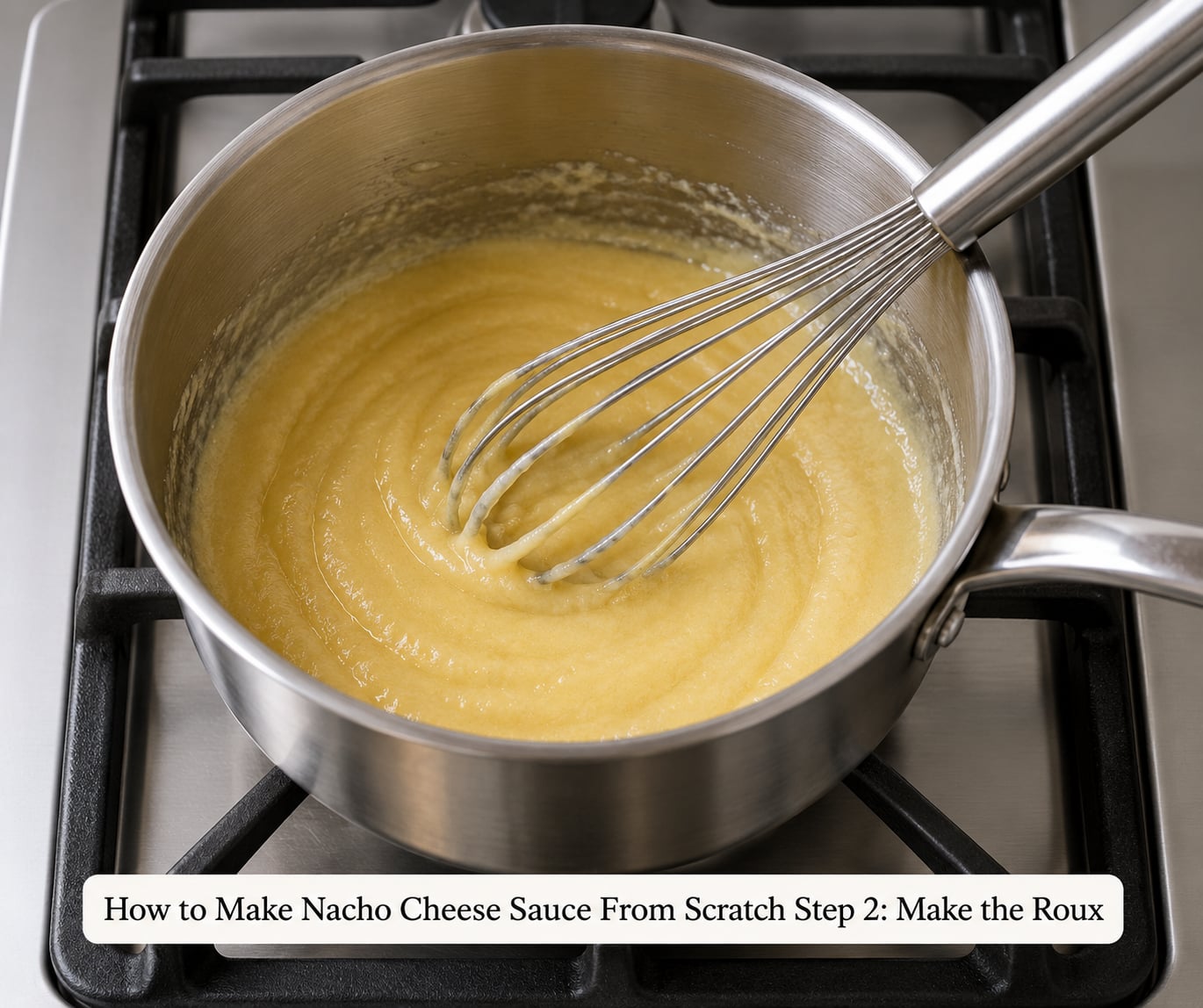
Add the flour to the melted butter and whisk constantly for about 60 seconds. The mixture will foam, then thicken into a paste, and it should turn a pale buttery yellow.
That 60 seconds of toasting is what cooks off the raw flour taste. Stop at blonde. If you brown the roux, you are heading toward a cheese sauce that tastes nutty and heavy, and you cannot un-burn it later. This is the single step people rush, and the single step that most improves the flavor.
Keep the whisk moving right up until the milk goes in. Flour that sits in the butter clumps, and clumps never fully disappear.
How to Make Nacho Cheese Sauce From Scratch Step 3: Add the Milk and Seasonings
Pour in about half the milk and whisk hard until the sauce comes together and smooths out. Then add the rest a little at a time, whisking between each addition, until you have a sauce that looks like thin cream.
Gradual is the whole instruction. Milk added all at once drops the temperature fast enough to make a skin form on the surface, and that skin is where the lumps in lumpy cheese sauce come from.
Season the sauce now, while it is still mild: add the salt, black pepper, chili powder or cayenne, and garlic powder if you are using it. Taste it with a clean spoon. Cheese sauce seasons later than you expect, because the cheese itself carries salt, so season the base slightly under what seems right.
Simmer gently for two to three minutes, stirring, until the sauce just starts to thicken and coats the back of a spoon. Do not boil hard. A hard boil is how the milk proteins break and the sauce turns thin and curdled-looking.
How to Make Nacho Cheese Sauce From Scratch Step 4: Melt the Cheese Slowly
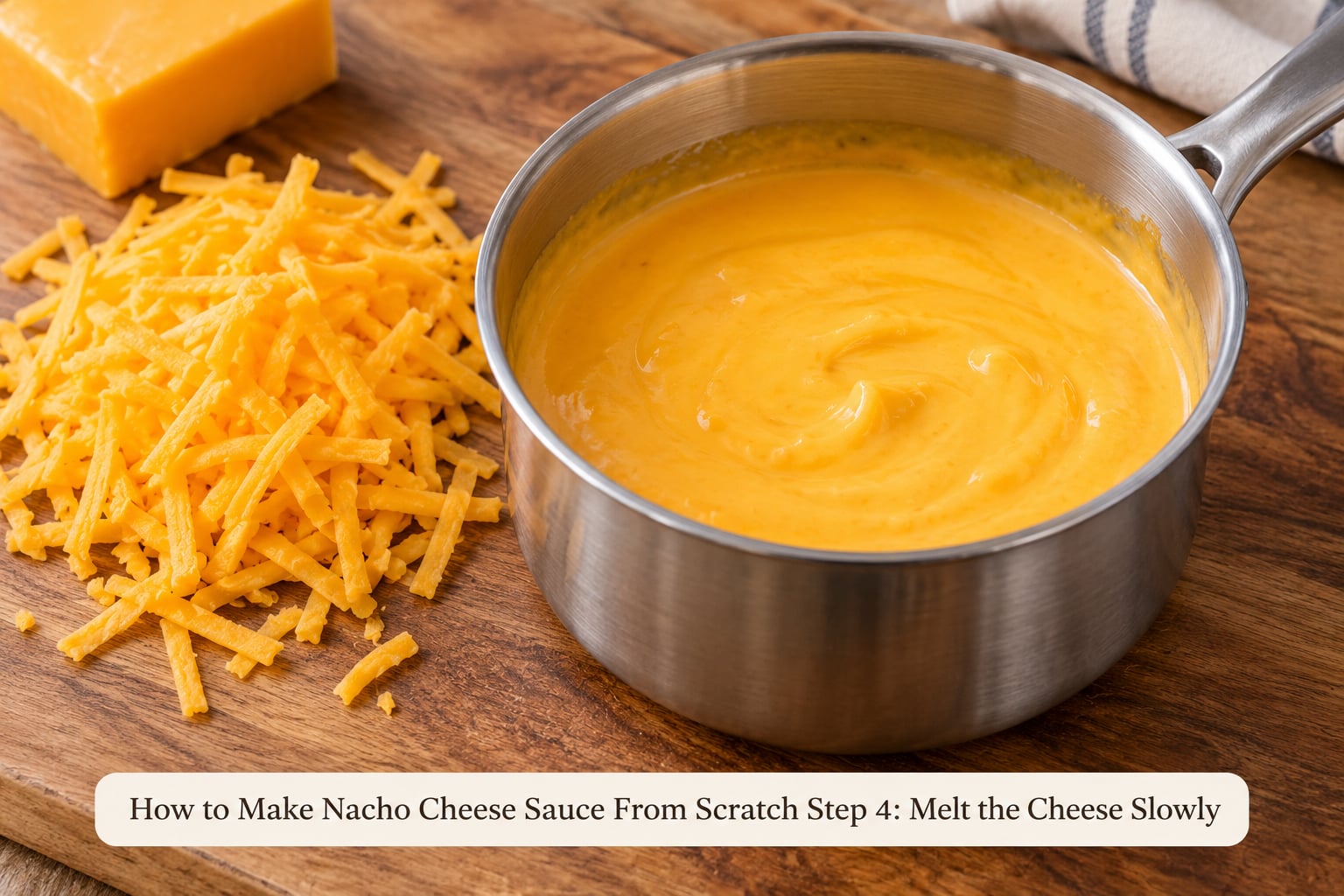
Take the pan off the heat. Wait about 30 seconds, then add the grated cheese one handful at a time, stirring after each addition until it has fully melted before adding the next.
That 30-second pause matters. Straight off a simmer the pan is hot enough to cook the milk proteins, and the cheese proteins tighten and squeeze out the fat, which is the oily sheen and the broken texture. Waiting lets the residual heat do the work instead.
Watch for the moment the last handful disappears and the sauce turns glossy, with no white streaks and a thick enough coat on the spoon that you can drag a line through it. Some residual heat keeps melting the cheese after this point, so if it still looks slightly tacky, give it thirty more seconds on the counter rather than putting it back on the stove.
If it looks thin once the cheese is in, that is normal for a moment. The sauce sets as it cools and the starch finishes thickening. Judge the thickness when it is warm, not boiling.
How to Make Nacho Cheese Sauce From Scratch Step 5: Finish and Serve
Taste again now that the cheese is in, and add salt if it needs it. The cheese brings its own salt, so most people find one more pinch is plenty.
Transfer the sauce to a bowl and serve it right away. It holds its texture for about two hours at room temperature on a snack table before it starts to stiffen, and you can refresh it with a splash of hot milk stirred in.
For extra hold time, warm it gently before serving. Every time you rewarm the sauce, reheat it slowly and never boil it. Boiling is what you are trying to avoid, and it is the reason a perfectly good batch turns gluey in a slow cooker.
Refrigerate any extra sauce in a sealed container for up to 3 to 4 days, per standard dairy leftovers guidance. Reheat in a saucepan over low heat with a tablespoon or two of milk, stirring, until it flows again. Add a little more milk than you think you need; it thickens more as it warms, and loosening is easier than thickening.
Common Mistakes
Most bad nacho cheese sauce traces back to one of five things: heat, cheese choice, starch, seasoning, or impatience. Here is how each one goes wrong and what actually fixes it.
Grainy or oily sauce
Grainy means the cheese proteins seized and expelled fat. The causes are high heat, pre-shredded cheese with its anti-caking starch, or a sharp cheese used alone. A separated oily layer on top of a grainy base is the same problem, and the oil is the fat that was squeezed out of the protein.
Next time: grate your own cheese, take the pan off the burner, and add the cheese in batches. If you are mid-batch and the sauce has already broken, the rescue is in the next section.
Lumpy sauce
Lumps come from two places. A skin forms on the milk when cold milk hits a hot roux all at once, and that skin catches the cheese as it goes in. Flour that was not fully whisked into the butter creates the other kind, heavier lumps that never dissolve.
Start with the roux: whisk it until it is completely smooth before any liquid goes in, and add milk in two or three additions rather than all at once.
Then keep the whisk or a spatula moving from the moment the milk hits the pan. A layer that stops moving for even 20 seconds is a layer that scorches, and scorched milk proteins are exactly the thing that turns a sauce lumpy and gluey.
Too thin or too thick
Thin sauce is usually under-reduced milk, and thick sauce is usually too much cheese relative to milk, or a roux cooked past the point where you needed it. Both are easy fixes. Loosen thin sauce with warm milk a tablespoon at a time. Thicken thick sauce with a slurry: mix 1 teaspoon cornstarch with 1 tablespoon cold water, whisk it into the warm sauce, and simmer gently for a minute.
Do not reach for more flour. Flour added after the cheese makes the sauce taste dusty and it will not dissolve.
Bland sauce
Nacho cheese is a seasoned cheese sauce, not just melted cheddar, and most homemade versions are undersalted and underspiced. Restaurant nacho cheese is noticeably tangier than the homemade default, which is usually why it disappoints people at home.
Fix it at the end with salt, a pinch more cayenne, and a squeeze of lime. A spoonful of pickled jalapeno brine also sharpens the flavor fast, and it is the trick that gets you closest to the fast-food version.
How to Fix Nacho Cheese Sauce That Already Turned Grainy or Lumpy
Yes, a broken batch can usually be saved. Pour the sauce back into the saucepan and warm it gently, stirring, just until you see fat separating at the edges. Remove it from the heat and whisk in 3 to 4 ounces of cold milk or half-and-half; the added liquid re-emulsifies the separated fat and loosens the clumps.
Whisk hard for a full minute, then warm it over low heat, stirring, without letting it boil. If it is still grainy, strain it through a fine mesh sieve; you will lose a little volume and keep the smooth sauce.
If the flavor is now thin from all the added milk, finish it with a pinch of salt and a small splash of evaporated milk for body, and use it on nachos where toppings carry some of the load.
The 3-Ingredient No-Roux Method for Big Batches
There is a second way to make nacho cheese sauce, and it is the one that scales best for a party. It uses just three ingredients: 16 ounces of freshly grated cheddar, 24 ounces of evaporated milk, and 2 tablespoons of cornstarch, plus a tablespoon of hot sauce. It is closer to the stadium concession style, thicker and glossier out of the gate, and it stays smooth longer as it sits.
Warm the evaporated milk in a saucepan over medium heat, then whisk in the cornstarch. Add the cheese a handful at a time and stir until smooth, then stir in the hot sauce. Keep it on the heat until it thickens enough to coat a spoon, then take it off and let it rest for 5 to 10 minutes; it firms considerably as it settles.
Which method should you use? The roux method gives you the most control over flavor, seasoning, and thickness, and it is the one to learn. The evaporated milk method is faster, scales to 20 servings without breaking, and is naturally gluten-free since there is no flour. Pick the roux for a small batch on game day, and the evaporated milk method when you are feeding a crowd.
Make-Ahead, Reheating, and Serving
For a party, make the sauce an hour or two ahead and hold it in the smallest pot you have, stirring occasionally. Small pots lose heat more slowly, and a sauce held warm for hours is one held close to its thickening temperature, which is where it behaves best. Cover it to slow evaporation.
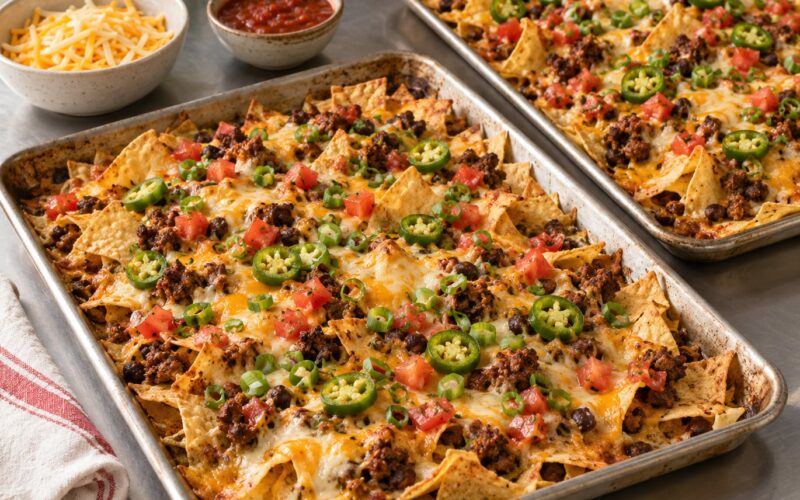
Serving ideas that go beyond a bowl of chips: pour it over a sheet pan of tortilla chips and run it under the broiler for two minutes, add pickled jalapeños and a pickled onion if you like heat, or spoon it over loaded tots, French fries, soft pretzel bites, or a chopped cheeseburger on a patty bun.
It also makes a fine sauce for sheet pan nachos, chicken nachos, and a dip for game day, paired with wings. For a thicker dip that holds a chip upright, chill the finished sauce for 30 minutes before serving; it firms noticeably.
Flavor Variations to Try
Once the base method is automatic, change one thing at a time. Add a teaspoon of smoked paprika and a pinch of cumin for a smoky profile, or stir in half a cup of drained Rotel for a chunky, tomato-bright version that works especially well over loaded tots. A tablespoon of jalapeno brine makes it sharp and tangy without extra heat, and a scoop of prepared salsa stirred in at the end loosens the sauce and gives it a fresh note.
For the beer-cheese style served in Wisconsin, swap in a 50/50 blend of cheddar and Monterey Jack, add a teaspoon of Dijon mustard, and keep the heat as low as possible. For a chipotle version, blend in a tablespoon of chipotle in adobo with the milk. A spoonful of Buffalo wing sauce in place of some of the hot sauce makes a buffalo dip that is genuinely good over celery and pretzel rods.
Frequently Asked Questions
What is the best cheese for nacho cheese sauce?
Medium cheddar is the safest choice because it melts slowly and resists breaking, which is why most restaurant nacho cheese is cheddar forward. Sharp cheddar has more tang but seizes more easily, so the best approach is a block of medium cheddar with a few ounces of sharp mixed in. Monterey Jack melted with cheddar gives a silkier, less crumbly sauce, and a slice of American cheese stirred in at the end will rescue a sauce that has already broken.
Can I make nacho cheese sauce without flour?
Yes, and the popular three-ingredient version uses evaporated milk and cornstarch instead of a butter and flour roux. Warm 24 ounces of evaporated milk, whisk in 2 tablespoons of cornstarch, then add 16 ounces of freshly grated cheddar a handful at a time until smooth. The result is thicker, glossier, gluten-free, and it holds its texture on a snack table for much longer than a roux-based sauce.
Why is my nacho cheese sauce oily?
An oily sheen usually means the cheese proteins tightened and squeezed out their fat, which happens when the cheese hits a pan that is too hot or when the sauce boiled. Pre-shredded bagged cheese makes it worse, because the anti-caking agent interferes with how the proteins melt. The fix is to grate your own cheese and add it in handfuls after taking the pan off the heat, letting residual heat finish the melt.
How do I keep nacho cheese sauce smooth when reheating?
Reheat slowly over low heat and stir often, adding a tablespoon or two of milk to loosen it as you go. Do not boil it, and do not use a microwave on high, because both push the sauce to the temperature where proteins seize. Warm it only until it flows, since it thickens as it heats. If it has already broken, whisk in cold milk off the heat before warming it again.
Can I make nacho cheese sauce ahead of time?
Yes, and for game day it is better made ahead than at the last minute. Make it up to a day early and refrigerate it covered for up to 3 to 4 days. Reheat in a saucepan over low heat with a splash of milk, stirring, and stop as soon as it flows. For a party, hold the warm sauce in the smallest pot you have over the lowest heat, stirring now and then so it never sits at a hard boil.
How long does homemade nacho cheese sauce last?
Refrigerated in a sealed container, homemade cheese sauce keeps for 3 to 4 days, which matches standard guidance for dairy-based leftovers. On a snack table at room temperature, treat it as a 2-hour item and discard it after that, sooner if the room is hot. If it sits out longer, give it a smell check: any sour or off note means it is done, regardless of how it looks.
The Bottom Line
Start by grating your own medium cheddar and measuring everything before the heat goes on. That is the whole difference between a smooth sauce and a grainy one. If you only remember one step, remember this: take the pan off the burner before the cheese goes in.