The short version of why do restaurant wings taste better than homemade is heat, timing and holding, not a secret ingredient. Restaurants fry twice in a big vat of constantly replaced oil that stays between 350 and 385F, sauce in a 1:1 blend of melted butter and hot sauce, and keep the finished wings crisp in a warm cabinet until someone orders them. A home pan rarely holds that heat for more than a minute.
I spent a long time blaming my own cooking before I admitted the fryer was the problem. Once I started measuring the oil with a thermometer instead of guessing, the gap closed a lot faster than I expected.
Here is what actually happens in a restaurant kitchen, and which parts of it you can copy with a skillet, a thermometer and about fifteen minutes.
Table of Contents
- What Makes Restaurant Wings Taste Better?
- Why Do Restaurant Wings Taste Better Than Homemade?
- How Wings Become Crisp and Juicy
- Why Seasoning and Sauce Taste More Intense
- How Professional Equipment Changes the Results
- 9 Differences You Can Reproduce at Home
- Restaurant-Style Wing Methods: Which Should You Use?
- Food Safety for Homemade Chicken Wings
- Frequently Asked Questions
- What secret ingredient makes restaurant wings taste better?
- Are restaurant wings always deep-fried?
- Should I brine chicken wings before cooking?
- Why are my homemade wings soggy after saucing?
- How do I keep cooked wings crisp until serving?
- Can I reheat restaurant-style wings?
- Conclusion
What Makes Restaurant Wings Taste Better?
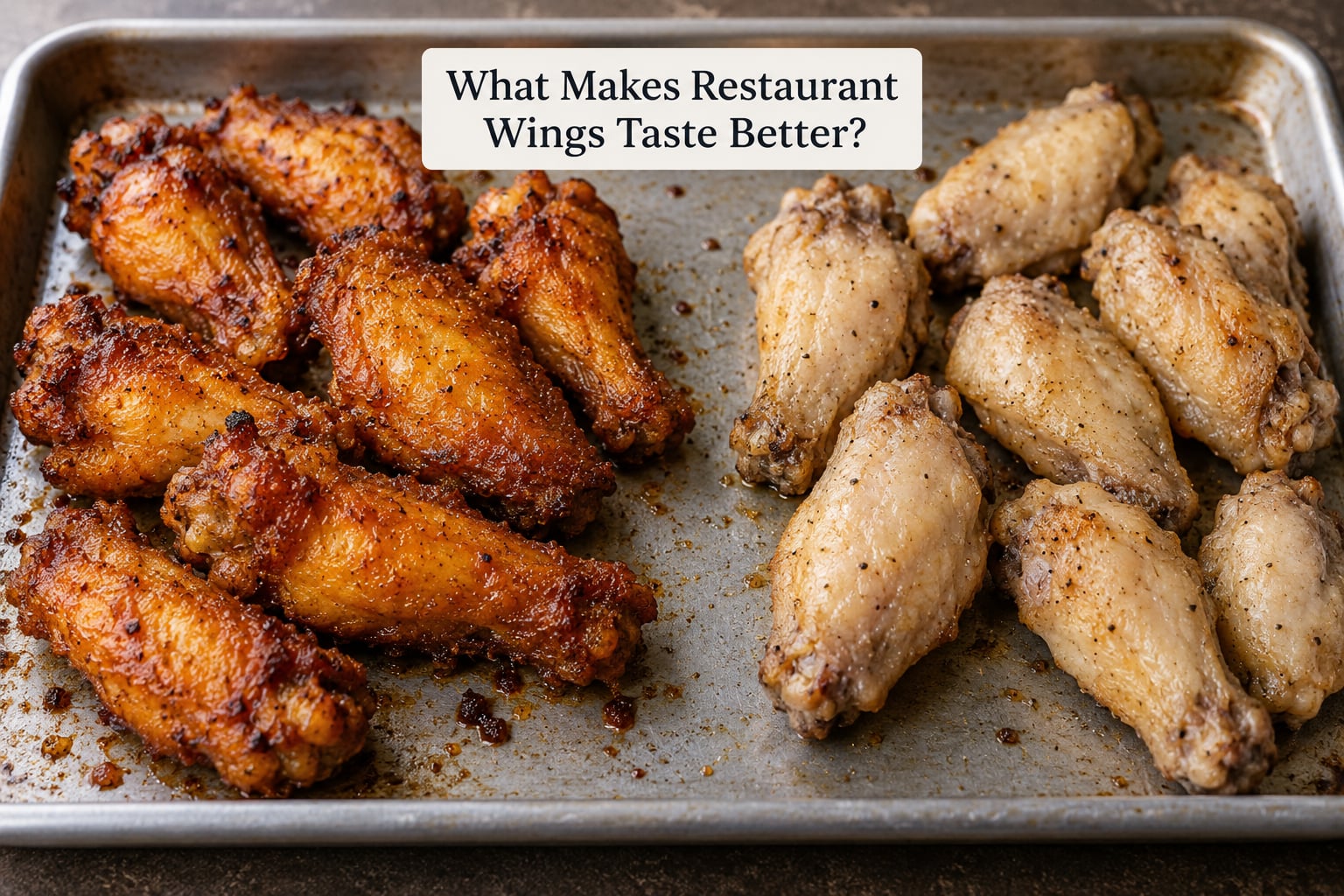
Five things separate the two, and none of them is a branded spice blend.
Preparation. Restaurants break wings down or buy them pre-trimmed, brine a portion of them, and pat everything dry before it ever touches oil. Wet skin fries, it steams.
Seasoning. Salt goes on in layers at two or three different points, not once at the end.
Frying conditions. A large body of oil with a burner that recovers fast, held within a narrow temperature band.
Sauce application. Wings get tossed in sauce while they are still hot enough to melt it, usually right before the order leaves the pass.
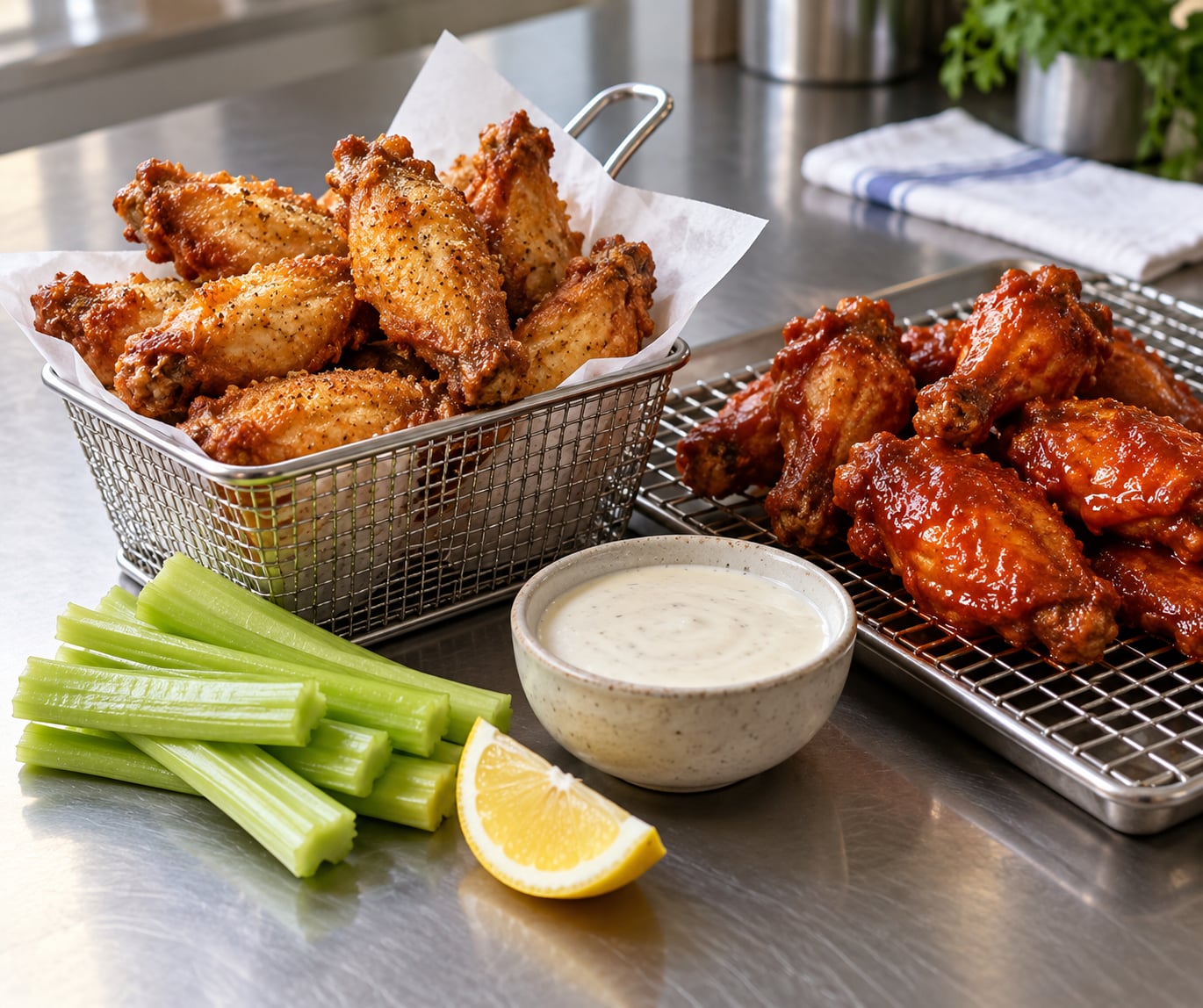
What happens after cooking. Finished wings sit in a hot, dry cabinet rather than a pile on a damp plate, which is the single biggest reason they still crunch when they reach your table.
Why Do Restaurant Wings Taste Better Than Homemade?
It comes down to texture first and seasoning second. Texture is what your tongue registers as restaurant quality, and texture is mostly a physics problem: water on the surface turns into steam, steam softens skin, and softened skin never gets crisp again. A restaurant removes nearly all that surface water and keeps the crust dry for twenty minutes before it touches sauce.
How Wings Become Crisp and Juicy
Start with moisture. Pat wings dry with paper towels, then leave them uncovered in the fridge for a few hours if you have time. Skin that has been sitting in the cold air loses surface water, and less water means faster browning.
Brine if you want. A dry brine of salt, pepper and whatever seasoning you like, applied and left for four hours in the fridge, seasons all the way through the meat and seasons the skin from the inside out. A wet brine in salt water works too, and adds juiciness, though you need to dry the wings thoroughly afterwards or they will steam.
Then heat. The Maillard reaction is what you want, the browning between amino acids and sugars that starts around 320F and runs fast above 350F. Below that range the wing soaks and the skin goes leathery. Above it too long and the meat dries out.
Cook to 165F inside the thickest part. Wings are small and forgiving, so an instant-read thermometer takes the guesswork out of it entirely.
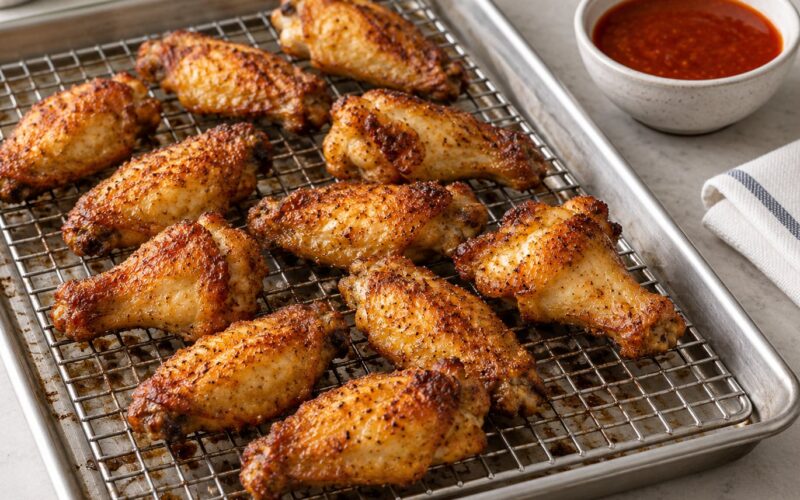
Finally, drain them on a rack over a tray, not on paper towels in a bowl. A rack lets steam escape upward instead of pooling underneath and re-softening the crust.
Why Seasoning and Sauce Taste More Intense
Salt applied once, at the end, mostly sits on the surface. Salt applied before cooking seasons the meat itself, which is why restaurant wings taste seasoned all the way to the bone rather than only on the skin.
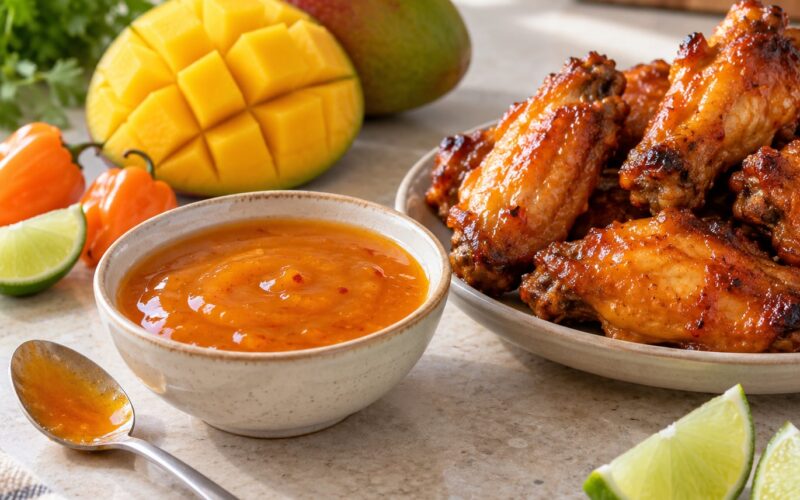
Sauce is the other half. The classic Buffalo ratio is one part hot sauce to one part melted butter, by volume. Bottled hot sauce alone is sharp and thin; the butter carries fat-soluble flavor, rounds the vinegar edge and gives the sauce something to cling with. Restaurants pour that mixture over hot wings and toss immediately, so the fat coats the skin evenly instead of sliding off.
Garlic parmesan and other dry-style sauces work by a different route. They go on after frying while the surface still has a little oil on it, so the granular coating sticks instead of dusting off.
How Professional Equipment Changes the Results
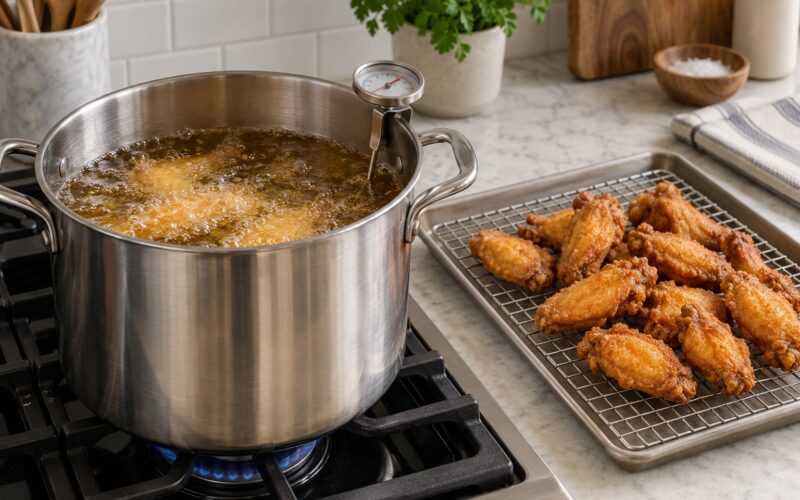
A commercial fryer holds far more oil than a home pan and has a burner sized to recover the heat loss within seconds. Drop a full basket in and the oil barely notices. Drop a dozen wings into a home skillet and the temperature can fall 40 to 50F, which means the wings sit in oil that is now poaching them instead of frying them.
Restaurants also filter and turn over oil daily. Home oil darkens and turns bitter after a couple of batches, and bitter oil coats everything, including the wings.
I am not going to tell you a home pan can match a commercial fryer. It cannot. But it can get close if you fry six pieces at a time instead of twelve, use enough oil that the wings float freely, and check the temperature before every batch rather than once at the start.
9 Differences You Can Reproduce at Home
1. Dry brine overnight. Salt, pepper and any seasoning you like, left uncovered in the fridge four hours or longer. Season the meat, not just the skin.
2. Dry the skin properly. Paper towels, then an uncovered rest. Frozen wings hold a surprising amount of surface ice and need this step more than fresh ones.
3. Season before cooking, not after. Most of the seasoning should go on before the wings meet oil. A light finishing salt after frying is still fine.
4. Use a thermometer. This is the one that changes everything. Aim for 350 to 365F on the first fry, 375 to 385F on the second.
5. Fry in smaller batches. Six at a time in a home skillet keeps the temperature where you set it. A crowded pan cooks wings in steam.
6. Use a high smoke point oil. Peanut, canola, sunflower or vegetable. Avoid olive oil, which has a low smoke point and will taste bitter before the wings brown.
7. Drain on a rack in one layer. A pile of wings traps steam and steams the bottom of the pile.
8. Fry twice. First fry at 350 to 365F for eight to ten minutes until the skin is set and pale gold. Rest ten minutes. Second fry at 375 to 385F for two to three minutes until deeply golden. That rest and second blast is where the crunch comes from.
9. Sauce at the last second. Toss wings in sauce right before they go to the table, not while they are draining, not ten minutes before guests eat.
A home cook on r/foodquestions described doing the double dredge, resting the coating and adjusting the oil temperature correctly, and still losing the crunch after a few minutes. That is not a technique failure. It is the holding problem, and the fix is a single layer on a warm rack rather than a bowl.
Restaurant-Style Wing Methods: Which Should You Use?
| Method | Crispness | Effort | Equipment | Best For |
|---|---|---|---|---|
| Double-fried in oil | Highest, closest to a restaurant | Medium | Thermometer, heavy pot or skillet, rack | Game day when crispness matters most |
| Single fry | Good but softer skin | Low | Same as above | Weeknight batches where you want less work |
| Air fryer | Very good, less even on a large batch | Low | Air fryer | Small quantities and low-oil cooking |
| Oven baked | Moderate, needs a rack and a hot pan | Low | Oven, wire rack, sheet pan | Crisp skin without deep-frying |
| Rotisserie or grill | Smoky, not crispy | Medium | Grill or rotisserie | Flavour-forward wings for a crowd |
If the goal is the restaurant experience, double frying wins. Everything else trades crispness for less work or less oil.
Never cover wings in the oven. Trapping steam keeps the skin soft. Bake uncovered on a preheated rack at 425F, and leave the door cracked if you have convection.
Boneless wings are breast meat shaped and battered, which is why they cook faster, crisp differently and go dry easily. They are not a fair comparison to a flat with flats.
Food Safety for Homemade Chicken Wings
Raw poultry carries bacteria, so handle it carefully. Wash your hands after touching raw wings, and keep raw wings and their packaging away from salad, fruit and cooked food.
Cook to 165F in the thickest part and confirm it with a thermometer, not a pop or a guess. Take wings off the heat at 165F or a touch above, since carryover cooking adds a little.
Get cooked wings into the fridge within two hours, and store them in a sealed container in the coldest part of the fridge for three to four days. Freeze them in portions if you need longer; they keep well for about three months.
When reheating, use a 400F oven or air fryer rather than a microwave. Microwave heat is mostly water turning to steam, which is exactly the thing that ruins a crisp crust.
Frequently Asked Questions
What secret ingredient makes restaurant wings taste better?
There is not one. The difference comes from double frying, a large volume of constantly filtered oil held at a steady temperature, layered salting, a 1:1 butter to hot sauce ratio, and hot holding. If your wings taste flat at home, the cause is usually a pan that lost heat or sauce applied too early, not a missing spice.
Are restaurant wings always deep-fried?
No. Chains run everything from double-fried traditional wings to air-fried and oven-finished versions, and some places serve grilled or rotisserie wings as a separate menu item. The ones people picture as crunchiest are deep-fried, usually twice, which is why the skin shatters instead of going chewy.
Should I brine chicken wings before cooking?
Yes, it helps, and it takes almost no effort. Salt the wings, refrigerate uncovered for four hours or overnight, then pat them completely dry before frying. The salt seasons the meat and firms up the protein, while the drying step is what stops the skin from steaming. Skip the brine if you are short on time and salt them just before cooking instead.
Why are my homemade wings soggy after saucing?
Sauce applied too early puts moisture back into a crust that just went crisp, and a pile of wings traps steam on top of that. Toss sauce in at the last possible second, spread the wings in a single layer, and use a rack rather than a bowl. If you need to hold them for a while, hold them warm and uncovered rather than sauced.
How do I keep cooked wings crisp until serving?
Keep them in a single layer on a rack over a sheet pan so air moves around them and steam escapes. A warm oven around 200F works as a short-term hold. The two things to avoid are piling the wings up and covering them, because trapped steam softens the skin within a few minutes.
Can I reheat restaurant-style wings?
Yes, and an oven or air fryer restores most of the crunch. Put them at 400F for eight to ten minutes, turning once, until the skin is hot and the meat is heated through. Avoid the microwave unless you plan to eat them straight from it, since the microwave will leave them soft.
Conclusion
Change four things and you will close most of the gap. Salt the wings hours ahead and dry the skin, fry in batches of six at 350 to 365F then again at 375 to 385F, drain them in one layer on a rack, and toss them in a 1:1 butter and hot sauce mixture right before they hit the table.
Worth saying plainly: a r/FoodPorn poster had homemade wings beat a local pub, and plenty of people would rather have a tender fast-food style wing than a shatteringly crisp one. You are not chasing something you cannot have. Most of the gap is a thermometer and some patience.