Ribs are done when the connective tissue has turned to gelatin, which usually happens somewhere between 195°F and 203°F (90–95°C) internally, and when the rack passes the bend test. Check the temperature first, confirm it with the bend test, then rest the ribs 10 to 20 minutes before slicing.
That is the honest answer, and it is also where the arguments start. Pitmasters on BBQ Brethren and TVWBB have argued for years about whether temperature tells you anything useful on ribs at all. Both sides are half right, which is the whole point of this guide.
Before the tests, here is the short version most people are looking for:
- Internal temperature hits 195–203°F (90–95°C) in the thickest meat between the bones
- The rack bends easily when lifted with tongs and the bark cracks on the inside of the curve
- The meat pulls back from the bone by about a quarter inch
- A probe slides between the bones into the meat with no resistance
- Bones wiggle independently when you grip the rack with your hands
- Jus runs clear when you lift a rib, and the surface stops looking wet and glossy
Two or three of those together beat any single one. Temperature alone is the weakest of the group on ribs, and the reason is physical rather than philosophical.
Table of Contents
- What You Need
- Step-by-Step: How to Tell When Ribs Are Done
- How to Tell When Ribs Are Done With a Thermometer
- Test the Bend
- Check the Texture and Pull
- Rest Before Serving
- Common Mistakes
- Frequently Asked Questions
- What temperature are ribs done at?
- How do you know ribs are tender without cutting them?
- Should ribs bend or fall apart when they are done?
- Can ribs be overcooked and still be safe to eat?
- How long should ribs rest before serving?
- Do baby back ribs and spare ribs have the same cooking time?
- Conclusion
What You Need
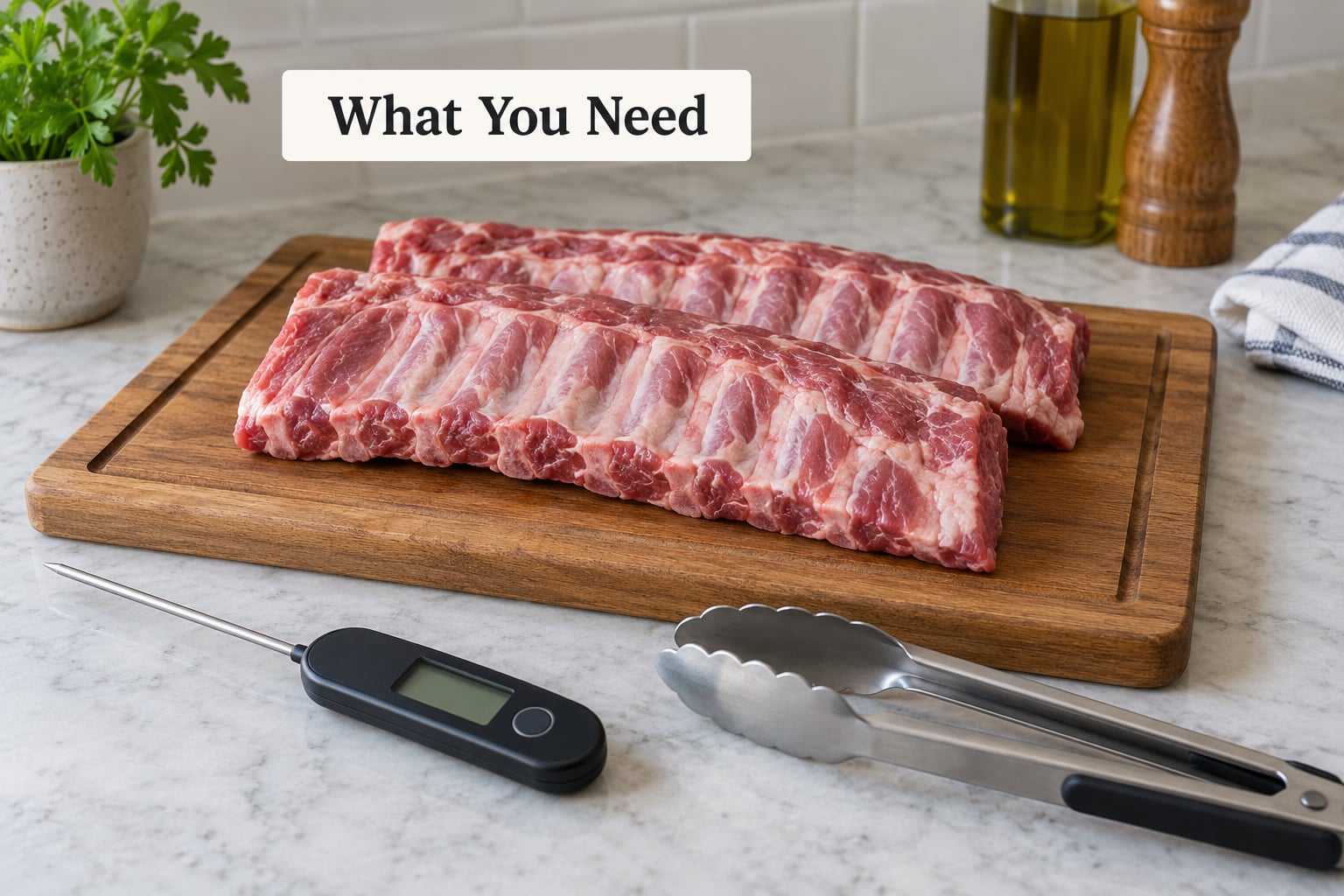
You do not need a rack of specialty gear. You need an instant-read thermometer, a pair of tongs, heatproof gloves, a cutting board, and a foil or butcher paper sheet for handling the rack when it comes off the heat.
The thermometer matters more on ribs than it does on a steak, which sounds backwards until you look at a rack. There is not much meat between the bones, so the probe touches bone, reads low, then you move it an inch and read high. Cooks on every major forum complain about exactly this, and it is the single biggest reason the bend test exists.
Tongs matter because the bend test is done with tongs. Your bare hands cannot judge the curve of a hot rack honestly. Gloves matter because you will be lifting meat at 400°F off a grate.
Rib type changes the target, too. A rack of baby backs is thin and finishes earlier than a St. Louis cut, and beef ribs carry more connective tissue than pork. Keep those differences in the back of your mind until the temperature section.
Step-by-Step: How to Tell When Ribs Are Done
How to Tell When Ribs Are Done With a Thermometer
Insert the instant-read probe into the thickest part of the meat between two bones, from the back side, and avoid touching bone with the tip. A reading taken against bone runs low and can fool you into waiting another hour.
Take three readings: one near the thick center, one toward each end, and use the highest one. The thin meat near the tips cooks long before the center does, so the center is the number that decides dinner. Readings across one rack can vary 10°F or more, which is normal and not a sign of a bad thermometer.
| Rib type | Tender range (competition pull) | Tender range (fall-off-the-bone) |
|---|---|---|
| Baby back ribs | 185–190°F (85–88°C) | 195–202°F (90–94°C) |
| Spare ribs | 190–195°F (88–90°C) | 200–205°F (93–96°C) |
| St. Louis cut ribs | 190–195°F (88–90°C) | 200–205°F (93–96°C) |
| Country style ribs | 195–200°F (90–93°C) | 205–210°F (96–99°C) |
| Beef back ribs | 195–200°F (90–93°C) | 205–210°F (96–99°C) |
Carryover cooking adds another 5°F or so while the rack sits, so pull at the bottom of your range rather than the top if you plan to hold the ribs wrapped.
USDA guidance for whole cuts of pork is 145°F (63°C) with a three-minute rest. That is the safe-to-eat line, not the tender line. Ribs have enough collagen that 145°F still means tough, and a little pink near the bone at 195°F is usually connective tissue that has not converted, not undercooking.
Test the Bend
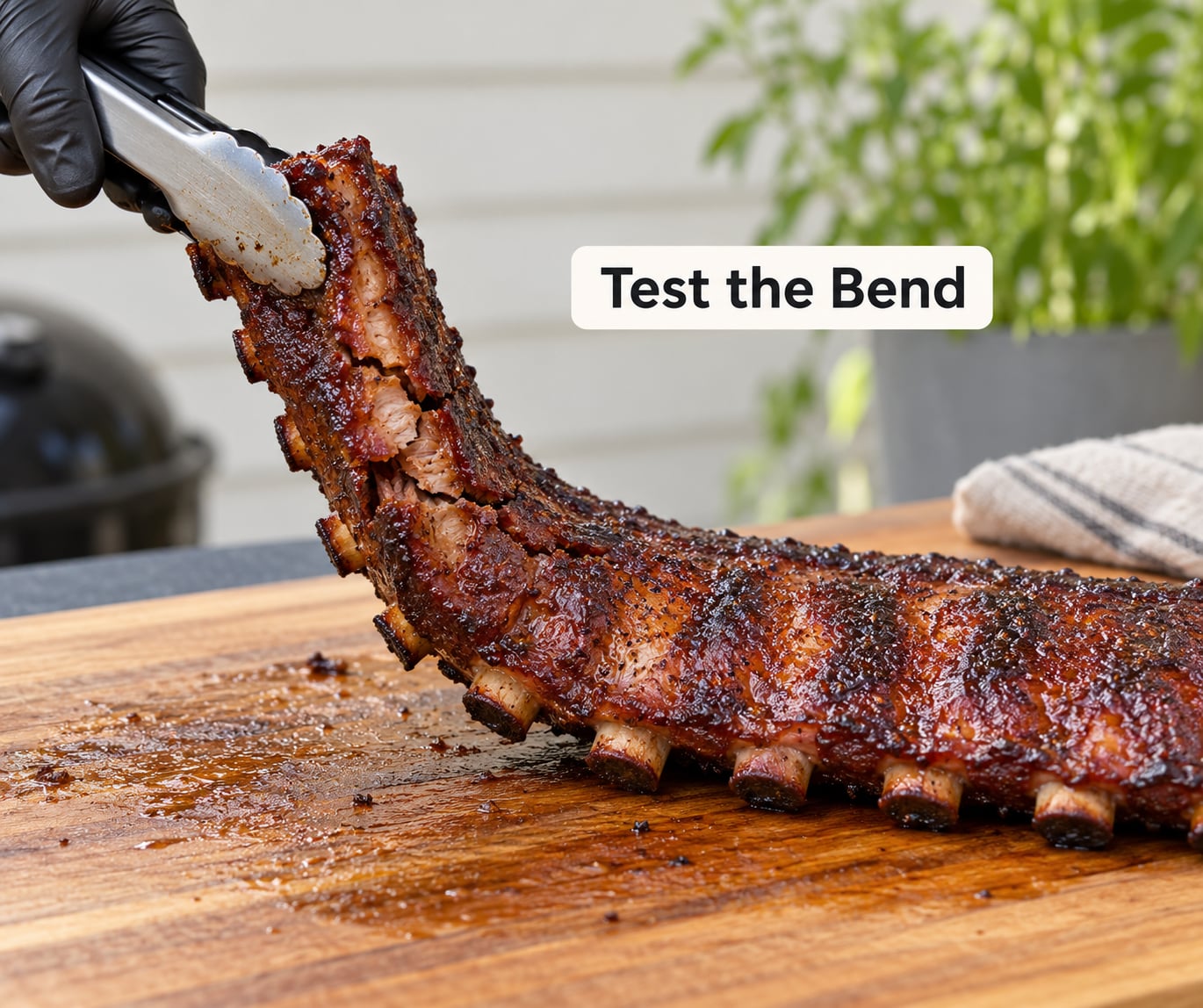
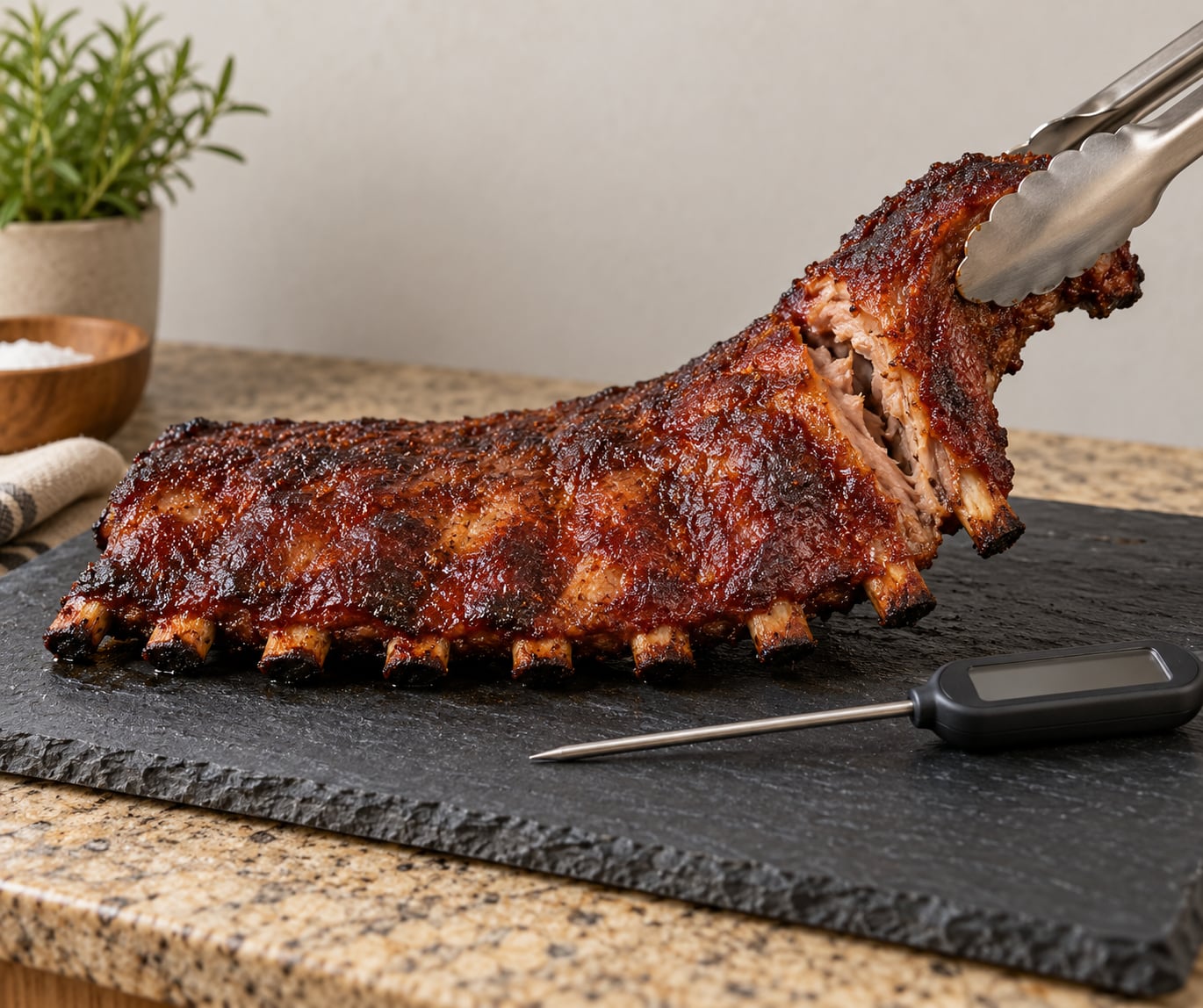
Grab one end of the rack with tongs and lift it while the other end stays on the grate. A done rack folds into a smooth curve without resistance, the meat cracks rather than snaps, and the bark splits along the inside of the bend.
A rack that is not there yet stays stiff or barely tilts. It bends maybe fifteen degrees and stops, like a plank of wood. That is a clear fail, and it means more time, not more heat.
A rack that has gone too far comes apart in the tongs. The ribs slide off the bones as you lift, the meat shreds, and slicing becomes scooping. Experienced cooks aim for tender with a little bite or pull, not mushy and sliding off the bone. SmokeyGood puts it plainly: tender but still with good texture.
Check the Texture and Pull
Slide a thin probe or a sturdy toothpick between the bones and into the meat. On a finished rack it goes in with almost no drag and comes out clean. Resistance means the collagen is still intact, so keep cooking.
Now look at the bone. The meat should have pulled back roughly a quarter inch, exposing that much bone at the tip, and the bones should wiggle independently when you grip the rack with both hands. If the bones move as one rigid unit, the rack is not there yet.
Decide what texture you are aiming for before you cook, because the target temperature moves. Competition style pulls at 185–190°F with visible pull and a clean bite. Fall-off-the-bone home style runs hotter and softer. TVWBB regulars have been pulling in that lower band for years and getting excellent results.
Rest Before Serving
Rest the wrapped rack 10 to 20 minutes after it comes off the heat. Resting lets carryover cooking finish the interior and keeps the juice in the meat instead of on your cutting board.
After the rest, run the bend test one more time before you slice between the bones. Ribs that read perfect straight off the smoker can tighten slightly during a long rest, and a quick second check costs you ten seconds.
Common Mistakes
Trusting the clock. Cooking time is a guess built on other people’s racks, which average thinner than yours. Start checking at hour three on a smoke and check every twenty minutes after that.
Probing through bone or in the thin ends. Both give you false readings. Push into the center meat between the bones and take three readings across the rack.
Testing before the fat has rendered. The bend test lies on unrendered ribs because the fat holds the meat stiff. If your bark is pale and greasy rather than dark and dry-looking, give it another 30 minutes before you judge anything.
Cooking past the pull point. Holding ribs in foil too long braises them into mush. If you want fall-off-the-bone texture, unwrap for the last stretch and glaze, then check the bend test instead of the clock.
Skipping the rest. Slicing straight off the grate bleeds the rack dry and gives you a drier result than the cook deserves.
Overcrowding the cooker. Too many racks create cold spots, and the rack nearest the door or the top shelf can trail the others by an hour. One Pitmaster Club thread reports a rack held between 225°F and 235°F that did not show its first bend-test crack until six and a half hours. If the rack next to yours is bending and yours is not, check your grate thermometer before you blame the wood.
Pulled too early? Wrap the ribs back up, put them in a 300°F (149°C) oven, and check every 20 minutes. They will finish.
Frequently Asked Questions
What temperature are ribs done at?
Pork ribs are tender at 195-203F (90-95C), with baby backs finishing nearer 195-202F and spare or St. Louis cuts nearer 200-205F. Beef ribs run hotter, around 205-210F. USDA lists 145F (63C) as the safe minimum for whole cuts, but ribs contain enough collagen that they stay tough well past that point, so use temperature as a guide and confirm with the bend test.
How do you know ribs are tender without cutting them?
Lift one end of the rack with tongs while the other end rests on the grate. Done ribs fold into a smooth curve and the bark cracks along the inside of the bend. Also slide a probe between the bones, which should meet almost no resistance, and check for a quarter inch of pullback at the bone tips. You get the same information without sacrificing a rib.
Should ribs bend or fall apart when they are done?
They should bend, not fall apart. A finished rack curves easily in the tongs, cracks at the surface, and still holds together when you lift it. If the ribs slide off the bone or shred in your hands, you have gone past the pull point. Fall-off-the-bone texture takes more heat, but it turns tender ribs into mushy ones that cannot be sliced cleanly.
Can ribs be overcooked and still be safe to eat?
Yes. Overcooked ribs stay perfectly safe because they have long passed the 145F (63C) safe minimum for whole cuts of pork. The problem is texture rather than safety: the meat turns dry, mushy, and impossible to slice, and the bark goes bitter if it burns. Serve ribs that hit 195-203F and rest them before cutting.
How long should ribs rest before serving?
Rest them 10 to 20 minutes. Wrap the rack in foil or butcher paper and set it somewhere warm, since carryover cooking will push the internal temperature up another 5F or so during that window. Resting keeps the juice in the meat instead of running out onto the board. Run the bend test once more after the rest, then slice between the bones.
Do baby back ribs and spare ribs have the same cooking time?
No. Baby backs are thin and lean, so they usually finish in 3 to 4 hours at 225F (107C), while spare and St. Louis cuts run 4 to 6 hours because of the heavier meat and more connective tissue. Beef ribs take longer still. Use the temperature range for your cut, then confirm with the bend test rather than trusting the clock.
Conclusion
Knowing how to tell when ribs are done comes down to a sequence, not a single number. Probe the thickest meat between the bones and take the highest of three readings, aim for 195–203°F (90–95°C) for pork and 205–210°F (96–99°C) for beef, then confirm with the bend test and a quarter inch of pullback.
When the rack curves in the tongs and cracks but still holds together, wrap it and rest it 10 to 20 minutes. Slice between the bones, and if you pulled early by mistake, finish it in a 300°F (149°C) oven rather than serving it tough. That is the plan most pitmasters run on every cook, and it works as well on the fiftieth rack as on the first.