Learning how to smoke chicken wings on a pellet grill comes down to two temperatures, not one. You smoke low at 225°F for 30 to 40 minutes to build smoke flavor, then crank the grill to 350–400°F and finish the wings until the skin renders and browns. A whole batch takes about an hour and a half, and the only tool that really matters is an instant-read thermometer.
That is the version that works, and it is the version most recipes bury under a wall of text. The smoke phase is short on purpose. Poultry drinks in wood flavor faster than pork or brisket does, so a long low-and-slow cook gives you wings that taste like an ashtray before the skin ever gets a chance to crisp.
Below is the method I use, broken into steps, followed by the mistakes that ruin wings most often and how to fix each one.
Table of Contents
- What You Need
- Step-by-Step: How to Smoke Chicken Wings on a Pellet Grill
- 1. Preheat the Pellet Grill and Arrange the Wings
- 2. Smoke the Wings Until They Near the Target Temperature
- 3. Increase the Heat and Crisp the Skin
- 4. Check Doneness and Rest the Wings
- 5. Sauce and Serve
- Common Mistakes and How to Fix Them
- The skin peels or slides off
- Skin is crispy underneath and rubbery on top
- Drippings cause flare-ups
- The meat is dry
- It tastes like an ashtray
- The sauce burns
- The grate is overcrowded
- The wings go soft before serving
- Frequently Asked Questions
- What temperature should I smoke chicken wings on a pellet grill?
- How long does it take to smoke chicken wings on a pellet grill?
- Do you smoke wings at 225F or 250F?
- How do I keep pellet-grilled wings from drying out?
- Should I sauce wings before or after smoking them?
- How do I get crispy skin when using a pellet grill?
- Conclusion
What You Need
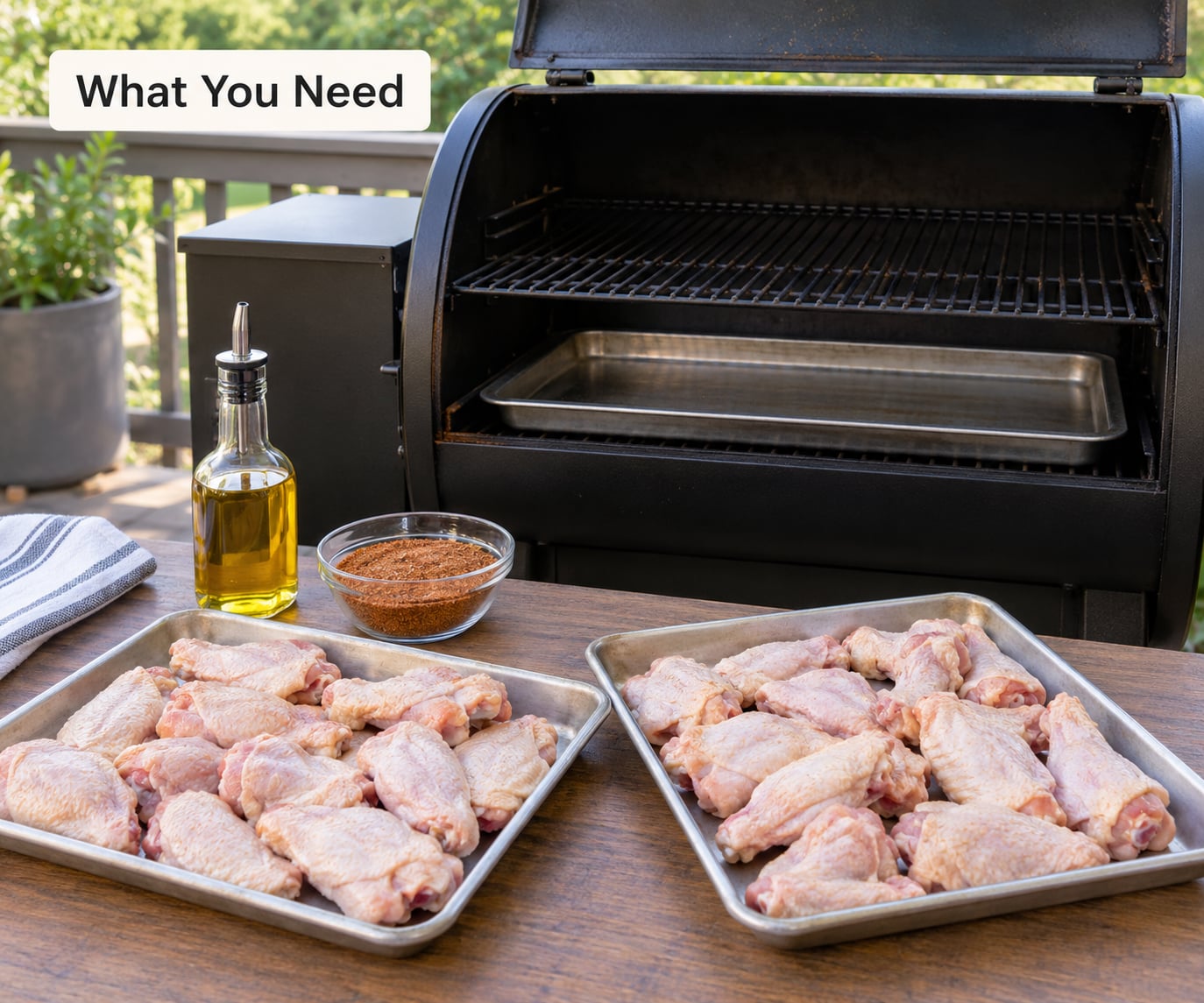
The pellet grill and a thermometer are non-negotiable. Everything else you can improvise or skip.
- Pellet grill or pellet smoker. Traeger, Pit Boss, Recteq, Camp Chef, Z Grills and generic hopper grills all work. What matters is that the grill holds temperature accurately and has enough grate area for the wings to sit in a single layer.
- Instant-read thermometer. A cheap one with a thin probe. You need it for the single non-skippable step in this whole process, which is checking doneness.
- Chicken wings, sorted by size. Flats and drumettes together if you like, but keep jumbo wings in their own batch. Wings cook at wildly different rates and mixing sizes is the number one reason a batch comes out with some dry and some underdone.
- Baking powder, about 1 teaspoon per pound of wings. This is the single most repeated tip across cooks who get crisp skin reliably. More on the science below.
- Dry rub. Salt, black pepper, garlic powder, smoked paprika. Ancho chile powder and a little brown sugar work if you want something with heat and color.
- Oil. Optional. See the section on whether to coat wings in oil before grilling.
- Sauce. Keep it separate until the wings are done. Buffalo, barbecue, teriyaki, or a plain salt-and-vinegar dip.
- Shallow drip tray with water. Wings render a surprising amount of fat. A water-filled tray under the indirect zone catches grease before it drips onto the burners and causes flare-ups.
- Tongs with a good grip. And a wire rack in the fridge if you want to air dry the wings, which is free crispness.
One more thing worth planning around: pellet burn rate and grate size decide your batch count. Most home pellet grills comfortably hold 20 to 30 wings in a single layer with real space between them. Cooking 60 at once means stacking, and stacked wings steam instead of crisping. Cook them in batches instead.
Step-by-Step: How to Smoke Chicken Wings on a Pellet Grill
1. Preheat the Pellet Grill and Arrange the Wings
Start the grill on high with the lid closed and let it come up to 225°F. On a Traeger or Pit Boss that usually means setting it to smoke at 225; on a Recteq you will use the low-temperature offset. Give the pellet hopper a full 10 minutes on preheat before you trust the reading.
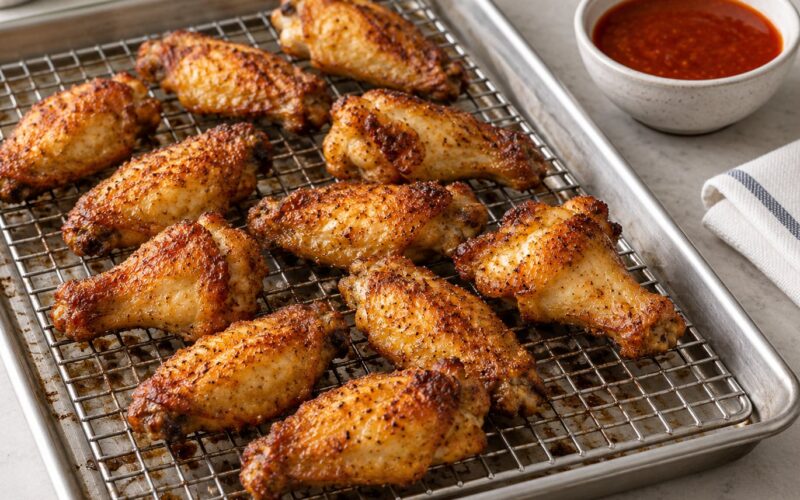
While it heats, work on the wings. Pat every wing dry with paper towels, then toss them in baking powder and salt until the powder coats them like a fine dust. If you have time, lay them skin-side up on a wire rack over a tray, cover loosely, and refrigerate for 2 to 4 hours. Dry skin is the difference between crispy and leathery, and it costs you nothing but fridge space.
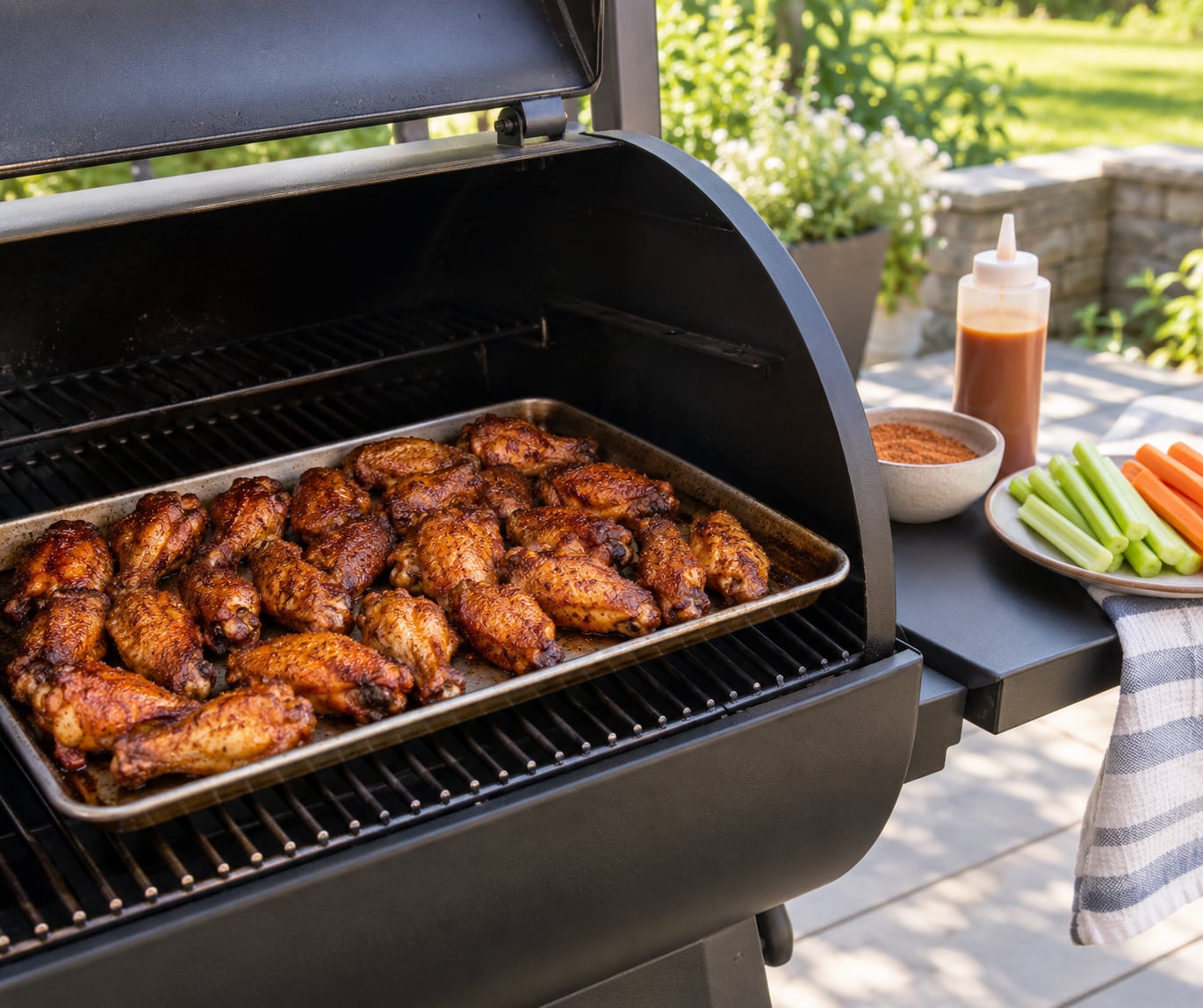
When the wings are dry, hit them with the dry rub and lay them out on the grill. Here is what determines the result: leave a full inch of space between each wing and do not touch them again for 30 minutes. Put them on the indirect side of the grate, away from the burners, with the water tray underneath.
Lay the wings flat, skin side down, rather than standing them up between the grates. Cooks on smoking forums consistently report that skin pressed against the grate crisps better, and the top side browns on its own during the high-heat finish.
2. Smoke the Wings Until They Near the Target Temperature
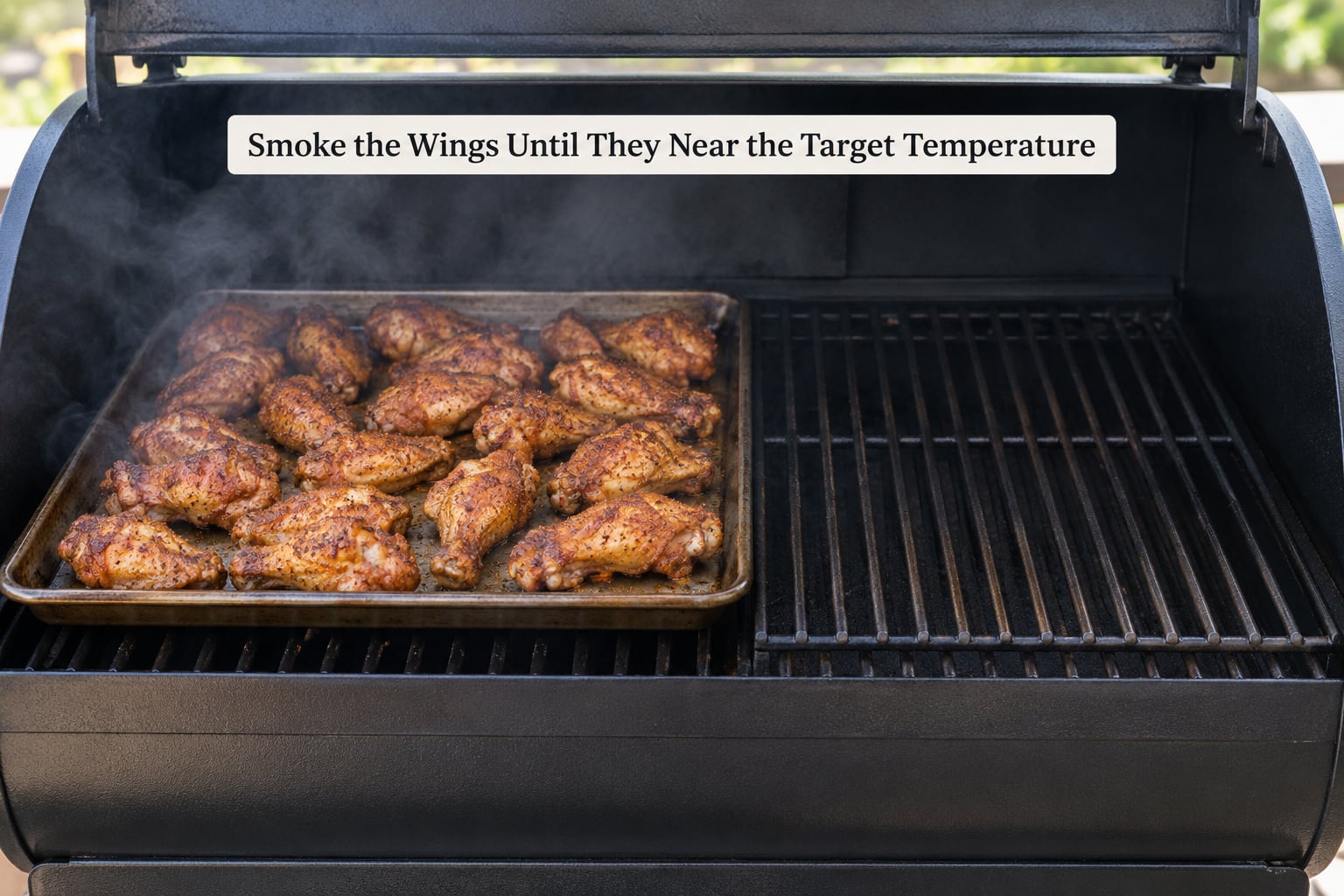
Keep the pit at 225°F, and where your grill allows it, use super smoke or a similar setting that keeps a steady pellet feed. Hold this phase for 30 to 40 minutes for flats and drumettes. Jumbo wings need closer to 45 to 50 minutes in the smoke phase before any heat increase.
Most pellet grills run a little hot on the dial at low settings. Check with your own grill thermometer at the grate level where the wings sit, not the lid-mounted one, and adjust the set point down if the real temperature reads high. A steady pit matters more than a specific number, and 225 to 250°F is the range that works.
Cues that the smoke phase is nearly done: the skin turns opaque and milky white, the wings tighten up and pull away from the bone slightly, and rendered fat starts beading on the surface. None of that is the doneness signal, though. Temperature is.
3. Increase the Heat and Crisp the Skin
Raise the grill to 350–400°F. This is the whole ballgame for skin. Chicken skin needs hot, dry air and a tight lid to render fat and crisp; a low-temperature cook alone will never get you there.
Close the lid and cook 20 to 30 more minutes at that temperature. Flip once at the halfway mark using the tongs, then close the lid again and let them finish. Wings that were larger or thicker may need another 5 to 10 minutes.
At 350°F you land on wings that are crisp-tender with a softer exterior. At 400°F you get the crunchiest skin, closer to what a fryer produces, and the cook finishes faster. If you have convection or a high-heat setting, use it, but watch the sugar in a brown sugar rub so it does not scorch before the wings are done.
4. Check Doneness and Rest the Wings
Insert the thermometer into the thickest part of a wing, close to the bone but not touching it. The USDA safe minimum internal temperature for poultry is 165°F, and that is the floor, not the target.
For the best texture, pull the wings between 175°F and 185°F. The higher target renders more fat out of the skin, which is what makes it crunch instead of chew. You will see comments all over cooking forums pulling at 185 to 195°F for maximum crispness; that works, but the meat starts tightening up and drying out, so it suits drumettes and hungry crowds better than delicate flats.
Move the wings to a wire rack set on a baking sheet and rest 5 to 10 minutes. A rack, not a plate. Wings sitting on a flat plate steam themselves soft from underneath, which is the number one reason restaurant wings arrive limp.
One thing carryover cooking does well here: wings pulled at 180°F will coast a few degrees while they rest, so you do not need to overshoot.
5. Sauce and Serve
Sauce after cooking, always. Any sugar in barbecue or teriyaki burns on the grill long before the skin finishes crisping, and it makes a sticky mess of your grates.
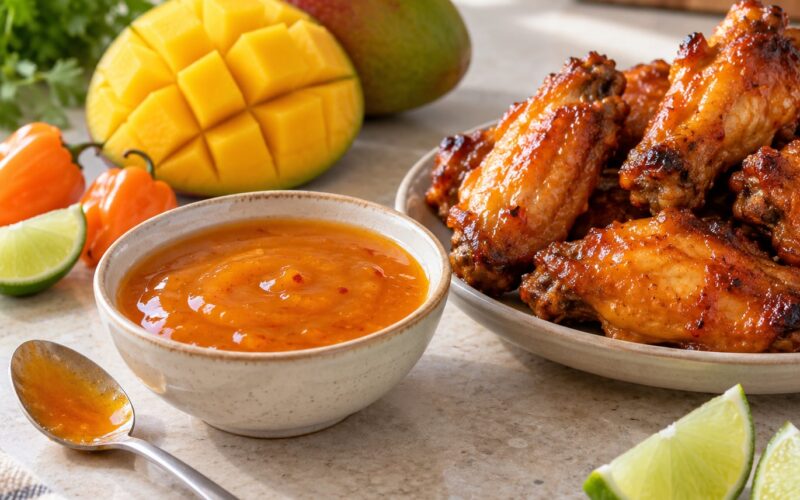
Toss the rested wings in a bowl with sauce and serve immediately. For a party, set out separate sauce options instead of tossing, so half the tray stays naked-crisp for the people who want it that way.
To hold wings without losing the crunch, spread them on a rack, not a pile, and keep them in a warm oven turned to its lowest setting. Thirty minutes is fine. Two hours is where the skin starts giving up.
Common Mistakes and How to Fix Them
Almost every disappointing batch of smoked wings traces back to one of these.
The skin peels or slides off
The surface was damp when the rub went on, so the seasoning and fat never bonded. Pat the wings dry before anything else, and air dry them on a rack in the fridge for a few hours if you can. Skin that is genuinely dry stops peeling.
Skin is crispy underneath and rubbery on top
This is the most common complaint in the r/Wings and r/smoking forums. The grate side crisped because it touched hot metal; the top never got enough heat. Fix it by flipping once mid-cook and making sure your finishing temperature is genuinely 375°F or higher at grate level. Wings stood upright between the grates are the worst offender, so lay them flat.
Drippings cause flare-ups
Rendered fat hitting a burner lights a short flame and gives you a bitter, acrid wing. Use a shallow water tray under the indirect zone and move that zone to the side of the grill where the burners cannot reach it.
The meat is dry
The cook went too long or too hot for the size of the wing. Check temperature early, sort by size before cooking, and pull at 175 to 185°F rather than waiting for a specific number of minutes. Wings on the small side can finish 20 to 25 minutes ahead of most published times, so a thermometer beats a timer every time.
It tastes like an ashtray
Too much time at low temperature. Poultry picks up smoke flavor faster than other meats, so keep the smoke phase to 30 to 40 minutes and use a mild pellet like apple or cherry instead of hickory or a heavy smoke blend.
The sauce burns
You sauced too early. Glaze goes on after the wings come off the heat. If you want a sticky finish, brush a thin layer on during the last 3 to 4 minutes at 350°F, keep the lid open, and watch it closely.
The grate is overcrowded
Touching wings trap steam and cook unevenly. Cook in batches. It takes longer and the results are better than one crowded tray that comes out half limp.
The wings go soft before serving
Hold them in a single layer on a rack in a low oven rather than stacked in a bowl or a foil pan. Sauce goes on at the last second, and for a party, put out the sauce bar instead.
Frequently Asked Questions
What temperature should I smoke chicken wings on a pellet grill?
Smoke at 225F first, then finish at 350 to 400F. The low phase builds smoke flavor without drying the meat, and the high phase renders fat so the skin crisps. Pull the wings when the thickest piece hits 175 to 185F internally, never below the 165F safe minimum for poultry.
How long does it take to smoke chicken wings on a pellet grill?
About 60 to 90 minutes total for most batches. Plan on 30 to 40 minutes at 225F for the smoke phase and 20 to 30 more minutes at 350 to 400F. Jumbo wings can take another 10 minutes, and smaller wings often finish 20 minutes sooner than recipes suggest, so check with a thermometer rather than the clock.
Do you smoke wings at 225F or 250F?
Either works. The range that matters is 225 to 250F for the smoke phase, held steady rather than bouncing around. Pellet grills often run hotter than the dial reads, so verify with a grill thermometer at grate level and lower the set point if needed. A consistent pit matters more than a precise number.
How do I keep pellet-grilled wings from drying out?
Sort the wings by size before cooking, smoke them only 30 to 40 minutes, and pull them off at 175 to 185F instead of cooking to a fixed time. Rest them 5 to 10 minutes on a wire rack so the juices redistribute. Wings on the small side can be ready 20 to 25 minutes earlier than most recipes say.
Should I sauce wings before or after smoking them?
After. Sugar in barbecue and teriyaki sauces burns on a hot grate before the skin finishes crisping. If you want a sticky glaze, brush a thin layer on during the final 3 to 4 minutes at 350F with the lid open. Toss sauce on after the wings rest so the skin keeps its crunch.
How do I get crispy skin when using a pellet grill?
Dry the wings first, then coat them with about 1 teaspoon of baking powder per pound and salt. Air dry them uncovered on a rack in the fridge for 2 to 4 hours if you have time. Cook at 225F, finish at 375 to 400F, flip once, and rest on a wire rack rather than a plate.
Conclusion
Knowing how to smoke chicken wings on a pellet grill is mostly about discipline: hold 225°F for a short smoke phase, keep the wings dry and spaced out, verify 165°F as the safety floor and 175 to 185°F for the best texture, then finish hot for crisp skin. Sort by size, sauce at the end, and rest on a rack. That sequence is the whole recipe.