How much charcoal to use for grilling comes down to one number most beginners get wrong: a half chimney for a quick sear or a few burgers, a full chimney for a standard kettle grill, and closer to one and a half chimneys when you are holding a low temperature for several hours. Fill one-third to one-half of the available charcoal area for direct cooking, bank the rest to one side for indirect heat, and you will never have to guess mid-cook. It takes about 20 minutes of lighting and waiting before the grill is usable, and almost no skill beyond reading the coals.
The reason the number matters so much is that charcoal gives you two dials. More fuel means a bigger, hotter coal bed. Open vents mean more oxygen. Most people crank one of them when they should be touching the other, and end up with a grill that either stalls at 200 degrees or runs away past 600.
Below I break the amount down by grill size and by food, then walk through lighting, arranging, replenishing, and shutting down. If you only read one part, read the food table and the ash-over test.
Table of Contents
- What You Need
- Step-by-Step: How Much Charcoal to Use for Grilling
- 1. Estimate the Amount for Your Grill
- 2. How Much Charcoal to Use for Grilling by Food
- 3. Arrange the Coals for Even Heat
- 4. Light the Charcoal and Wait for a Cooking Zone
- 5. Cook and Respond to the Heat
- 6. Add More Charcoal Only When Needed
- 7. Finish Safely and Shut Down
- Common Mistakes
- Frequently Asked Questions
- How much charcoal does a standard 18-inch kettle grill need?
- Can I reuse charcoal from the previous cook?
- How much charcoal do I need for an all-day cook?
- Should I use briquettes or lump charcoal?
- How do I know when to add more charcoal?
- Is it safe to add unlit charcoal while the grill is hot?
- Conclusion: Start Small and Adjust
What You Need
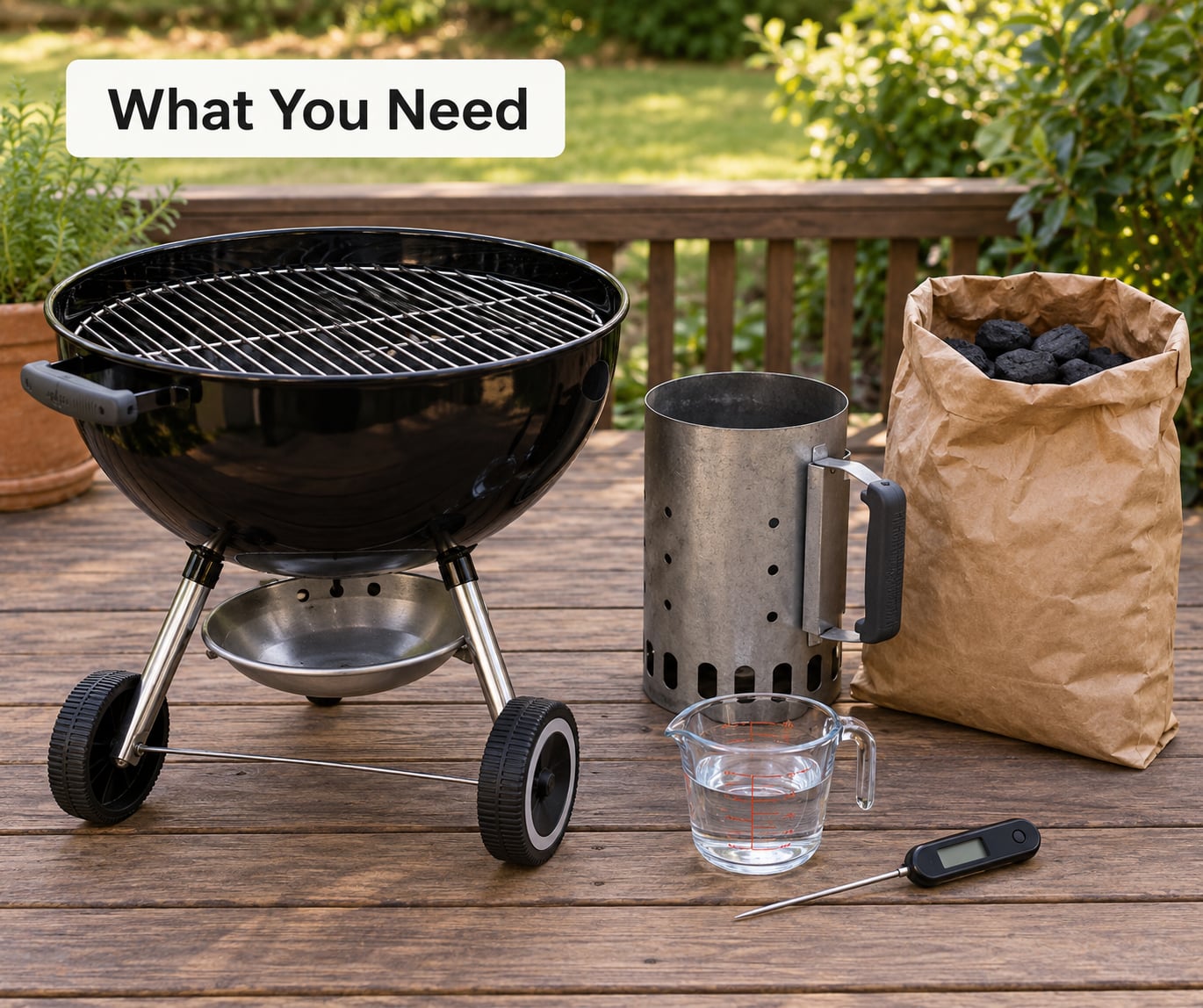
You do not need much to get consistent results. A steel chimney starter is the single most useful tool, because it turns charcoal quantity into a repeatable fill level rather than a pile you eyeball.
- A charcoal chimney — a standard one holds roughly 8 to 10 pounds of briquettes when filled level to the top. A half fill is a genuinely useful amount for small cooks.
- A grill with a bottom vent and a lid vent — these are your temperature controls.
- An instant-read thermometer or an infrared gun — the dome thermometer on the lid of most grills is decorative at best.
- Long-handled tongs or a coal rake — for moving coals without burning yourself.
- A heat-resistant glove — the grate and lid stay hot far longer than the food does.
- Newspaper or charcoal lighter cubes — not lighter fluid, which puts a flame you cannot control under your hands.
Step-by-Step: How Much Charcoal to Use for Grilling
1. Estimate the Amount for Your Grill
Start with the space, not the food. Measure the diameter of the cooking grate, then fill one-third to one-half of the available charcoal area. That is your direct-heat zone, and the coals you bank against the far wall for indirect cooking sit outside it.
Grill geometry matters more than a universal rule, so treat these as starting points and adjust after you see how the fire behaves.
- 10 to 12 inch portable grill: about 15 to 20 briquettes, which is about a quarter to a third of a chimney. Enough for two burgers or a few sausages.
- 14 inch grill: 25 to 30 briquettes, roughly a half chimney. This is the size most people buy first and most often under-fill.
- 18 inch kettle: 40 to 50 briquettes, about two-thirds of a chimney, for a solid bed under the cooking area.
- 22 inch kettle or a standard 22 inch covered grill: a full chimney, about 100 briquettes or 8 to 10 pounds. Peopled on The Virtual Weber Bulletin Board report a full Weber chimney at its hottest pushing well past 500 degrees, which is plenty for searing and a lot for a weeknight burger.
- 22 inch plus with a basket or a snake method: one to one and a half chimneys, because you are building a long, even bed rather than a hot pile.
A common mistake is filling the grill because a bag is open and it feels wasteful to leave fuel behind. One user on a UK BBQ forum loaded a full chimney into a small cooker and could not push past 200 degrees with the lid on. Excess fuel is not wasted until you have to burn it off.
2. How Much Charcoal to Use for Grilling by Food
Match the amount to how long the food needs heat and how much of the grate you are using. Briquettes and lump charcoal are not a one-for-one swap by volume — lump burns hotter and faster, so use less of it.
| What you are cooking | Briquettes | Chimney fill | Lump charcoal |
|---|---|---|---|
| 2 burgers or a small hot dog | 15 to 20 | Quarter chimney | About 1.5 to 2 pounds |
| 4 to 6 burgers | 30 to 35 | Half chimney | About 3 to 4 pounds |
| Steaks, lamb chops, searing | 50 to 60 | Two-thirds chimney | About 5 pounds |
| Whole chicken, pork roast | 50 to 60 | Two-thirds chimney | About 5 to 6 pounds |
| Sausages, sliced vegetables | 25 to 30 | Half chimney | About 3 pounds |
| Pork ribs, two racks | 75 to 90 | Three-quarters chimney | About 7 to 8 pounds |
| Brisket or other long cook at 225F | 100 to 125 | One to one and a half chimneys | About 9 to 11 pounds |
| All-day cook, 6 to 8 hours | Start with 60 and add | Two-thirds to start | About 6 pounds to start |
As a backstop, budget roughly half a pound of charcoal per pound of meat. That number drifts with cook length, but it keeps a big cookout from running out halfway through the second hour.
3. Arrange the Coals for Even Heat
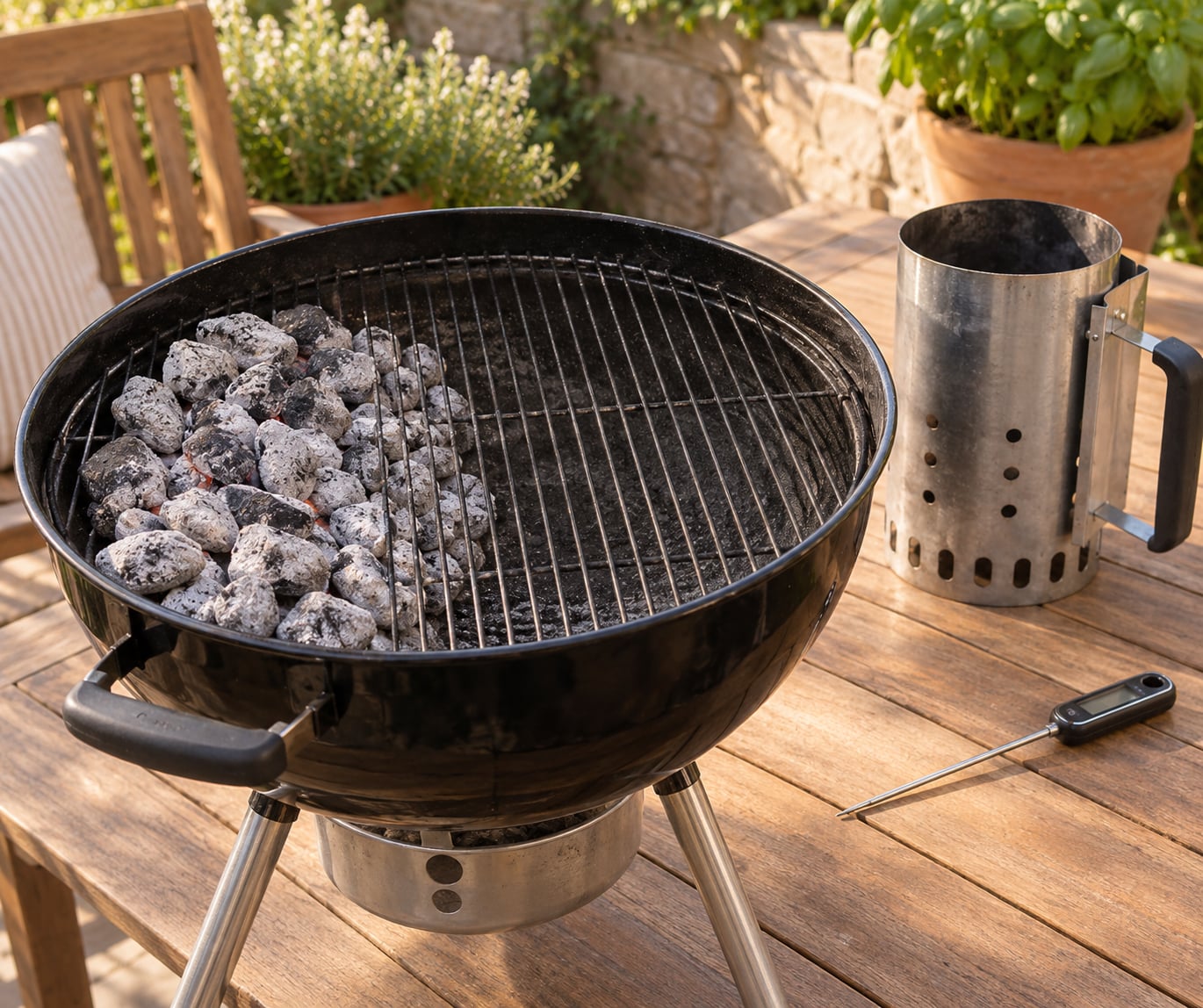
Put most of the charcoal on one side. That empty half becomes your indirect zone, where rising heat circulates around the food instead of blasting it from below, and it is the whole reason a kettle grill can roast a whole chicken as well as it sears a steak.
For a long cook, spread the coals into an even bed across the cooking area instead. People running low-and-slow on a two-zone fire often start with 10 briquettes in the chimney and a 2×2 charcoal snake, which they report holds 250 degrees for around eight hours with very little tending.
You want the coals covered in light grey ash with a small red center and no black edges. That is ash-over, and it means the fire is producing a clean, steady heat rather than a smoky combustion.
4. Light the Charcoal and Wait for a Cooking Zone
Fill the chimney, set it on the lower grate, and tuck crumpled newspaper or two lighter cubes under the bottom. Light the paper at the bottom, not the top, so the fire climbs through the charcoal instead of licking the surface.
Plan on roughly 15 minutes. Resist the urge to cook on top of black, smoking coals — that is the single most common source of acrid, sooty flavor, and it is a fixable mistake rather than bad technique.
Read readiness with an infrared thermometer or an instant-read probe on the grate, not with the clock. Coal bed temperature is a better signal than lid temperature for most cooks, and ash-over is the visual backup when the thermometer is not handy. Lighter fluid is the shortcut most beginners regret; it produces smoke that settles on the food and leaves a film on the grate.
5. Cook and Respond to the Heat
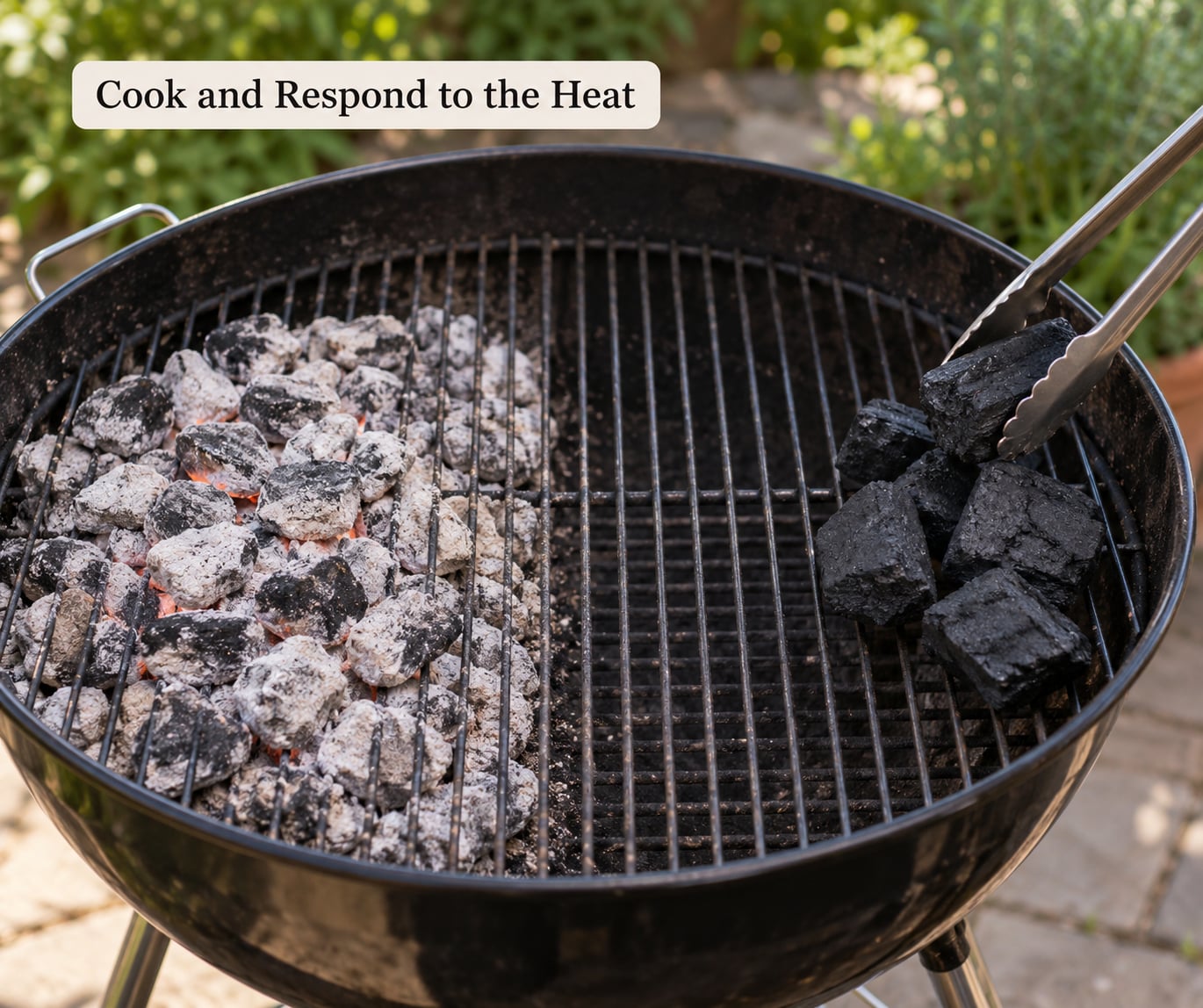
Sear over the direct zone, then move the food to the indirect side and put the lid on. The lid converts the grill from a radiant-heat cooker to a convection oven, and it is what lets you hold 225 to 250 degrees for hours without adding fuel.
If you cannot tell which zone is which, hold your hand a few inches above each one. The direct zone is uncomfortable within a few seconds; the indirect side is merely warm.
When heat runs low, change the vents before you change the fuel. Open the lid vent for finer control, and open or close the bottom vent for bigger swings — a grill with the lid closed and both vents wide open burns fuel fast and hot, while a mostly closed bottom vent smothers it. A grill does not get hotter with the vents open or closed as a blanket rule; the answer depends on which vent and which stage of the cook you are in.
6. Add More Charcoal Only When Needed
Add charcoal when the existing coal bed is spent, not on a timer. Signs that it is spent: the coals are mostly white ash with no red at all, the temperature has dropped below your target, and opening the lid produces no new radiant heat.
The cleanest method is to bank a small amount of unlit charcoal against the hot side of the bed, wait for it to catch, and let it merge in. Pouring a large batch of fresh fuel onto a hot fire smothered by cold weight is what knocks a grill offline, and it is the mistake behind most runaway-temperature horror stories.
A partial chimney is the natural increment. On The Virtual Weber Bulletin Board a popular thrift trick is to light a half chimney and pour it onto a chimney of unlit charcoal so one fill does the work of two. For a slow cook, several people on grilling forums add a couple of handfuls of lump charcoal every 20 to 30 minutes instead, which keeps the fire alive without a big swing.
Keep the grate where it is unless you need a change. Raising the grate by a few inches buys radiant heat without adding a single coal, which is useful when you want to sear or when the coal bed is growing.
7. Finish Safely and Shut Down
Cook to temperature, not to time. USDA minimum internal temperatures: 165 degrees Fahrenheit for poultry, 160 for ground meat, and 145 for whole cuts of beef, pork, and lamb and for fish. A cheap probe thermometer is worth more than any amount of charcoal technique.
Put the grill somewhere stable and noncombustible before you light it, and never move a grill with lit coals in it. Gloves matter here, because the grate and lid hold heat long after the coals look done.
When you are finished, close both vents to cut off oxygen and let the coals die out on the grate. Wait until everything is cold before scraping it into a metal container with a tight lid, and never put warm coals in a bag, a bin, or anywhere near a wall.
Common Mistakes
Dumping one flat pile of coals in the middle. You get a hot spot under the food and nothing useful at the edges. Fix: bank the coals to one side and leave the other side clear.
Overloading the grill. A full chimney in a small cooker is a common beginner error, and the excess fuel just has to burn off. Fix: match the fill to the grate diameter and the length of the cook.
Adding a large batch of unlit charcoal to an active fire. The weight of cold fuel smothers the bed and drops the temperature. Fix: bank a small amount against the hot side and let it ignite on its own.
Lighting charcoal indoors or under a structure. Carbon monoxide is not a risk you control with ventilation. Fix: always light outside on a noncombustible surface.
Judging doneness by smoke, smell, or the clock. Smoke means combustion is still incomplete, and time means nothing without a thermometer. Fix: probe the thickest part of the food and use the safe minimums above.
Using the wrong fuel for the cook. Briquettes hold steady heat for hours, which suits ribs and brisket. Lump charcoal burns hotter and faster, which suits a sear. Fix: pick the charcoal for the duration, not for the label.
Opening the lid constantly. Every opening dumps heat and adds cook time. Fix: work out where your food sits in the two zones, then leave the lid alone except when you are adding charcoal or checking temperature.
Frequently Asked Questions
How much charcoal does a standard 18-inch kettle grill need?
About 40 to 50 briquettes, or roughly two-thirds of a chimney, gives you a solid bed under the cooking area. That handles burgers, sausages, chops, and a whole chicken on a 30 to 45 minute cook. For a low-and-slow rib cook, start with the same amount and add a few briquettes every 20 to 30 minutes, or load two-thirds of a chimney and bank it to one side.
Can I reuse charcoal from the previous cook?
You can, but most of the value is already gone. Partly burned charcoal from last week is largely ash, and it lights slowly and burns unevenly. A better reuse is within the same cook: bank unlit charcoal against a hot bed and let it catch. Genuinely leftover lumps that are still solid can go under a new fire, just never on top of a fully white bed, where they will smother it.
How much charcoal do I need for an all-day cook?
Plan on one and a half to two chimneys for six to eight hours, and start with about two-thirds of a chimney. One user on r/smoking lights 10 briquettes in a chimney with a 2×2 charcoal snake and reports holding 250 degrees for around eight hours with minimal tending. Add in small handfuls as the bed thins rather than dumping a large batch, and keep the lid closed.
Should I use briquettes or lump charcoal?
Briquettes are uniform, burn longer, and give you an even bed with less tending, which makes them the easier choice for beginners and for long cooks like ribs or brisket. Lump charcoal burns hotter and faster, so use less of it by volume — about 1 to 2 pounds less than the equivalent briquette fill. Lump gives a cleaner, more natural charcoal flavor once ashed over.
How do I know when to add more charcoal?
Add charcoal when the bed is spent, not on a schedule. The signals are coals that are almost entirely white ash with no red remaining, and a grill temperature that has fallen below your target. Bank a small amount of unlit charcoal against the hot side, let it ignite, and avoid pouring a large batch onto an active fire, which smothers it.
Is it safe to add unlit charcoal while the grill is hot?
Yes, if you do it carefully. Use long-handled tongs and heat-resistant gloves, and touch the coals as little as possible. Build a small bank against the existing fire rather than dumping fuel in the middle, and never use lighter fluid once the grill is lit, because the flashback can reach your hand. Wait for the new coals to catch before closing the lid.
Conclusion: Start Small and Adjust
Pick the row in the food table that matches what you are cooking, load only that much, and build two zones instead of one pile. Light it, wait for ash-over rather than the clock, then set your temperature with the vents and add charcoal only when the bed runs out. Do that once and you will stop guessing at how much charcoal to use for grilling altogether.