To marinate meat the right way, salt it first, add an acid in controlled amounts, coat it in an oil-based marinade, and keep it refrigerated for a time matched to the cut — a few hours for thin steaks, up to a day for thick roasts. Most home cooks go wrong on acid and timing, not on effort. It takes about 5 minutes of active work plus fridge time, and the whole thing costs pennies.
Here is the honest version of what marinating does: it seasons the outside far more than it tenderizes. Acid denatures surface proteins so the outer layer feels softer, and salt and oil carry flavor into that same outer inch or so. The deep center of a thick roast barely changes. Cooks on r/Cooking have argued about this for years, and the consensus is that real tenderness comes from low-and-slow cooking, not from a night in a zip bag.
That does not make marinating optional. Get the balance right and you get meat that tastes seasoned all the way through the first bite instead of plain meat with a salty edge. The rest of this guide walks through the equipment, the process, the timing, and the mistakes that turn a good marinade into mush.
Table of Contents
- What You Need
- Step-by-Step: How to Marinate Meat the Right Way
- Step 1: Choose the Right Meat
- Step 2: Build a Balanced Marinade
- Step 3: Mix and Marinate Safely
- Step 4: Let the Meat Develop Flavor
- Step 5: Cook and Check Doneness
- Common Mistakes That Ruin How You Marinate Meat the Right Way
- Frequently Asked Questions
- How long should I marinate meat before cooking?
- Does marinating meat make it tender?
- Can I reuse the leftover marinade as a sauce?
- Should I add salt to every meat marinade?
- Can I marinate meat overnight or freeze it in the marinade?
- What internal temperature should I cook marinated meat to?
- Conclusion
What You Need
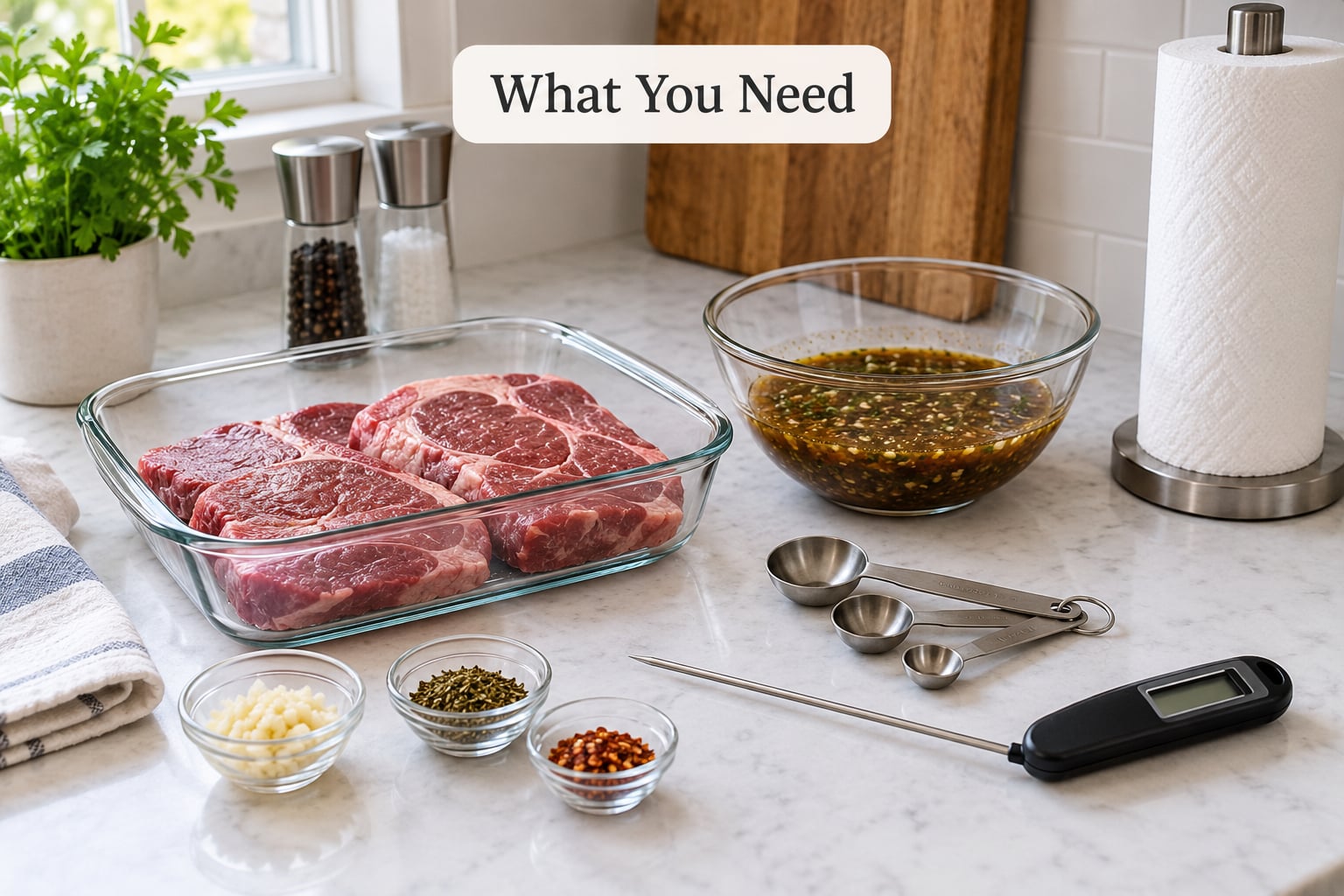
You do not need anything exotic. Everything below is either essential or genuinely useful.
Essential:
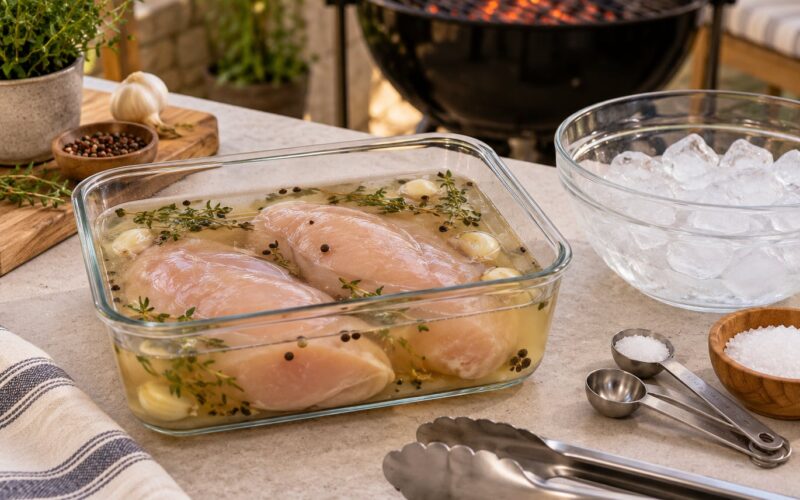
- A non-reactive vessel. Glass, ceramic or a food-grade zip-top bag. Aluminum and bare steel react with acid and can dull flavor over several hours.
- Salt. Kosher salt, or about 60 percent as much fine table salt by weight. Salt is the one component you do not want to be shy with, because it seasons deeper than anything else in the bowl.
- An acid. Lemon juice, lime, red wine vinegar, apple cider vinegar, rice vinegar, or buttermilk and yoghurt. Choose one, not three.
- An oil. Olive oil is the default because it carries fat-soluble flavor and stands up to heat. Sesame oil works, but use it in smaller amounts.
- Aromatics. Garlic, ginger, onion, cracked pepper, and herbs such as rosemary, thyme or oregano.
- Paper towels. For patting the meat dry before it hits the pan.
Useful, not required:
- A food thermometer, the single best tool for Step 5 and the difference between juicy meat and dry meat.
- A shallow dish or bowl bigger than the meat, so every piece lies in one layer instead of stacking.
- A kitchen scale for portion control, which matters more than people think when you are marinating a week’s worth of protein at once.
- A separate clean plate and fork for handling raw meat, so you never back into the marinade with a used utensil.
Step-by-Step: How to Marinate Meat the Right Way
Step 1: Choose the Right Meat
Thin cuts and thick cuts are different jobs. Thin cuts — flank steak, skirt steak, chops, sliced boneless thighs, small breast portions — soak up flavor fast and fall apart if you overdo it. Give those 30 minutes to 4 hours, and no longer.
Thick cuts — a whole sirloin, a leg of lamb, a pork loin roast, a butterflied thigh — can take 8 to 24 hours because the flavor has further to travel. Chicken breast is the exception: it is a thick-looking cut made of two thin lobes, so it behaves like a thin cut and goes chalky after about 6 hours in a strong acid.
Poultry, pork and veal generally need less time than beef, lamb or game, and that is worth internalizing. Beginners on r/cookingforbeginners often treat marinating as the fix for tough meat, which is why so many end up with a mushy outer layer and an untouched center.
Trim away loose fat and silver skin before the meat goes in. Fat does not absorb marinade, it just sits there and makes the container slippery. Then portion the meat so pieces are roughly the same thickness — a two-inch steak sitting next to a half-inch strip in the same bag will always disappoint you.
Whether to score or pierce thick cuts before marinating? Scoring the surface a few millimeters deep helps flavor reach further, and it is fine on a roast you are cooking that day. Deep-piercing with a fork pushes surface bacteria toward the center, so shallow scores are the better tool.
Step 2: Build a Balanced Marinade
Every good marinade is the same skeleton: salt for seasoning, acid for surface softening, oil as a flavor carrier, aromatics for scent and bite, and a sweetener or umami booster if you want one. The single most useful ingredient is salt, followed closely by oil, because oil is what carries garlic and pepper compounds into the meat.
Acid is the component people get wrong. Here is the rough strength ranking, gentlest to harshest, with the cuts each one suits:
- Buttermilk or yoghurt — gentlest. Chicken, lamb, any tender cut that needs a long time.
- Rice vinegar or white wine vinegar — mild. Seafood, delicate fish, light poultry.
- Red wine vinegar or cider vinegar — medium. Beef, pork, general purpose.
- Red or white wine — medium. Roasts, steaks, anything getting 8 hours or more.
- Lemon or lime juice — firm. Chicken, pork and shrimp; keep times under 6 hours.
- Balsamic or sherry vinegar — harsh. Use sparingly, in short marinades only.
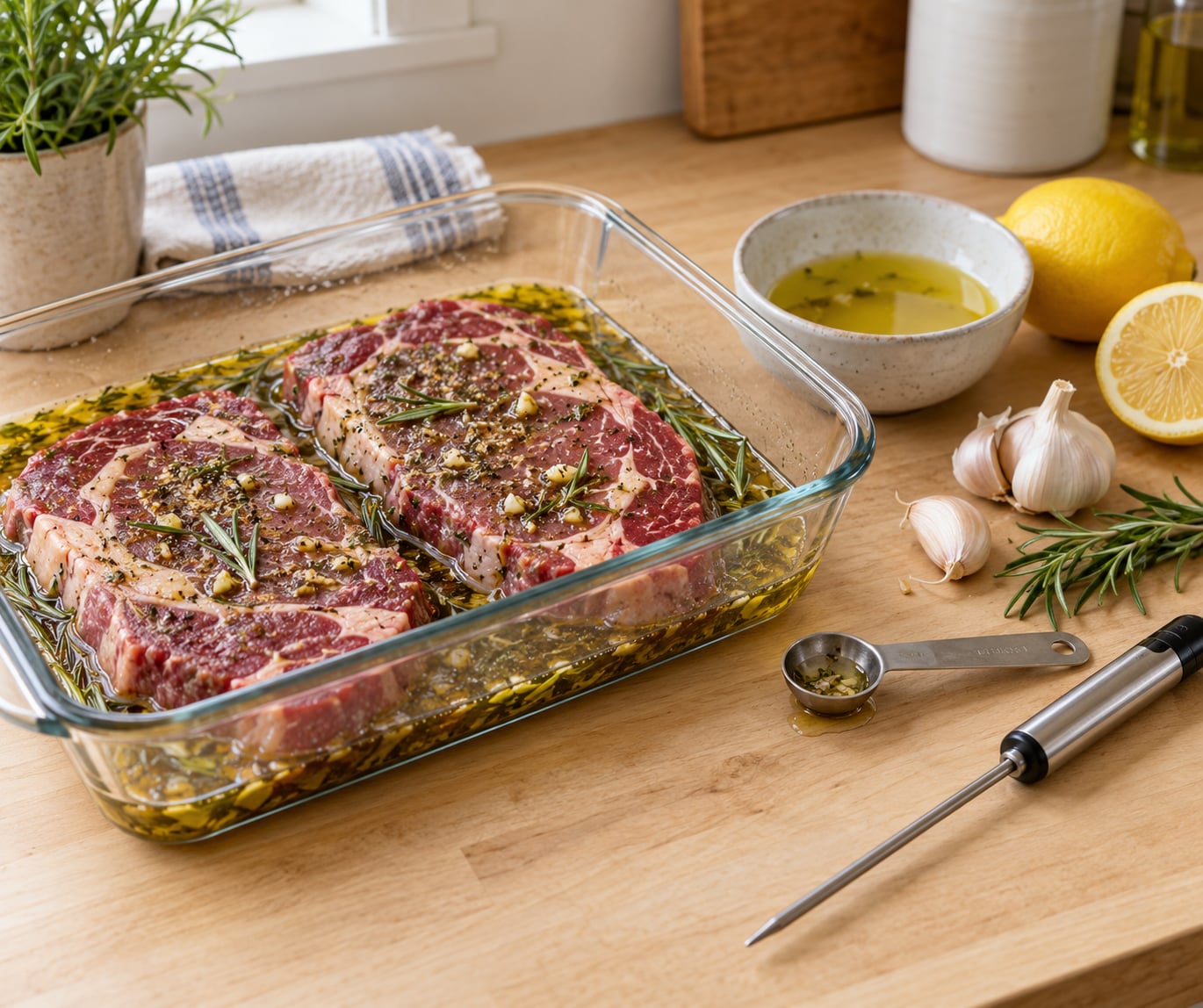
A useful starting formula for about 2 pounds of meat: 2 tablespoons olive oil, the juice of one lemon or 2 tablespoons vinegar, 1 tablespoon Worcestershire sauce, 4 crushed garlic cloves, a teaspoon of sugar or honey, 1 to 2 teaspoons salt, and whatever pepper and herbs you like. Whisk it in a bowl first rather than dumping it on the meat, so nothing clumps in one spot.
Sweeteners brown faster and cause flare-ups on a grill, so use less if you are cooking over open flame. Umami boosters — a teaspoon of miso, anchovy paste, Worcestershire sauce, or a spoonful of mushroom powder — add depth that salt and acid cannot.
Be careful with pineapple, kiwi and papaya. They contain proteases, and the time cap is short: 15 to 30 minutes for pineapple or kiwi on thin cuts, up to 2 hours on a thick roast. Papain is more forgiving at around 4 hours. Leave them longer and the outside of the meat goes to paste. Traditional BBQ folks often point this out, and they are right that dry rubs handle big cuts better than any marinade.
Step 3: Mix and Marinate Safely
Put the meat in the vessel, pour the marinade over it, and turn the pieces so every surface is wet. You need roughly one-third to one-half cup of marinade per pound of meat — enough to coat and pool slightly, not so much that you are essentially boiling the meat in liquid. Aim for the meat to lie in a single layer if you can.
Seal the bag with as little air as possible, or cover the dish, then put it straight into the refrigerator. The single non-negotiable rule: marinating happens in the fridge, always. Raw meat held at room temperature should not exceed two hours, and one hour if the kitchen is above 90°F.
Avoid cross-contamination. Use a clean plate, fork and tongs for cooked meat, and never dip a piece you already dipped in marinade back into the bowl. If you want to taste the marinade, spoon some into a separate cup.
You can marinate frozen meat, but the liquid will only touch the outside, so thaw first if flavor matters to you. If you marinate a double batch on Sunday, cook half and keep the rest raw in its marinade in the fridge for no more than 2 days.
Step 4: Let the Meat Develop Flavor
Most marinating-time confusion comes from using one number for every cut. Use the cut, not the animal, as your guide. Thickness matters more than species. The working numbers, minimum through maximum:
- Beef steak, 1/2 to 3/4 inch: 30 min minimum, 1 to 4 hrs ideal, 6 hrs maximum.
- Beef steak, 1.5 inches or thicker: 2 hrs minimum, 4 to 12 hrs ideal, 24 hrs maximum.
- Flank or skirt steak: 15 min minimum, 1 to 3 hrs ideal, 4 hrs maximum.
- Beef or pork roast, 3 to 5 lbs: 4 hrs minimum, 8 to 24 hrs ideal, 2 days maximum.
- Pork chops, 3/4 inch: 30 min minimum, 2 to 4 hrs ideal, 8 hrs maximum.
- Pork tenderloin: 1 hr minimum, 2 to 6 hrs ideal, 8 hrs maximum.
- Chicken breast: 30 min minimum, 1 to 4 hrs ideal, 6 hrs maximum.
- Chicken thigh, bone-in or boneless: 2 hrs minimum, 4 to 12 hrs ideal, 24 hrs maximum.
- Lamb chops: 1 hr minimum, 2 to 6 hrs ideal, 10 hrs maximum.
- Lamb leg or whole shoulder: 6 hrs minimum, 12 to 24 hrs ideal, 2 days maximum.
- Shrimp or scallops: 10 min minimum, 15 to 30 min ideal, 1 hr maximum.
Once the surface stops changing color and the liquid has thinned from cloudy to clear, absorption has basically plateaued. More hours add very little. Signs you have gone too long: the meat smells sharply tangy, the surface feels slick or mushy, and the texture turns chalky when you cut it — that last one is the acid over-denaturing the outer proteins.
Thin cuts are where people go wrong. A thin steak left overnight in a lemon marinade can be inedible by morning, while the thick roast next to it improved. Same bowl, same time, opposite results.
Step 5: Cook and Check Doneness
Take the meat out and scrape off the pooled liquid, especially sugary marinades that will blacken or flare on a hot grill. Blot the surface dry with paper towels. A wet surface steams instead of searing, and you will lose the browning you just built a marinade for.
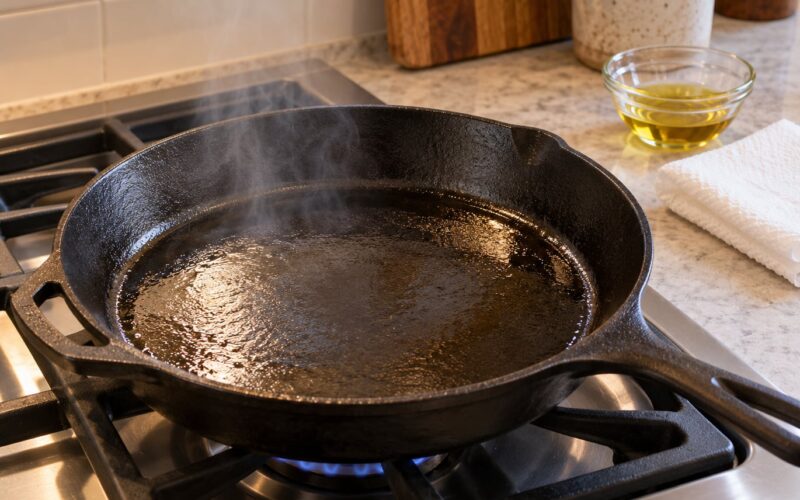
Cook over high heat for thin cuts — a screaming-hot cast iron pan or a clean grill, 2 to 4 minutes per side for a steak. Cook moderate and slow for thick roasts, and baste or add liquid partway through.
Verify doneness with a thermometer, in the thickest part and away from bone. Follow the USDA minimum internal temperatures: 145°F with a 3-minute rest for whole cuts of beef, pork, lamb and veal, 160°F for ground meats, and 165°F for all poultry. Those are minimums, not targets — most cooks pull steak at 125°F to 130°F for a medium-rare result and let the carryover cooking finish the job.
You can safely turn used marinade into a sauce: pour it into a pan, bring it to a full boil and let it simmer for a full minute, or discard it. Never spoon raw marinade over cooked meat and call it a glaze.
Common Mistakes That Ruin How You Marinate Meat the Right Way
Here are the errors that actually change the result, with the fix for each.
- Leaving meat at room temperature. Some of the bacteria that cause food poisoning grow between 40°F and 140°F. Fridge only, and no more than two hours out.
- Adding salt at the very end of cooking. Brining the meat in the marinade for several hours seasons it through the outer layer. Salting at the end only seasons the crust.
- Overusing acid. More vinegar and lemon is not more flavor, it is more denatured protein. Measure it, and keep harsh vinegars to short marinades.
- Crowding the container. Stacked pieces marinate evenly worse and trap heat in the middle. Use a bigger dish or two smaller batches.
- Marinating delicate or already-tender cuts too long. Fish, shrimp, scallops, tenderloin and thin cuts turn chalky or mushy after a few hours. Set a timer when the time window is under four hours.
- Using a metal pan. Reactive metal dulls flavor over long marinades. Glass, ceramic or a food-grade bag.
- Pouring raw marinade on cooked meat. The liquid carried bacteria from the raw stage. Boil it for a full minute first, or throw it away.
One more habit worth building: taste your marinade before it touches the meat. It should be slightly more intense than you want the finished dish to be, because most of the intensity stays behind.
Frequently Asked Questions
How long should I marinate meat before cooking?
Match the time to the cut, not the animal. Thin steaks, chops and chicken breast need 30 minutes to 4 hours. Thick steaks take 4 to 12 hours, and large roasts or lamb leg take 8 to 24 hours. Keep all of it refrigerated, and watch the clock rather than your nose.
Does marinating meat make it tender?
A little, and only at the surface. Acid softens the outer layer of muscle by denaturing surface proteins, and salt and oil carry flavor into that outer inch. The deep center of a thick roast barely changes. Real tenderness comes from cutting against the grain and cooking slowly at a moderate temperature.
Can I reuse the leftover marinade as a sauce?
Yes, but only if you heat it to a full boil and simmer it for a complete minute. The liquid has been sitting in raw meat, so it can carry bacteria. A simpler option is to make a fresh sauce, or to boil the used marinade, skim the fat and reduce it with a little stock or water.
Should I add salt to every meat marinade?
Yes, with one caveat. Salt is the ingredient that seasons deepest, so a plain oil and vinegar marinade without it tastes flat in the center. Use roughly 1 to 2 teaspoons of kosher salt per pound of meat, and hold back on additional salted ingredients like soy sauce if you are already generous with the salt.
Can I marinate meat overnight or freeze it in the marinade?
Overnight works well for thick cuts like pork loin, beef roast and bone-in chicken thighs, but thin steaks and chicken breast can go mushy by morning. Freezing in the marinade is safe and convenient, though only the outer layer marinated while it was frozen, so thaw it in the refrigerator first for better flavor.
What internal temperature should I cook marinated meat to?
USDA minimums are 165°F for all poultry, 160°F for ground meats, and 145°F with a three-minute rest for whole cuts of beef, pork, lamb and veal. Marinating does not change these numbers, and a marinade is no exception. Most cooks pull steak and chops 5 to 10°F below the final serving temperature to let carryover cooking finish.
Conclusion
Start tonight with the simplest version: one tablespoon of oil, one tablespoon of lemon juice or vinegar, a teaspoon of salt, garlic and pepper, mixed in a bowl and poured over the meat in a zip bag. Put it in the fridge, set a timer that matches the cut, and check doneness with a thermometer before it reaches the table.
That is the whole method. Acid in control, time matched to thickness, meat cold the entire time, and a dry surface in the pan. Everything else is seasoning preference.