To plan a super bowl party food spread, work backward from three numbers: your guest count, the kickoff time, and the four hours the game actually runs. Plan about 5 to 8 bite-sized servings per guest per hour, fill six food categories, and do roughly 70 percent of the cooking the day before. That way the spread is ready when guests arrive and you are not stuck at the stove during kickoff.
The biggest mistake is planning a meal. Nobody sits down for dinner at halftime. A spread gets grazed for four hours, so it needs one-bite and two-bite foods that survive sitting out, food that is easy to pick up one-handed, and enough variety that a guest who arrives at the second quarter still finds something new.
Table of Contents
- What You Need for a Super Bowl Party Food Spread
- Equipment and supplies to have ready
- Step-by-Step: Build a Crowd-Friendly Game-Day Menu
- 1. Set the guest count and choose your menu style
- 2. Plan enough food without cooking for a crowd twice
- 3. Choose mostly make-ahead foods
- 4. Set up a buffet or snack stations
- 5. Use a game-day serving timeline
- 6. Finish with drinks, labels, and easy cleanup
- Common Mistakes When Planning a Super Bowl Party Food Spread
- Overordering by a third
- Cooking everything on game day
- One crowded serving table
- Letting dips sit out too long
- All salty, all fried
- Forgetting the vegetarian and gluten-free guests
- Frequently Asked Questions
- How much food should I plan for a Super Bowl party?
- What is the best food to serve at a Super Bowl party?
- How early should I prepare food before a Super Bowl game?
- How do I keep wings and other hot food warm during the game?
- What drinks should I serve with a game-day food spread?
- Should I cook everything myself or ask guests to bring dishes?
- Conclusion
What You Need for a Super Bowl Party Food Spread
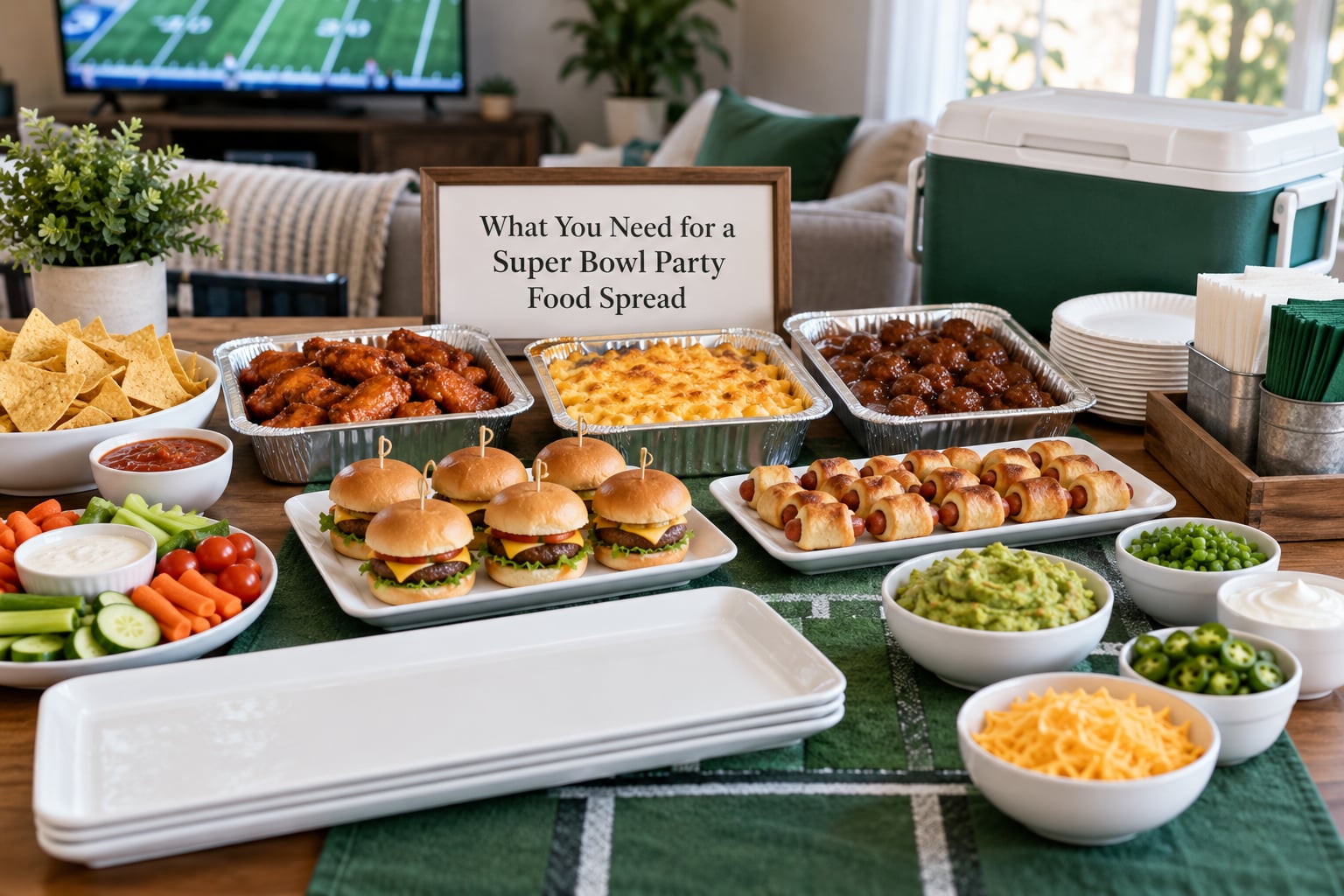
You need five things before you shop: a guest count, a category list, an equipment list, a rough prep-space plan, and a drink plan. Hosts who skip the equipment list are the ones quietly reheating chili in three saucepans at kickoff.
Equipment and supplies to have ready
Two or three slow cookers are the single most useful thing you can own for game day. They hold meat at serving temperature without you hovering, and they free up your oven and stovetop for the last-minute items.
- Serving platters, one shallow bowl or tray per category
- Tongs and slotted spoons for each platter, plus a few backups
- Paper plates, sturdy napkins, and take-home containers for leftovers
- A trash can and a recycling bin within walking distance of the food
- Chafing dish or foil trays and an oven set to its warm setting for backup
- Tablecloths or sheet pans under the food to catch drips and scratches
- Labels, masking tape, and a marker so guests know what’s what
Prep space matters more than recipes. Clear a stretch of counter near the kitchen for hot items, a separate table for cold items and dips, and one table that is purely drinks. Keeping them apart is what stops the traffic jam at halftime.
Step-by-Step: Build a Crowd-Friendly Game-Day Menu
Here is the whole process: count your guests, pick one item from each of six food categories, portion for 5 to 8 bites per person per hour, cook most of it the day before, set out three separate serving stations about 45 minutes before kickoff, and schedule reheats around commercial breaks. Follow these six steps in order and the spread runs itself.
1. Set the guest count and choose your menu style
Estimate attendance rather than guessing. Take your confirmed list and add about 15 percent for the friend who brings someone, plus a small buffer for kids. Then decide whether you are feeding a seated dinner crowd or running a grazing spread, because that changes quantities more than anything else.
A grazing spread needs roughly 5 to 8 small bites per guest per hour. Over a four-hour game that lands around 20 to 30 bites per adult. A casual crowd of 12 needs somewhere near 300 individual bites total, and most bites are two-bite items, so plan on well over 150 pieces of finger food.
Choose one of three styles and stick to it. Casual means dips, wings, nachos, and a veggie tray. Potluck means you provide two or three things and guests fill the rest. No-cook means deli trays, a charcuterie board, and store-bought dips, which is a completely legitimate choice when you have other guests to worry about.
2. Plan enough food without cooking for a crowd twice
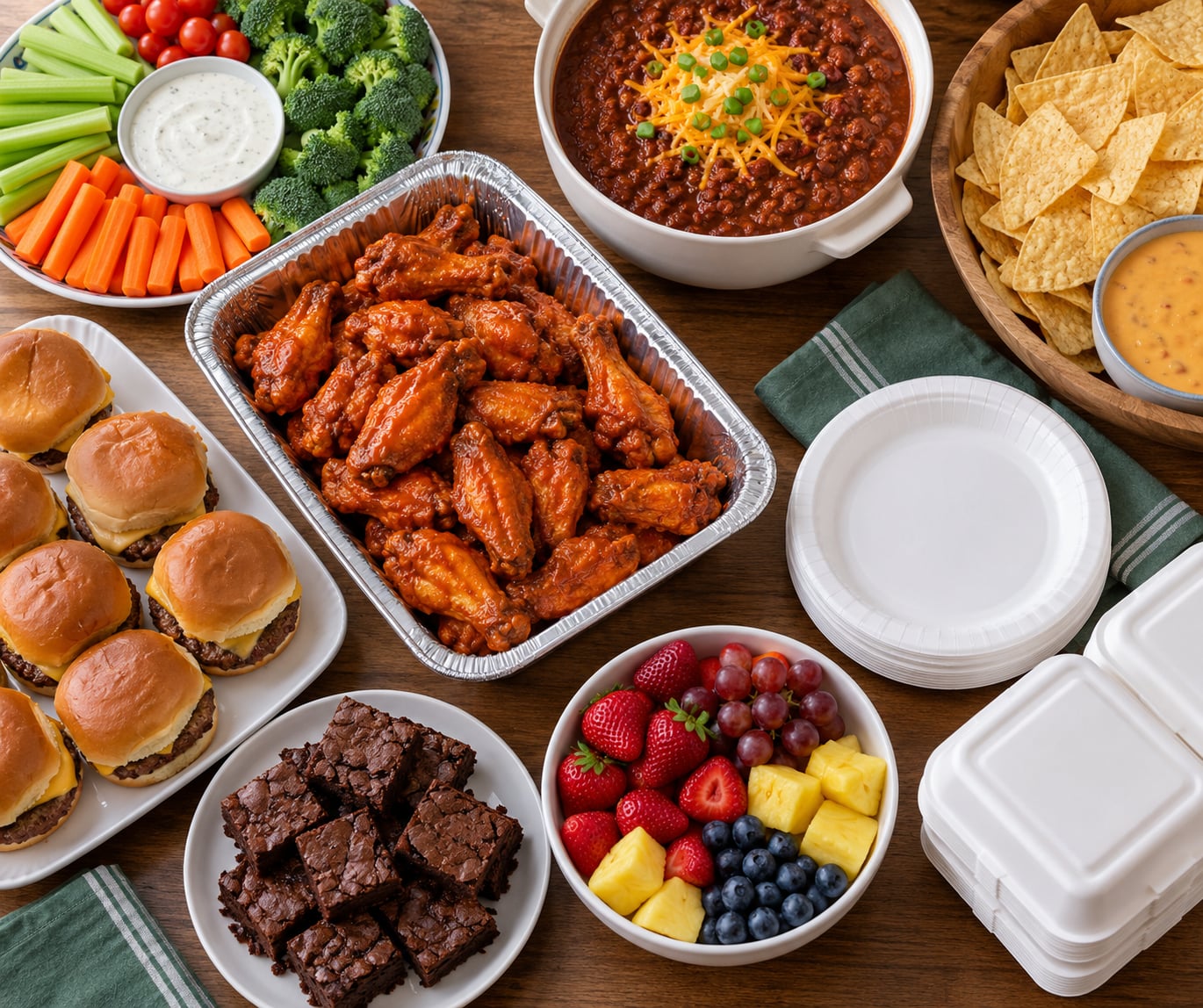
Fill one slot from each category: a dip, a protein, a bread or handheld item, something fresh, a vegetable or fruit tray, and a sweet. Six categories is the sweet spot for most home parties. Fewer than five and guests tire of everything by the third quarter, more than seven and you are cooking for a wedding.
Now do the math on how to plan a super bowl party food spread using per-guest-per-hour math. Multiply guest count by hours, then multiply by your bites per hour figure, then divide across six categories. That gives you a total bite budget rather than a vague sense of quantity.
| Category | Per guest, per 4 hours | For 12 guests | For 25 guests |
|---|---|---|---|
| Dip | 1/4 to 1/3 cup | 3 to 4 cups | 6 to 8 cups |
| Chips and crackers | 1 to 1.5 cups | 12 to 18 cups | 6 to 8 large bags |
| Wings or drumettes | 6 to 8 pieces | 72 to 96 pieces | 3 to 4 pounds |
| Meatballs, sausages or sliders | 4 to 6 pieces | 48 to 72 pieces | 100 to 150 pieces |
| Vegetables | 8 to 10 pieces | 2 to 3 full platters | 5 to 6 platters |
| Fruit | 5 to 8 pieces | 1 to 2 platters | 4 to 5 platters |
| Sweets | 3 to 4 small pieces | 36 to 48 pieces | 4 trays |
Those numbers assume nobody is eating a real meal first. If you are serving dinner before kickoff, cut the finger food by about a third. If you have teenagers who arrive hungry and stay for four hours, round up instead.
3. Choose mostly make-ahead foods
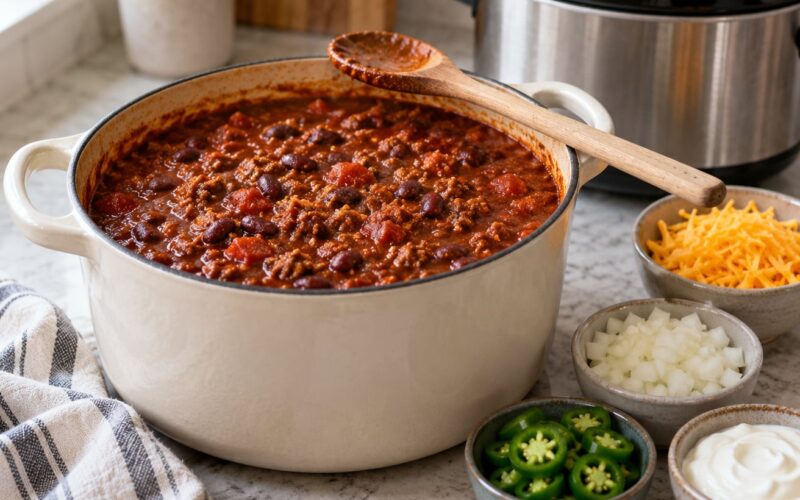
Make-ahead is what makes the evening work. Dips, chili, meatballs, sausages, and most desserts can be made the day before and just reheated or served cold. Wings can be cooked ahead and reheated at a high temperature so the skin stays crisp rather than going soft.
Keep cold food cold. Meatballs, cheese dips, and cut fruit should stay under 40 degrees, which means either setting them over ice in a bowl or keeping them in the refrigerator until ten minutes before guests eat. Perishable food should not sit out past two hours, and less than that if your guests are seniors or the room is warm.
Cook poultry, ground meat, and any reheated dish to a safe internal temperature: 165 degrees Fahrenheit for poultry, 160 for ground meat, and 145 for whole cuts of beef, pork, and fish.
4. Set up a buffet or snack stations
Three stations beat one crowded table every time. Put hot proteins together near the kitchen, cold dips and spreads on a side table, and drinks at the far end of the room away from both. Guests can refill drinks without crossing the food line, which is where the bottleneck usually forms.
Protect the dips. Cream cheese dips, queso with dairy, and anything with mayo get dropped in the danger zone fast on a warm table. Set them in shallow bowls nested inside a larger bowl of ice, and give each one its own spoon so nobody double-dips.
Leave an empty spot at each station for refills. If everything sits in one pile in the center of the table, the bottom layer never gets touched and you will run out of the good stuff early.
5. Use a game-day serving timeline
A game-day serving timeline is the difference between hosting and surviving. Most of the work happens the day before and in the two hours before kickoff; the rest is reheats during commercial breaks.
| When | What happens |
|---|---|
| Two days before | Confirm headcount, make a potluck list, buy shelf-stable items like chips, drinks, and take-home containers |
| Day before | Make dips, chili, meatballs, sausages, desserts. Portion dips into serving bowls. Buy wings or proteins to cook today or tomorrow |
| Game day, morning | Cook proteins, tray nachos, assemble veggie and fruit platters, set out serving gear and labels |
| Four hours before kickoff | Warm anything that reheats well, like chili, meatballs, and sausage. Set slow cookers on low |
| One hour before kickoff | Reheat wings at high heat, set cold items out, ice the drinks, place trash and recycling bins |
| Kickoff | Put out cold dips and veggie trays, keep hot items in slow cookers or foil trays |
| Halftime | Refill trays, restock chips and ice, bring out dessert |
| Final minutes | Put out take-home containers, start moving dirty plates to the kitchen |
One warning about reheating wings. Microwave them and they go chewy. Oven or air fryer at a high setting for eight to ten minutes brings back the crackle without drying the meat out badly.
6. Finish with drinks, labels, and easy cleanup
Plan drinks by the same logic. Assume two alcoholic drinks for drinking adults over four hours, one for moderate drinkers, and about 20 ounces of water per person. Add roughly half a pound of ice per drink, which sounds excessive until you have actually done it.
Batch one cocktail if you are serving alcohol, and batch one mocktail for everyone else. On a mixed-age crowd, the mocktail gets more requests than you expect, and kids drink it happily.
Label everything, even if only with masking tape and a marker. It solves dietary questions before anyone has to ask and it stops guests lifting the wrong lid.
For cleanup, the whole game is decided in the last five minutes. Put take-home containers near the door so leftovers travel with guests instead of sitting in your fridge, and bus dirty plates to the kitchen as people start heading out rather than trying to reset during the post-game.
Common Mistakes When Planning a Super Bowl Party Food Spread
Here are the six mistakes that turn a good spread into a stressful one, and what to do about each.
Overordering by a third
Overordering feels generous and turns into a week of reheating leftovers. Plan for the confirmed list plus 15 percent, and let guests take containers home.
Cooking everything on game day
Cooking everything on game day means missing kickoff. Move 70 percent of the cooking to the day before and keep only reheating for the day itself.
One crowded serving table
A single long table creates a bottleneck that empties in about fifteen minutes. Split it into hot, cold, and drinks stations so several people can serve themselves at once.
Letting dips sit out too long
Dairy dips left on a warm table for three hours are a genuine food safety problem, not just a texture problem. Nest serving bowls in ice and pull refrigerated items out ten minutes before serving.
All salty, all fried
A spread of wings, fries, and chips leaves guests thirsty and tired by the end of the third quarter. Include something fresh and something pickled, plus one vegetable-based protein like hummus or veggie skewers.
Forgetting the vegetarian and gluten-free guests
Plant-based guests rarely get a real option at a spread like this. Include one substantial meatless item, such as a hummus platter, stuffed peppers, or a bean-based chili, placed at eye level rather than tucked in a corner.
Frequently Asked Questions
How much food should I plan for a Super Bowl party?
Plan 5 to 8 bite-sized servings per guest per hour, which for a four-hour game works out to roughly 20 to 30 bites per adult. Spread that across six categories: dip, protein, bread or handheld item, vegetables, fruit, and sweets. A group of 12 needs about 300 bites total, so think 4 cups of dip, 80 to 100 wing pieces, and 3 to 4 platters of vegetables and fruit.
What is the best food to serve at a Super Bowl party?
Chicken wings are the most popular item by a wide margin, and buffalo with celery, carrots, and blue cheese dressing is the crowd favorite. Beyond wings, the dependable spread fillers are nachos with good queso, slow-cooker meatballs or chili, sliders, sausage bites, dips with chips, a veggie tray, and one sweet treat. Variety matters more than any single showpiece dish.
How early should I prepare food before a Super Bowl game?
Start the day before. Make dips, chili, meatballs, sausage, and desserts, then portion dips into serving bowls you can pull straight from the refrigerator. On game day, cook proteins in the morning, assemble the vegetable and fruit platters, and do all reheating four hours before kickoff. You should have a maximum of 45 minutes of active cooking left once guests arrive.
How do I keep wings and other hot food warm during the game?
Use slow cookers on low for anything saucy, like buffalo wings, meatballs, or chili. For wings that need to stay crisp, hold them in a single layer on a foil-lined sheet pan in an oven set to its warm setting, no more than about two hours. Bring cold dips out in batches on ice rather than all at once so the first batch stays at a safe temperature.
What drinks should I serve with a game-day food spread?
Serve water first, in large coolers or bottles, because salty wings drive thirst. Then plan one batched cocktail and one batched mocktail for the same menu so nobody has to improvise. A useful budget is about 20 ounces of water per person, half a pound of ice per drink, and two alcoholic drinks per drinking adult across four hours, or one for moderate drinkers.
Should I cook everything myself or ask guests to bring dishes?
Both work, but pick one approach instead of half of each. Cooking everything works for 6 to 12 people and gives you control over the menu and timing. A potluck works well above 15 guests, where you assign two or three specific dishes rather than inviting people to bring whatever. For any size, store-bought deli trays and dips are a completely reasonable shortcut.
Conclusion
Start with the headcount, cut your menu to six categories, and do the easy food the day before. That single decision is what turns a super bowl party food spread from a kitchen project into something you can actually enjoy with your own guests. Portion at 5 to 8 bites per person per hour, set out three stations, and keep the oven on warm for backups.