The fastest way to plan a potluck without duplicate dishes is to stop asking guests what they want to bring and start assigning each one a food category on a single shared sign-up sheet. Set the categories first, publish the sheet, cap the ones people over-claim, then re-check it 48 hours out.
That whole approach takes about 30 minutes of admin spread across a week, and it fixes the specific failure that ruins most potlucks: an open group chat where everybody says “I’ll bring a casserole.” I’ve watched the message thread get buried under work chatter and weekend photos, and nobody re-reads it until Saturday afternoon.
Below is the system I use, step by step, including the part where a guest ignores the slot you gave them.
Table of Contents
- What You Need
- Step-by-Step: How to Plan a Potluck Without Duplicate Dishes
- 1. Set the Rules and Choose a Potluck Theme
- 2. Divide the Menu into Food Categories
- 3. Create a Shared Sign-Up System
- 4. Review Entries and Prevent Duplicate Dishes
- 5. Fill Menu Gaps and Set Serving Quantities
- 6. Confirm the Plan and Send Everyone the Details
- Common Mistakes
- Frequently Asked Questions
- What is the easiest dish to bring to a potluck?
- What not to bring to a potluck?
- What are some good pre-made dishes to bring to a potluck?
- What are the etiquette rules for hosting a potluck?
- How many dishes should a potluck have?
- What do I do if two guests bring the same dish?
- Conclusion
What You Need
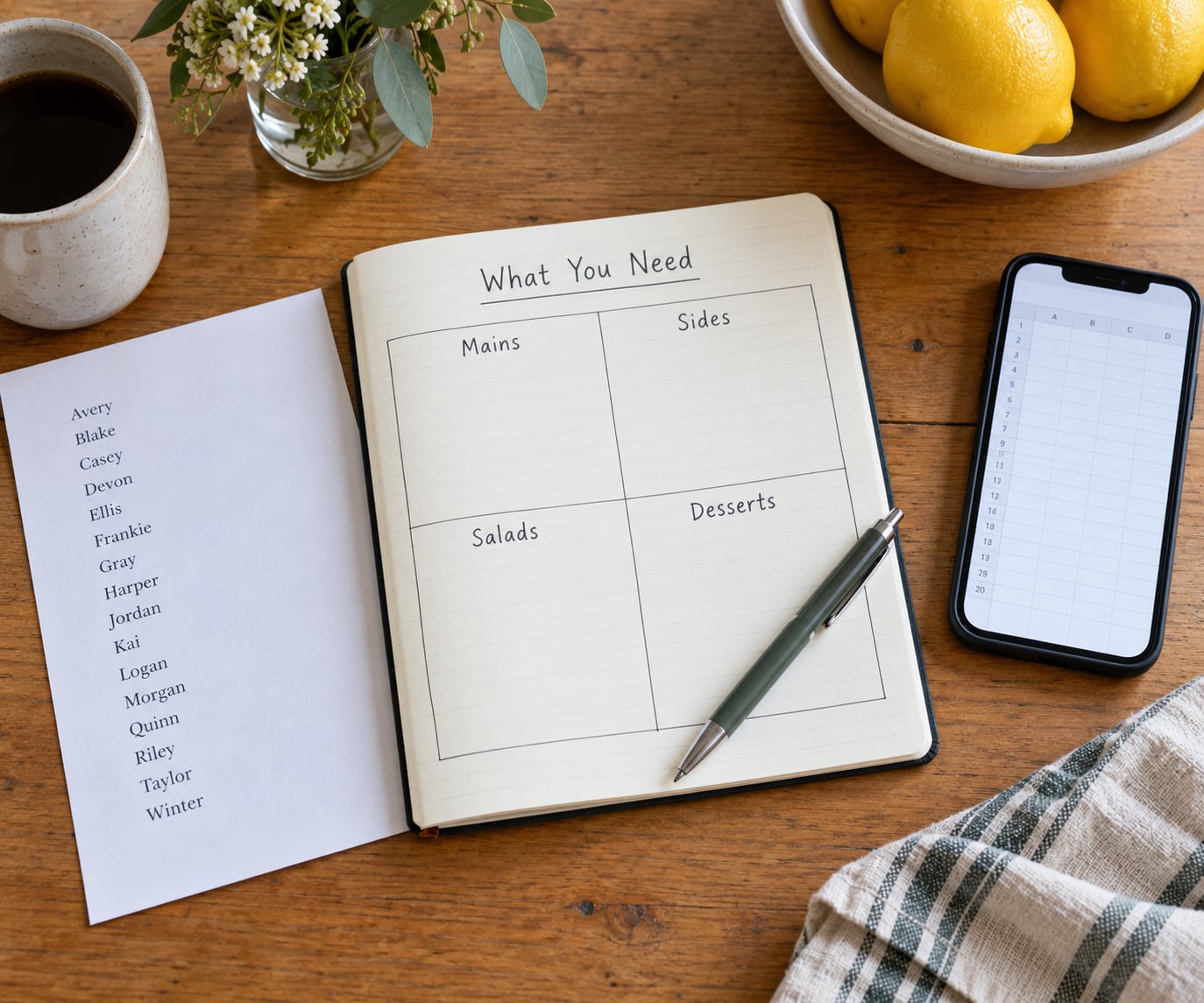
You do not need any special software. Five things do the work:
- A confirmed guest list with headcount. Not an invite list, the number of people who actually said yes.
- A category list with a slot count for each one. Mains, sides, salads, desserts, bread, drinks, and a dietary slot if anyone needs one.
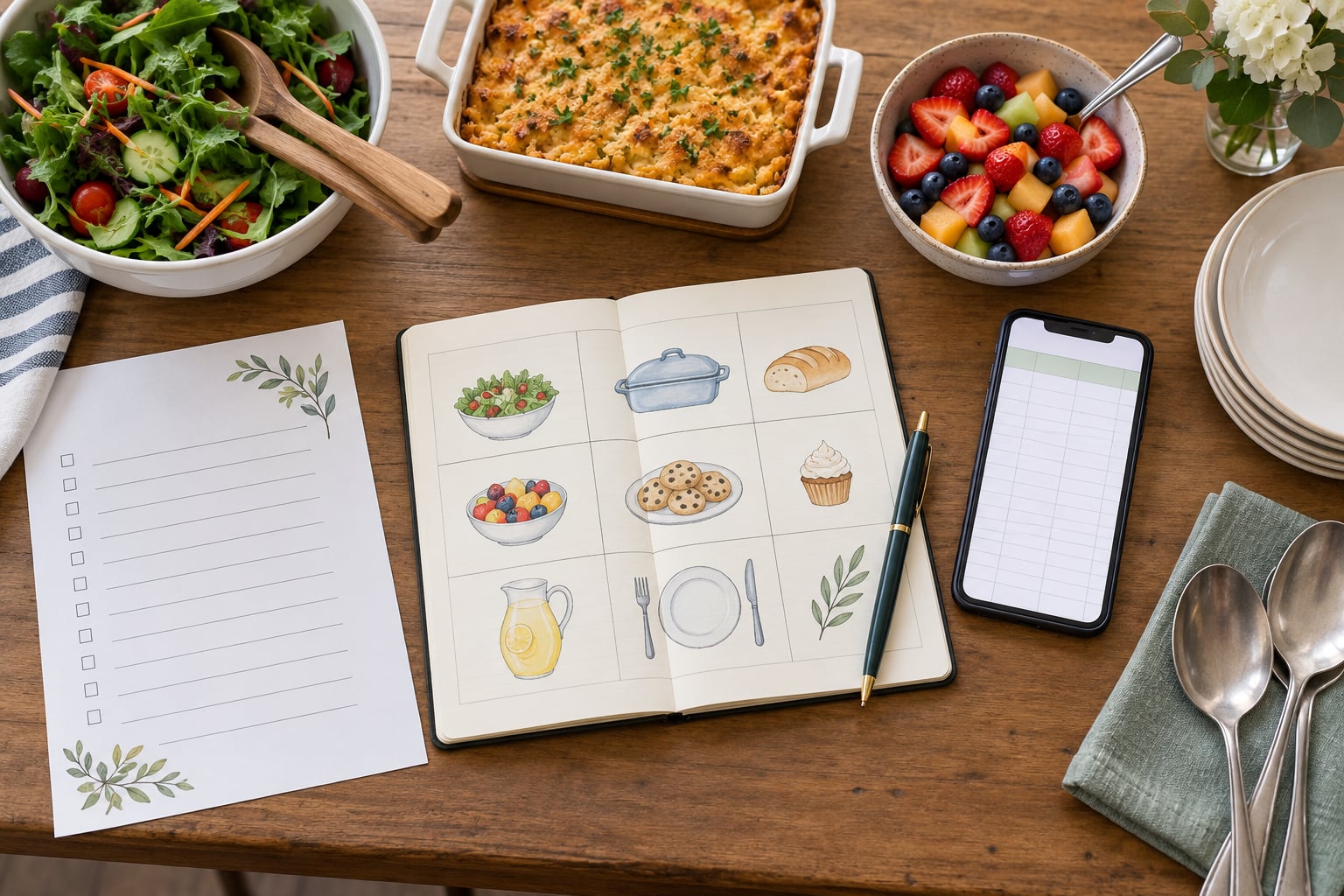
- One shared sign-up sheet that every guest can see and edit. A single Google Sheet works. So do most free sign-up tools.
- A name or email attached to every claim, so you know who is bringing what.
- One communication channel for the final plan. A link in the group chat is fine, as long as the sheet itself lives somewhere permanent.
Two more items earn their keep later: a running note of dietary restrictions and allergies, and a deadline for claiming a slot. Give guests 72 hours. Short deadlines mean people grab the nearest open cell instead of thinking.
Before you build the sheet, read through your guest list and note anyone who travels far, cannot cook, or is bringing a child. Travel distance dictates whether you need no-reheat dishes, and it changes nothing about the slot math.
Step-by-Step: How to Plan a Potluck Without Duplicate Dishes
Duplicate dishes happen for one reason: nobody owns the list. The fix is six steps that move the decision upstream, before anyone buys groceries. You set the structure, guests fill in one slot each, and you audit the finished menu twice before the day itself.
1. Set the Rules and Choose a Potluck Theme
A theme does more work than most hosts expect. “Mexican” fills the table with a taco bar almost on its own, which makes duplicate dishes far less likely than a spread with no boundaries at all. Themes people like: taco bar, chili cook-off, brunch, game day, soup and bread, cookie swap, summer grill.
Then write down four rules before you share anything with the group:
- The date, the start time, and when food should arrive (usually 30 minutes before guests).
- One dish per person, one assigned category, no exceptions without asking you.
- Whether the host is providing an anchor dish (see below) and what it is.
- Where guests should drop off: the kitchen counter, a folding table in the garage, or the host’s front door.
An anchor dish is the one substantial hot thing you, the host, are providing. Chili, pulled pork, a lasagna. Naming it in advance removes the single most contested slot and stops three people from volunteering for the same casserole. If nobody hosts, then the mains category gets two slots instead of one.
A fresh and crunchy slot is the other one worth protecting. Salads, crudité, fruit, slaws. Sweet and salty dishes crowd each other out, so having one cool, crisp option on the table keeps the spread from tasting like a dessert case.
2. Divide the Menu into Food Categories
Write out your categories, then attach a number to each one. The number is the slot count, and it scales with headcount. Start with one main per six guests and one side per four, then apply the caps.
| Category | Slots per group size | The duplicate to watch for |
|---|---|---|
| Anchor main (host) | 1, always | Two people deciding they will each bring the same chili |
| Other mains or entrees | 1 per 6 guests | Pasta bakes and casseroles stacking up |
| Sides and vegetables | 1 per 4 guests | Three versions of the same potato dish |
| Salads and fresh crunchy | 1 per 8 guests, cap 4 | Pasta salad, three versions |
| Bread or rolls | 1 per 10 guests | Everyone assuming the bread is handled |
| Desserts | 2 per 12 guests, hard cap 4 | The big one. Nine desserts, no savoury food |
| Drinks and ice | 2 per 15 guests | Two people buying the same 12-pack |
| Dietary-specific slot | 1 if anyone needs it | Assuming “gluten free” means one labelled dish |
Two rules keep this honest. First, cap desserts hard, because desserts get claimed far faster than any other category and nobody wants to eat cake with dinner. Second, leave one wildcard slot open. Some guests only bring one dish and it is already made, and having somewhere to put it saves an argument.
Small groups work differently. Under 12 people, use three categories instead of eight, and be honest about it: one main, two sides, one dessert. Trying to fill eight slots with six guests is how you end up with a potluck of nothing but relishes.
3. Create a Shared Sign-Up System
The sign-up sheet needs seven columns. Name, dish, category, how many people it serves, dietary notes, and what needs reheating or stays cold. Anything less and you will chase people by text later.
Here is the column set to copy straight into a shared spreadsheet:
- Your name
- Your email (so I can send the final plan)
- Category slot (dropdown: main, side, fresh and crunchy, bread, dessert, drinks, wildcard)
- Dish name
- Serves how many
- Dietary notes (allergens, vegetarian, gluten free, spice level)
- Keeps hot / keeps cold / room temperature
Guests claim by editing their own row. Restrict editing to the row they add, or use a form, and you get the structure without the mess. Posting a blank link in the group chat is the only distribution step needed.
Do not use the group chat itself as the sign-up sheet. It is where commitments get forgotten. People scroll past the dish list, the thread fragments across topics, and a late “me too!” from someone who never checked loses to a quicker reply. If your group is genuinely small, eight people or fewer, a poll in the chat works, but the poll needs to show existing answers to everyone.
| Option | Best for | Watch out for |
|---|---|---|
| Shared spreadsheet | Any size, full control, works offline | Guests need editing access set up before they arrive |
| Free sign-up tool | Groups that will not touch a spreadsheet | Fewer columns, less customisation, extra tab to open |
| Group-chat poll | Eight guests or fewer | Answers hide each other, so duplicates slip through |
| Physical list on a card at work or church | Non-digital groups | You must type it up yourself afterwards |
Decide who owns the sheet before you send it. One person, named, in the message. “I am running this, ask me anything” prevents the drift where four people each start their own list and the sheet nobody looks at becomes the real one.
4. Review Entries and Prevent Duplicate Dishes
Read the finished entries by main ingredient, not dish title. Two dishes with completely different names usually share the problem: three potato sides, two pasta bakes, four things in a slow cooker. Near-duplicates are the ones that get noticed at the table, because they look identical once sliced.
Ask people for a clearer description rather than a new dish when a category is already crowded. “What is the base of it?” is a neutral question that does not sound like a complaint.
When you need to redirect someone, give them a choice of what is still open. This is the script that works:
“Quick flag before Friday: there are already three potato dishes, so a pasta or rice base would round out the table much better. The desserts are full, and the sides and drinks slots are still open.”
It names the problem, offers the alternative, and never asks them to redo work already done. Guests who planned to bring dessert and get moved to a side usually go along with it, because nobody wants to be the reason the table has no food.
If someone insists, accept it and adjust. One extra dish beats a strained conversation. Write it on the sheet anyway, marked as unconfirmed, so the audit catches it.
5. Fill Menu Gaps and Set Serving Quantities
Look at the finished sheet and count categories, not dishes. A menu with eight pasta salads is balanced on paper by total dish count and completely broken on the table. Look for empty columns: no main, no fresh, no drinks, nothing savoury.
Fill gaps in this order. Ask a reliable guest first, by direct message, naming the specific slot. Then buy it yourself, because a store-bought tray of something reasonable beats an empty space. Then add it yourself.
Quantities stop the two classic outcomes: running out by plate three, or enough food to feed the neighbourhood for a week. Plan a little heavy, since extras get taken home and do not go to waste the way an empty tray does.
| Category | Per adult | Per child (roughly age 5 to 12) |
|---|---|---|
| Main | 6 to 8 oz | 3 to 4 oz |
| Side or vegetable | 3 to 4 oz | 2 oz |
| Salad | 1 cup | Half a cup |
| Bread | 1 roll, or 2 slices | 1 roll |
| Dessert | 1 piece, or 2 small | 1 small piece |
| Drinks | 2 servings | 1 serving |
Multiply by confirmed headcount, add 10 percent for guests who arrive hungry, and round up to full containers rather than fractions. Nobody notices an extra tray. They notice the tray that scraped clean.
For a 20-person office lunch, that works out to roughly three mains, five sides, two fresh salads, two desserts, two bread items, and three drink runs, with the host covering one main as the anchor. For a 30-plus block party, plan the same ratios plus one extra drink runner and a second dessert slot, because big crowds move through food faster than the numbers suggest.
6. Confirm the Plan and Send Everyone the Details
Forty-eight hours out, post the final list in the same channel as the sign-up sheet. Ask everyone to confirm their row. Most duplicate dishes are already visible at this point and still have time to be swapped.
Include these in the final message:
- The full dish list with the guest’s name beside each one
- Arrival time, and whether food goes to the kitchen or a table in another room
- Serving gear each guest should bring: a spoon, a knife, a platter, a set of take-home containers
- Which dishes keep hot, which keep cold, and where coolers and ice are
- Dietary notes and allergen labels, spelled out
- The supplies owner, named, for plates, cups, ice and napkins
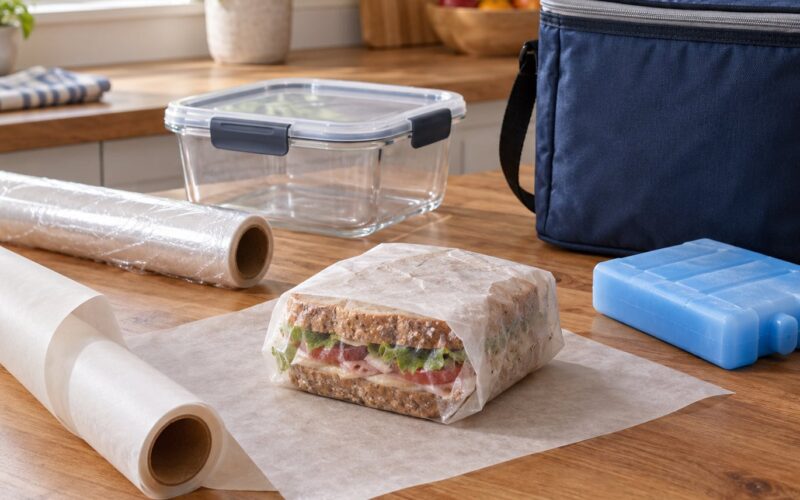
On food safety, keep anything perishable under 90 minutes at room temperature, and use ice or a chafing dish to hold it. Poultry reaches a safe internal temperature of 165°F, ground meat 160°F, and whole cuts of meat and fish 145°F. Cold dishes go into a cooler with ice packs, not a decorative bowl on a warm table, and leftovers go into containers within two hours.
Two hours out, set up the table in category order with serving utensils and small tent cards or folded index cards naming each dish. The labels cut down on the “what is this?” questions and make allergy information visible without anyone asking.
Common Mistakes
Using the group chat as the sign-up sheet. Commitments get scrolled past and duplicated by people who never saw the earlier replies. One permanent sheet, one link, posted once.
Leaving categories uncapped. Desserts get claimed first, every time, and the table ends up with a beautiful dessert spread and nothing to eat it with. Cap desserts at four and let the rest of the menu breathe.
Publishing the sheet without a theme. Free-for-all sign-ups drift toward whatever is easiest to cook. A theme makes nine different decisions unnecessary.
Letting guests claim without seeing the list. If each person fills in their row blind, you get two coleslaws by accident. Restrict the sheet so new claims appear for everyone to see, or post a screenshot with each new entry.
Cooking for a mystery headcount. Confirm RSVPs, then plan for the number who said yes plus a small buffer. A grocery run for twelve feeding twenty-five ends with plates scraped at six o’clock.
Assuming the guest who ignores the slot will read the list. Some people genuinely will not look at a spreadsheet. Give those guests a direct assignment in a private message, name the specific dish category, and ask them to confirm. If you cannot reach them, buy a backup of the category they were supposed to cover and stop worrying.
Forgetting supplies. Someone always volunteers for ice, cups and plates, but only if you ask by name in the final message. Otherwise it is three people hunting for a corkscrew at 6:45.
A potluck with 12 guests or fewer needs far less administration. Skip the spreadsheet, assign three categories in a single message, and ask each person to check the thread before they cook. The rules only get heavy once the headcount climbs, which is usually when nobody wants to do the job.
Frequently Asked Questions
What is the easiest dish to bring to a potluck?
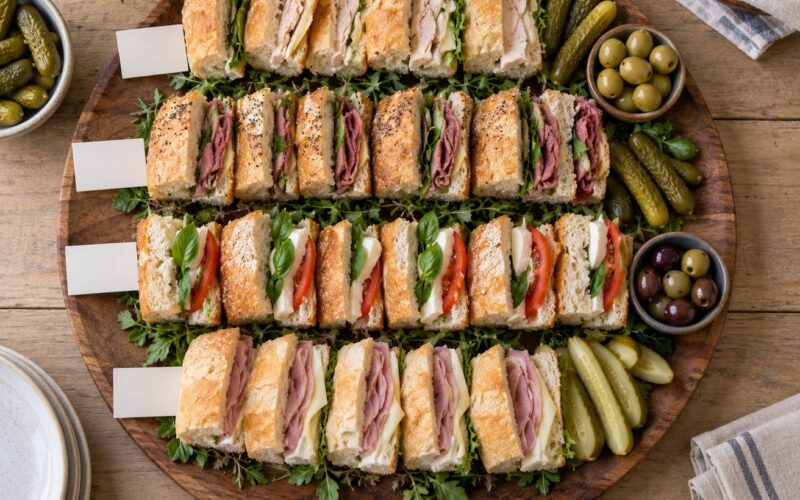
A platter of sandwiches, a vegetable and dip tray, a bag of chips with a dip, or a store-bought rotisserie chicken all travel well and need no last-minute cooking. The easiest choices are the ones served at room temperature, portioned onto their own tray, and free of ingredients that need to be kept hot. If you are nervous, bring something that can be set out the moment you walk in.
What not to bring to a potluck?
Skip anything that collapses on the drive, like a tall layered cake without a box, or a hot dish that needs an outlet and finishes before everyone eats. Avoid bringing a second salad when a salad slot is already full, a dish in a pan you want back, or anything requiring a knife to serve beyond a quick slice. Also skip very spicy dishes unless you want to be the only person who can taste the food.
What are some good pre-made dishes to bring to a potluck?
Store-bought options that work well: rotisserie chicken, deli platters, antipasto trays, prepared pasta salads, tubs of soup kept hot in a slow cooker, bakery bread, and bakery cookies on a platter. A jar of olive oil and vinegar set out with bread reads as intentional rather than lazy. Add a small label with the ingredients so nobody has to guess about nuts or dairy.
What are the etiquette rules for hosting a potluck?
The host sets the date, the categories, the headcount for quantities, and who brings plates and ice. Guests claim one category slot, arrive 30 minutes early if their dish needs reheating, bring their own serving utensil, and label allergens. The host provides the anchor dish and steps back once people start serving themselves. Everyone takes their extras home rather than leaving them.
How many dishes should a potluck have?
Plan one main per six guests, one side per four, one fresh salad per eight, bread for every ten, and two desserts per twelve with a cap at four. For 12 people, three categories are plenty. For 20, aim for around 12 dishes including drinks. For 30 or more, add an extra drink runner and a second dessert rather than more mains, since the table gets long fast.
What do I do if two guests bring the same dish?
Do not ask either person to leave. Put both on the table, name them differently on the tent cards, and spread them out rather than stacking them next to each other. If the dishes are near-identical, slice one and serve it as a second option at the same station. Two versions of a good dish is a far smaller problem than a host calling out a guest over it in front of everyone.
Conclusion
Three things, in this order: write the categories before you tell guests anything, put every commitment on one shared sign-up sheet that guests can see, then read that sheet twice before the event. Once, when the last claim comes in, and again 48 hours out.
Everything past that is adjustment, not organisation. Assigning slots takes about half an hour, and it is the whole difference between a spread of fifteen dishes and the same dinner with three potato casseroles and no vegetables.