Garlic parmesan wings are oven-baked, not deep-fried: you dry-brine chicken wings in kosher salt and baking powder, bake them at 400°F until the skin crackles, then toss them in warm garlic butter and finely grated Parmesan. This is how to make garlic parmesan wings that hold their crunch on a platter for an hour and need nothing more than a lined sheet pan, a wire rack, and about 40 minutes of oven time.
The technique is forgiving, but one detail decides the result. Skin that is still wet when it goes in the oven steams instead of browning, and no amount of Parmesan fixes that. Dry the wings properly and everything after that is straightforward.
Table of Contents
- What You Need
- For the wings
- For the garlic Parmesan sauce
- Equipment and substitutes
- Step-by-Step: How to Make Garlic Parmesan Wings
- 1. Prepare and Season the Wings
- 2. Bake Until the Skin Is Crisp
- 3. Make the Garlic Parmesan Sauce
- 4. Coat the Wings
- 5. Finish Crisp or Go Extra Saucy
- 6. Rest, Garnish, and Serve
- Common Mistakes and Fixes
- Why won’t my wings get crispy?
- Why does the Parmesan clump instead of coating evenly?
- Why is the sauce watery or greasy?
- How do I batch and store them?
- Frequently Asked Questions
- Can I make garlic parmesan wings ahead of time?
- Can garlic Parmesan wings be made in an air fryer?
- How do I keep garlic Parmesan wings crispy?
- How long do garlic Parmesan wings last in the refrigerator?
- Can I use frozen wings for garlic Parmesan wings?
- Conclusion
What You Need
You need roughly 2 pounds of chicken wings and a short list of pantry ingredients for the dry brine and the sauce. The equipment is a rimmed baking sheet, a wire rack, and either a stand mixer or a large bowl and a sturdy spoon for tossing.
For the wings
- 2 pounds (about 900 g) party wings, drumettes and flats
- 1 1/2 teaspoons (about 9 g) kosher salt
- 1 1/2 teaspoons (about 7 g) aluminum-free baking powder
- 1 teaspoon garlic powder
- 1/2 teaspoon black pepper
- 1 teaspoon olive oil or cooking spray, for the rack
For the garlic Parmesan sauce
- 4 tablespoons (60 ml) unsalted butter
- 4 cloves garlic, minced, about 4 teaspoons
- 1/2 cup (about 45 g) finely grated Parmesan, plus more for finishing
- Zest of 1 lemon
- 2 tablespoons chopped fresh parsley
- 1/2 teaspoon smoked paprika, optional
- 1/4 teaspoon cayenne pepper, optional
Equipment and substitutes
- A wire cooling rack set inside a rimmed baking sheet; without the rack the wings sit in their own rendered fat and steam
- Parchment paper or a silicone liner, since the butter sauce will stick to bare metal
- A digital thermometer, so you are not guessing at 165°F, the safe minimum internal temperature for chicken
Substitutions are easy. Grated Pecorino Romano works in place of Parmesan and is sharper. Pre-minced garlic from the jar saves a minute but loses most of its aroma, so use fresh if you can. There is no unsalted butter substitute worth making here, because the sauce needs the fat to cling to the wings.
Metric conversions, since half the internet writes this recipe in grams: 1 cup of grated Parmesan is about 90 g, 4 tablespoons of butter is 60 ml, and 1 teaspoon of kosher salt is roughly 6 g. Diamond Crystal is flakier and saltier per teaspoon than Morton, so if you use it, cut the salt back to about 1 teaspoon.
Step-by-Step: How to Make Garlic Parmesan Wings
1. Prepare and Season the Wings
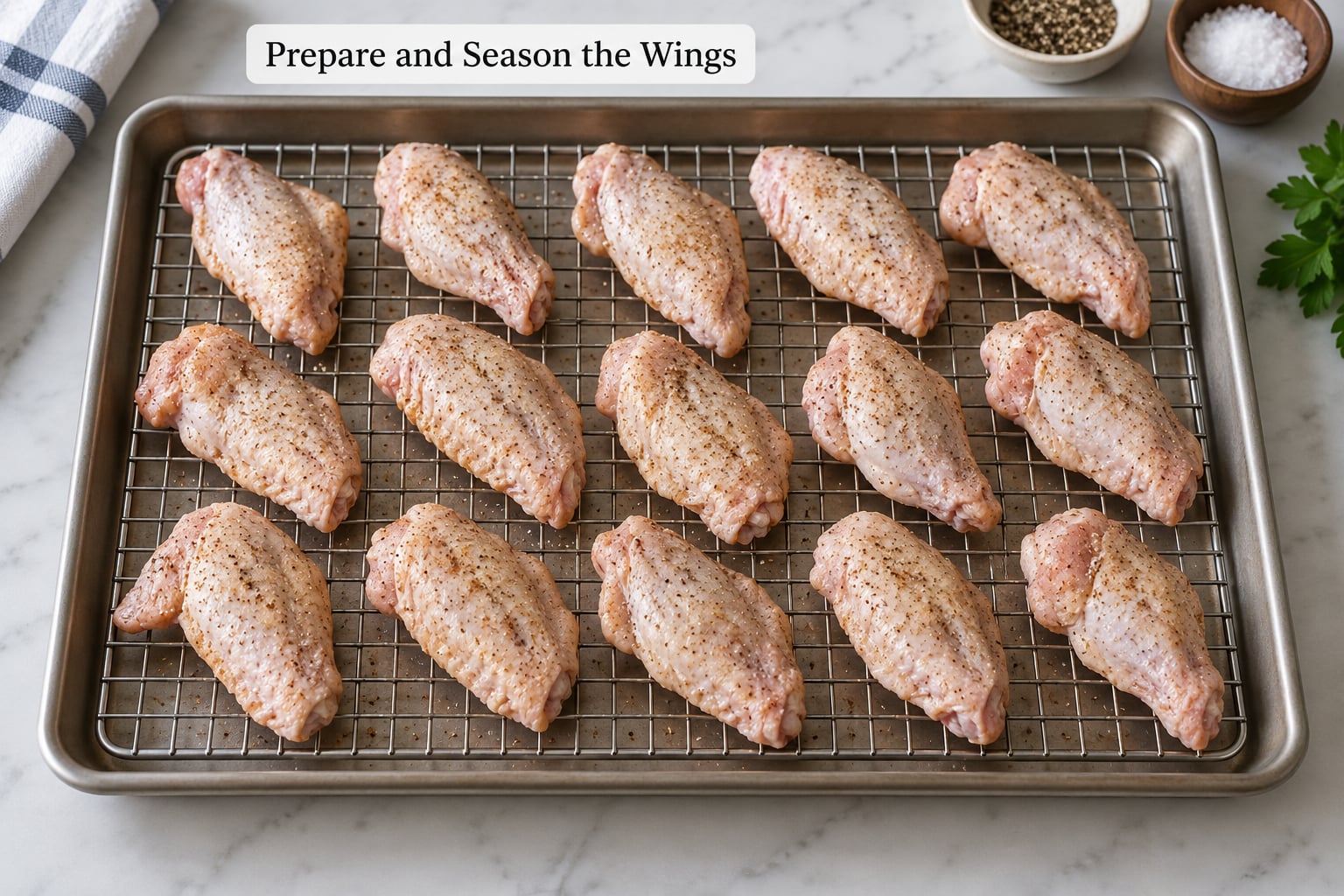
Pat every wing bone-dry with paper towels, then season them on all sides with the salt, baking powder, garlic powder, and pepper. The towels are the step people skip and the step that decides everything.
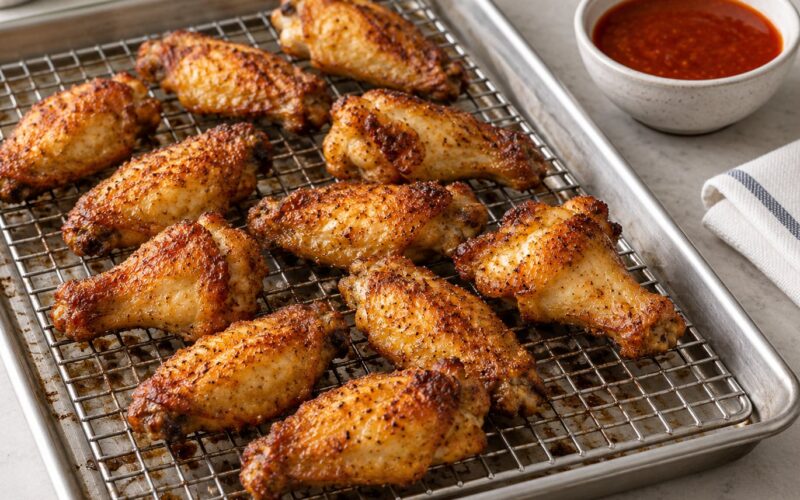
Put the seasoned wings on the rack so they are touching each other but not overlapping, and slide the sheet into the fridge for at least 15 minutes and up to 24 hours. That chill is a dry brine: the salt and baking powder pull water out of the skin, and skin that has lost water browns and blisters in the oven instead of staying pale and rubbery.
How you know it worked: the skin looks matte and slightly tacky rather than wet, and the pieces feel firmer than they did straight out of the package. Turn the oven to 400°F (205°C) and leave it heating while the wings chill.
2. Bake Until the Skin Is Crisp
Bake the wings at 400°F (205°C) for 20 minutes, then flip every piece and bake another 25 to 30 minutes. Total time runs 45 to 50 minutes, and party wings need the full window; flats, which hold less meat and more surface area, usually finish 10 minutes sooner.
Check the thickest drumette with a thermometer and pull the batch at 165°F internal. The skin should be deep golden with a slightly tightened look, and the joint should bend without resistance when you wiggle it.
If the wings are browned but the flesh still feels squishy near the bone, give them five more minutes rather than trusting color alone. Wing size varies so much between a supermarket party pack and a butcher case that a timer is a guess, but the thermometer is not.
3. Make the Garlic Parmesan Sauce
Melt the butter in a small pan over medium-low heat, add the minced garlic, and cook it for 60 to 90 seconds until it smells sweet and turns pale gold. Let the garlic take on any color at all and it turns bitter, so keep the heat low and stay close.
Kill the heat, add the Parmesan, lemon zest, and smoked paprika if you are using it, and stir until the cheese melts into a smooth, pourable sauce. It should coat the back of a spoon and run slowly off it. If it looks like thick paste, a tablespoon of warm butter brings it back; if it looks loose and separated, let it sit on the warm pan another 30 seconds to tighten.
4. Coat the Wings
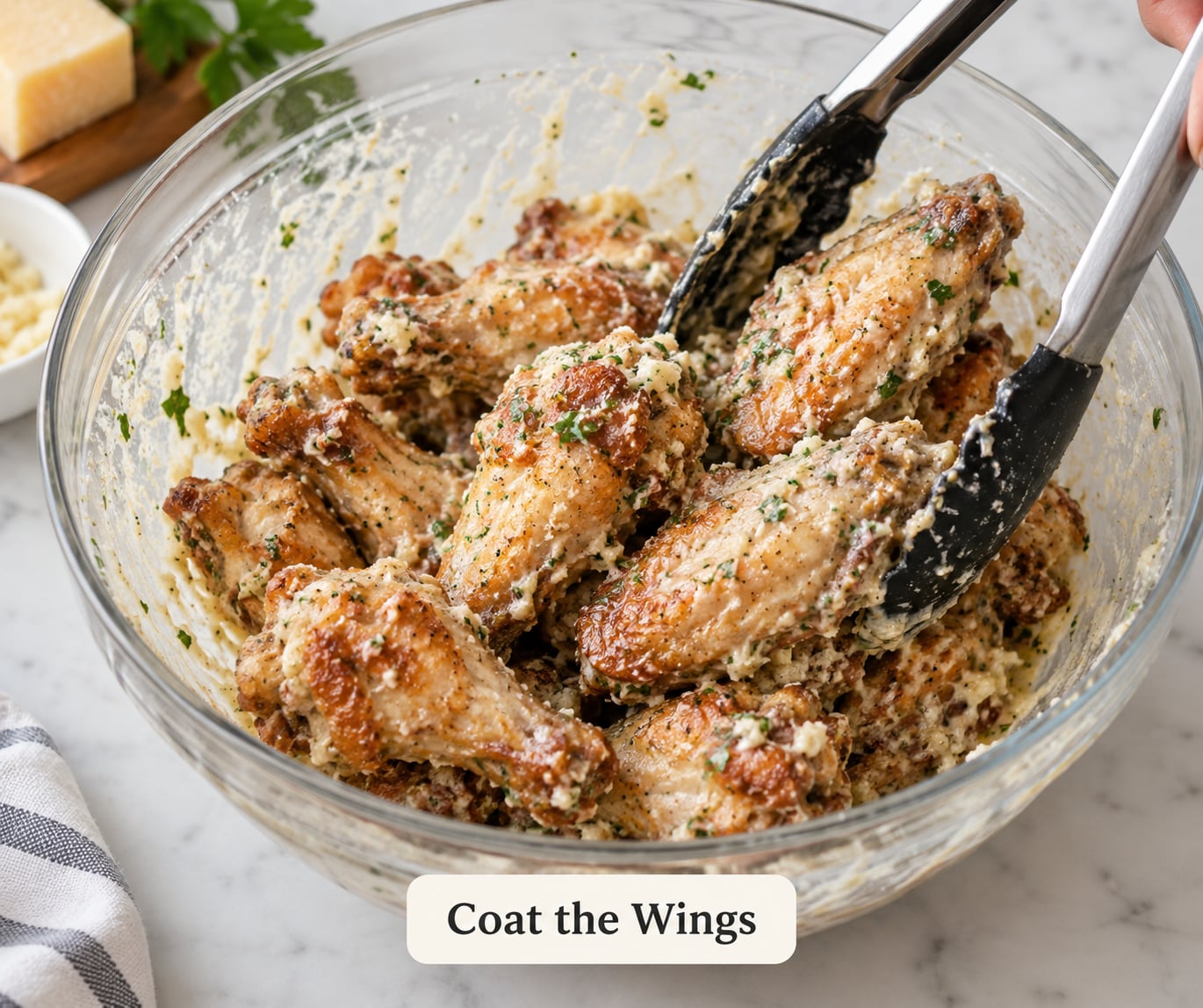
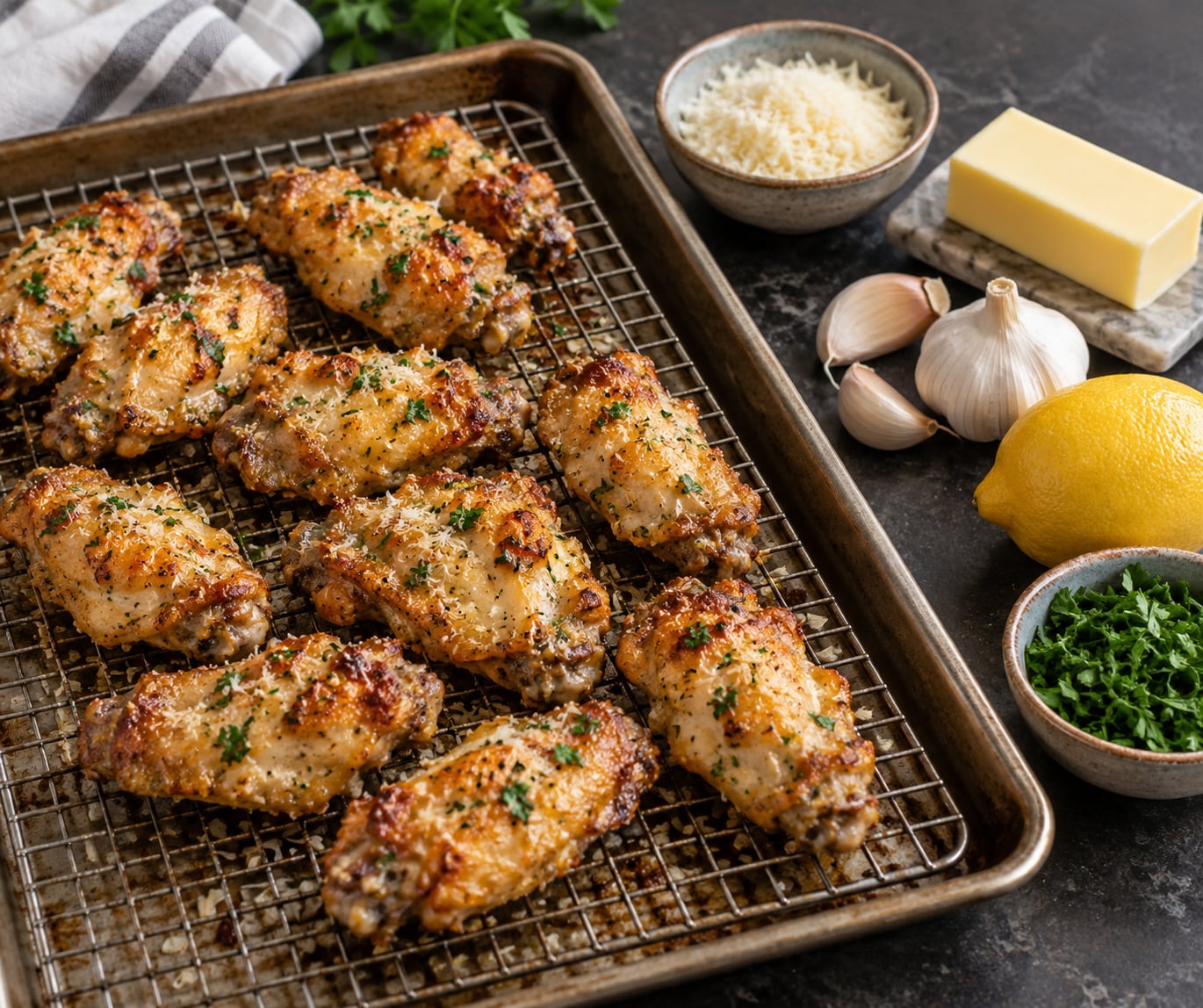
Toss the wings in the sauce while they are still hot, right out of the oven, and use a pair of tongs or a large spoon to turn every piece for 20 to 30 seconds. Hot wings melt the butter immediately, which is what makes the Parmesan fuse into a thin savory crust instead of sitting in dusty patches.
Add the parsley at the very end and toss once more, off the heat. If the coating is turning pasty, you mixed in too late or too hard: a wing that sits in the sauce while it cools drinks up the butter and the Parmesan loses its structure. Work in two batches rather than dumping the whole sheet pan in at once.
5. Finish Crisp or Go Extra Saucy
For crisp edges, spread the tossed wings back on the rack and broil for 2 to 3 minutes, watching constantly, until the Parmesan blisters and browns in spots. Add the extra Parmesan after the broil, never before, because cheese that goes under the broiler clumps and scorches before it can melt.
For a softer, more traditional restaurant-style result, skip the broiler and serve them straight from the bowl. Those are the sauced wings people expect with celery sticks, and they will not crackle no matter how long they broil, so treat them as a different dish rather than a failed one.
6. Rest, Garnish, and Serve
Rest the wings on the rack for 3 to 5 minutes so the sauce sets and any excess butter runs off. Top with a final snowfall of Parmesan and a few more parsley leaves, and serve them warm, not hot, so the coating holds its texture.
Ranch and blue cheese are the obvious dips, and both cut the butter nicely. Marinara works when you want to push the Italian angle, and a quick garlic Parmesan dipping sauce made from mayo, Parmesan, a squeeze of lemon, and grated garlic gives you something sturdier than store-bought ranch for a spread of mixed appetizers.
Common Mistakes and Fixes
Most disappointing garlic parmesan wings fail before they reach the oven, not in it. These are the four problems I see most often, followed by how to batch the work for a party.
Why won’t my wings get crispy?
The skin was damp, the pan was overcrowded, or the wings were undercooked. Pat the wings bone-dry, use a single layer on a rack with air moving underneath, and finish to 165°F internal rather than to a timer.
Two more causes are worth naming. Cornstarch crisps through a different mechanism than baking powder: it forms a thin shell when it hits heat and keeps the skin from softening, but it produces a smooth glassy crunch rather than the craggy, fried-looking blister that baking powder gives you. Use one or the other, not both at full strength, and choose aluminum-free baking powder if regular baking powder leaves a soapy or metallic taste on your tongue.
Yes, you can put too much baking powder on wings. Past roughly 2 teaspoons per pound it starts to taste metallic and faintly bitter, and it will not rescue wings that were wet to begin with. If you have already gone too far, a rinse and a pat dry before baking is better than trying to cover the taste in sauce.
Why does the Parmesan clump instead of coating evenly?
Because the sauce was too cool or too loose when the wings went in, and because the cheese was grated too coarsely. Grate the finest you can, melt the sauce until it runs like cream, and toss hot wings in small batches so every piece is submerged and turned within a few seconds.
Any heavy patches that form anyway are the reason to broil, not to stir harder. Ten seconds under the heat melts the clumps into the rest of the coating.
Why is the sauce watery or greasy?
Butter separated from the water in the garlic, or the Parmesan was added before the heat was off. Take the pan off the burner before adding the cheese and stir continuously until it melts, then loosen with a tablespoon of warm butter if it seizes.
Garlic that was fried too hot, or garlic powder used in place of fresh, also makes the sauce taste flat and slightly acrid. Fresh garlic for 60 seconds in warm butter is the whole flavor base.
How do I batch and store them?
Cook wings in batches of a single layer and hold the finished ones on a rack over a sheet pan in a 200°F (95°C) oven, which keeps them crisp without drying them out. Do not stack them in a bowl, and do not cover them with foil; trapped steam is what softens the skin.
Count for a party: 6 to 8 whole wings per person is a safe starting number for an appetizer spread, and 10 to 12 if the wings are the only thing on the menu. Cooked wings keep in the refrigerator for 3 to 4 days in a sealed container, and the way to reheat them is a 375°F (190°C) oven for 10 to 15 minutes on a rack, not the microwave.
Frequently Asked Questions
Can I make garlic parmesan wings ahead of time?
Yes, and this is the best use of the method. Season the wings with the salt and baking powder up to 24 hours ahead and refrigerate them uncovered on a rack; the dry brine keeps working the whole time. Cook them fully, then hold them on a rack in a 200°F oven. Toss in the garlic Parmesan sauce no more than 20 minutes before serving so the coating stays put.
Can garlic Parmesan wings be made in an air fryer?
Yes, and the air fryer is the fastest route. Set it to 400°F (205°C), arrange the dry-brine seasoned wings in a single layer without crowding, and cook for 20 to 25 minutes, shaking the basket halfway through. Check a drumette for 165°F internal. Toss the finished wings in the same warm garlic Parmesan sauce, and broil for 1 minute at the end if you want blistered edges.
How do I keep garlic Parmesan wings crispy?
Crispness is decided before the wings are sauced. Dry brine them for at least 15 minutes, bake on a wire rack rather than a flat pan, and finish to 165°F. Once coated, the Parmesan crust stays crisp only while the wings sit on a rack, not in a pile, and a 2 to 3 minute broil after saucing crisps the edges back up. Any dish you cover or store sealed will trap steam and soften them.
How long do garlic Parmesan wings last in the refrigerator?
Cooked wings keep for 3 to 4 days in a sealed container in the refrigerator, which is the standard safe window for leftover cooked poultry. Store them without sauce if you can, because the Parmesan coating holds moisture and goes soft faster. Reheat on a wire rack in a 375°F (190°C) oven for 10 to 15 minutes, and eat them straight from the oven rather than letting them cool again.
Can I use frozen wings for garlic Parmesan wings?
You can, but thaw them first and season them as if they were fresh. Thaw in the refrigerator overnight or under cold running water, then pat the skin bone-dry, because the water that comes off thawed wings is the enemy of crisp skin. Never thaw them on the counter. Fully thawed and properly dried, they behave exactly like fresh wings; straight from the freezer, the center often stays undercooked before the skin browns.
Conclusion
Start with the dry brine, not the sauce. Pat the wings bone-dry, coat them in kosher salt and aluminum-free baking powder, give them at least 15 minutes in the fridge, and bake at 400°F until a thermometer reads 165°F. Toss the hot wings in warm garlic butter, Parmesan, and lemon zest, then add the extra Parmesan and parsley after any broil so nothing clumps.
Once you have that sequence, how to make garlic parmesan wings stops being tricky and becomes a 40-minute job you can run before a game without a deep fryer in sight.