To make wings less greasy, dry the skin completely, coat it lightly with baking powder, and give the pieces space around them so hot air can render the fat instead of trapping it. Most greasy wings are a moisture problem, not an oil problem. Get the skin bone-dry and hot, and you can cut grease dramatically without deep-frying.
This takes maybe fifteen minutes of prep and the same cooking time as any other batch. Wing sizes and appliances vary, so treat the temperatures below as solid starting points rather than laws of physics.
Table of Contents
- What You Need to Make Wings Less Greasy
- Step-by-Step: How to Make Wings Less Greasy
- 1. Pat the Wings Dry Before Seasoning
- 2. Season Lightly and Let the Skin Expose
- 3. Use a Light Dry Coating
- 4. Cook on a Rack or Bake on a Preheated Sheet
- 5. Shallow-Fry in Small Batches at a Steady Temperature
- 6. Drain on a Rack and Serve the Sauce Separately
- Common Mistakes That Make Wings Greasy
- Frequently Asked Questions
- Are frozen wings greasy?
- Does air-frying make wings less greasy than deep-frying?
- Should I remove the skin before cooking wings?
- Why do my wings turn greasy when I add sauce?
- How should I store wings so they stay crisp?
- Does cornstarch really help wings absorb less oil?
- Conclusion
What You Need to Make Wings Less Greasy
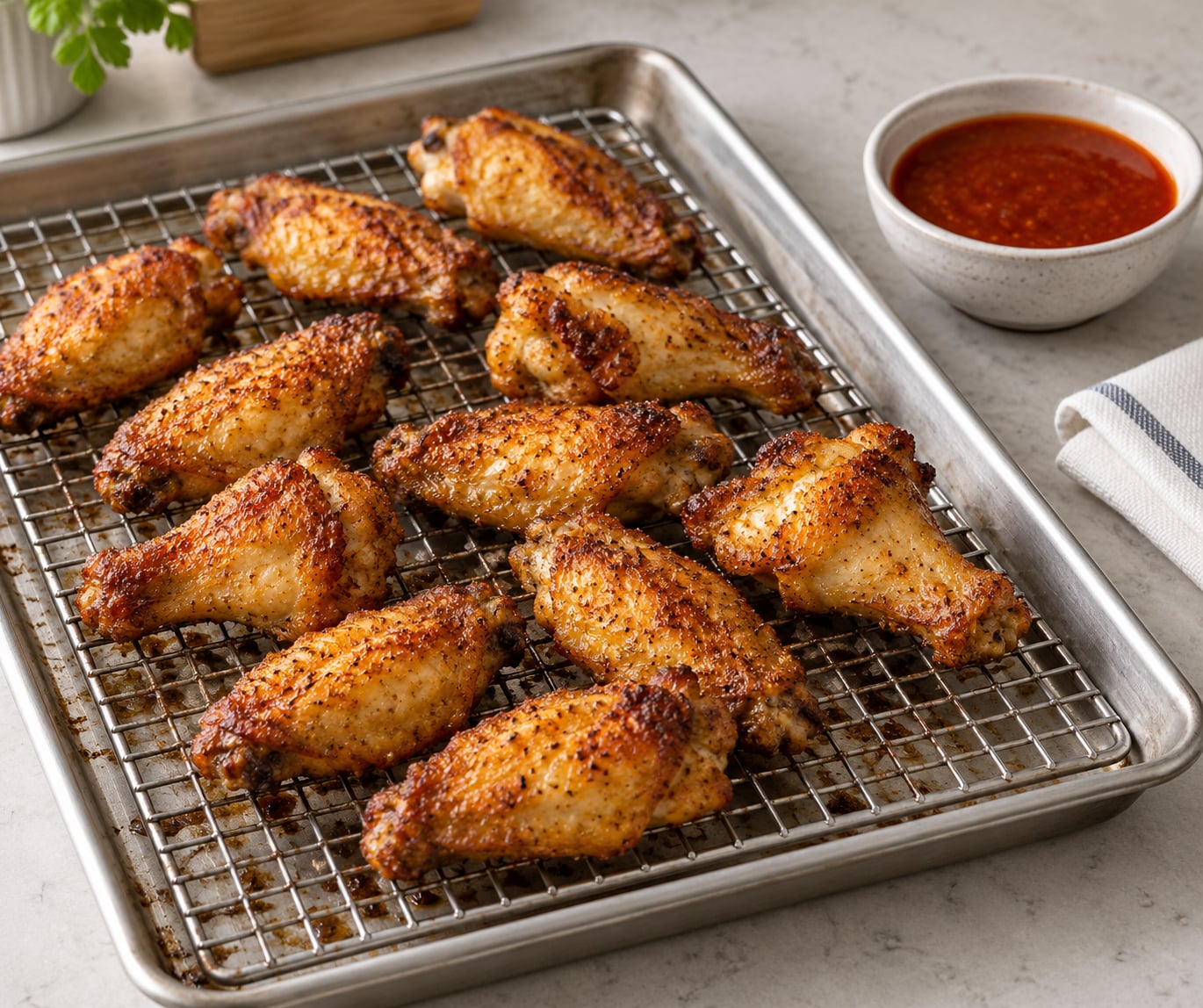
A wire rack and a rimmed sheet pan are the two pieces of equipment that change results most. The rack holds wings above the drippings so the underside breathes instead of sitting in pooled fat, which is the grease puddle that fries the bottom into a soggy flap.
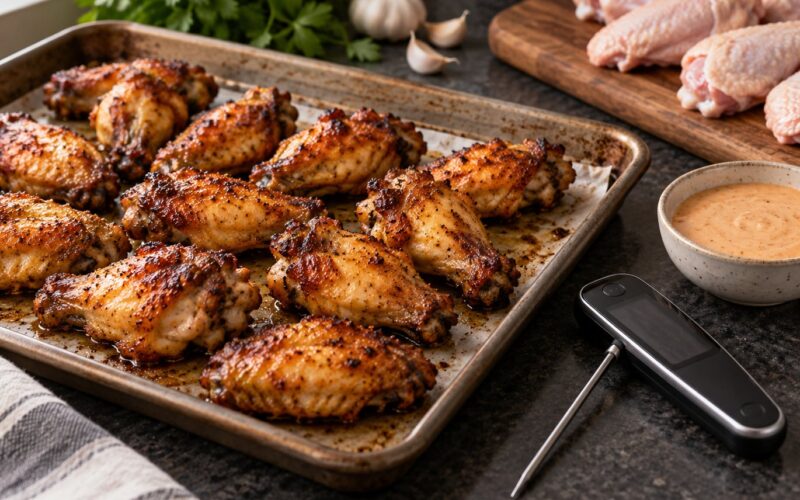
Beyond that, you need paper towels, a neutral oil such as canola or peanut if you are frying, baking powder or cornstarch for a dry coating, and an instant-read thermometer. The thermometer matters more than people expect. Wings look done long before the thickest part reaches 165°F (74°C), and pulling them early leaves the meat tight and the skin tacky.
A large bowl or container for air-drying, uncovered in the fridge, is the third optional piece. It needs more footprint than a plate, so use something that lets air move around the wings.
Step-by-Step: How to Make Wings Less Greasy
1. Pat the Wings Dry Before Seasoning
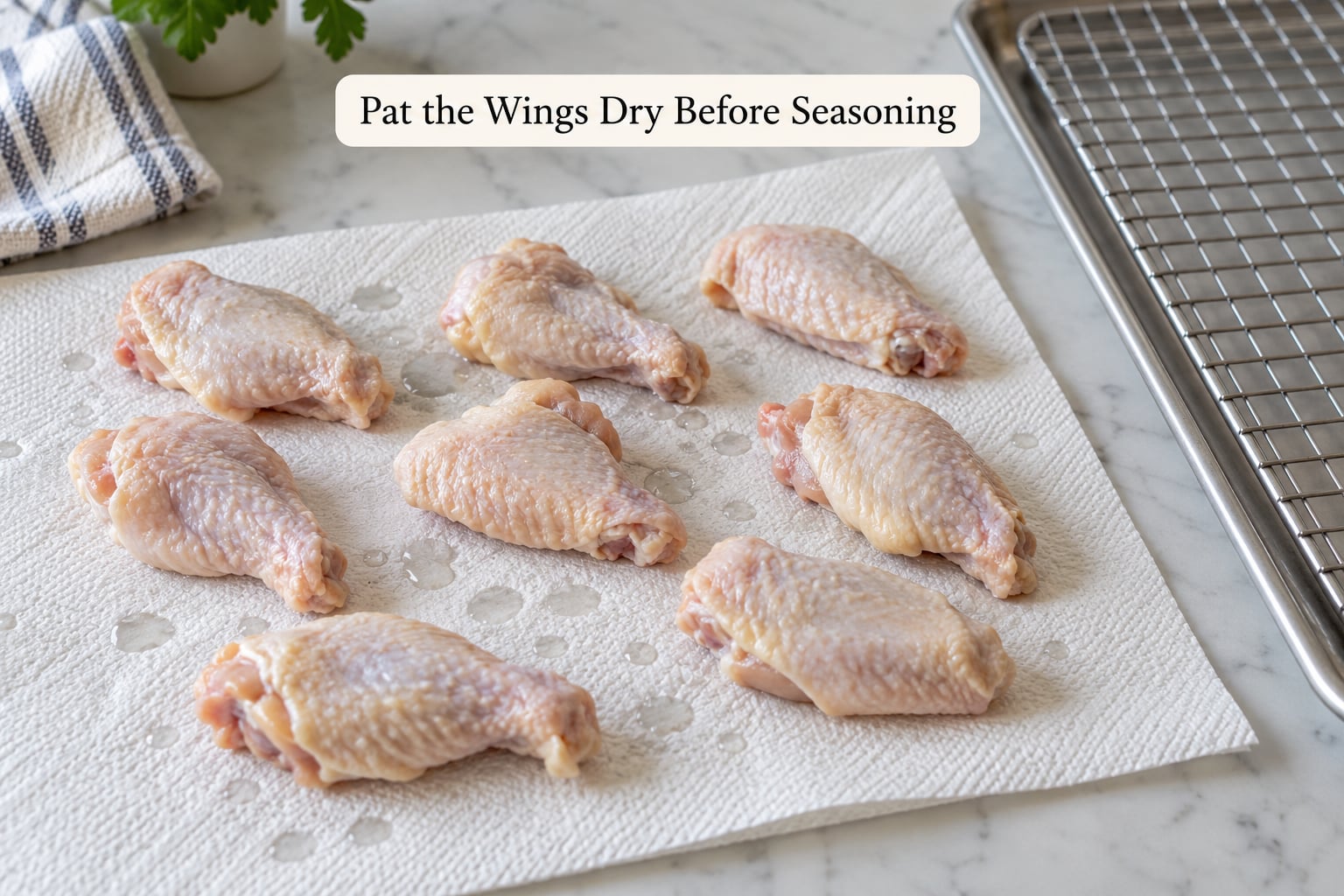
Blot every wing with paper towels until the skin looks matte rather than shiny. That test is the whole thing: if light reflects off it, there is still moisture on it, and that moisture turns to steam in the oven and softens the skin into a greasy shell.
Do this after thawing, not before. Wings that go from freezer to pan carry ice crystals that melt into the skin, so pat them dry again once they are fully thawed.
Once dry, you can let them sit uncovered in the fridge for a few hours or overnight. The surface loses moisture to moving air, which is exactly what you want. Then pat them dry one more time before cooking.
2. Season Lightly and Let the Skin Expose
Season after drying and after air-drying, not before. Salt sitting on damp skin for hours draws water out of the wing and leaves the surface wetter than when you started, which fights every other step you took.
Keep the seasoning light. A moderate amount of salt and pepper, applied right before they hit the heat, gives you seasoned skin without creating a wet paste in the crevices. Some cooks go further and salt only after cooking, which lets the skin crisp undisturbed and seasons the meat instead.
Space matters more than seasoning here. Set wings so nothing touches, with a finger’s width between pieces. Air moves through that gap. Where wings touch, you get steam, and steam is the exact opposite of the crisp you are after.
3. Use a Light Dry Coating
Baking powder is the single most useful ingredient for this. It raises the pH of the skin slightly, which speeds browning and loosens the proteins that hold moisture in place. The skin dries out, blisters, and browns faster than it would on its own.
The ratio people use most often is about 1 to 1.5 teaspoons per pound of wings. Toss to coat evenly, with no clumps, and shake off the excess back into the container. Home cooks in air fryer forums land in the same range, roughly a tablespoon for two pounds.
Baking soda is not a substitute. It is a much stronger alkaline and will leave a bitter, soapy taste on skin at that dose. If you have already used baking soda on a batch, rinse the wings and start again; the taste will not roast off at wing temperatures.
Cornstarch is the other option. A teaspoon or two per pound makes the surface drier and crisper, and it works well in an air fryer where dry heat is doing all the work. Flour-based breading also crisps, but it adds its own oil appetite and heavy batters are a common cause of greasy wings.
4. Cook on a Rack or Bake on a Preheated Sheet
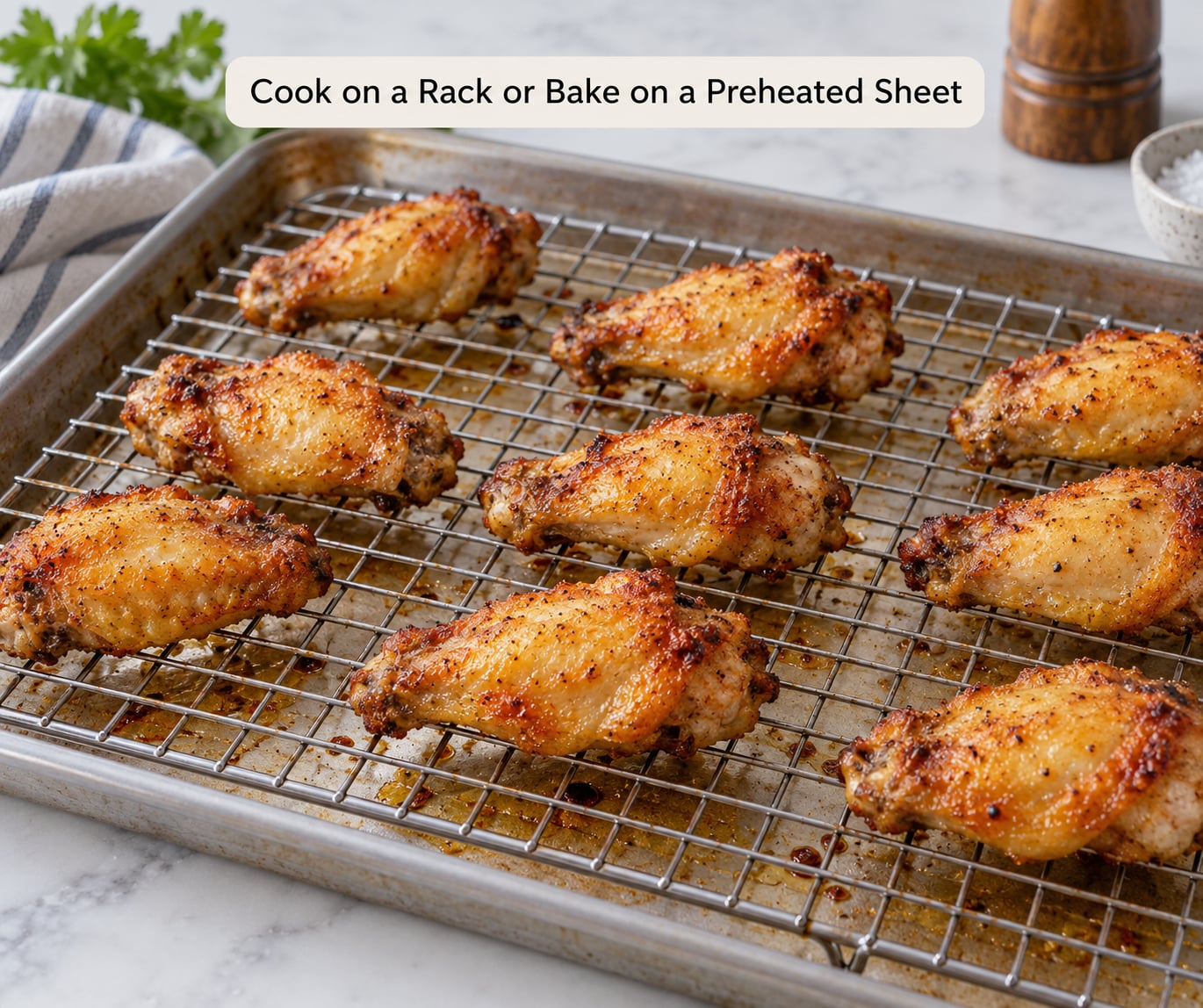
Set the wire rack over the sheet pan and put the oven to 450°F (230°C) for at least ten minutes before the wings go in. A hot pan starts rendering fat immediately; a cold one lets the skin sit and sweat in its own moisture first.
Bake 30 minutes, flip the wings with a pair of tongs, then drop the oven to 375°F (190°C) for another 20 to 25 minutes. The high-heat phase renders the fat under the skin and gets the browning started, and the lower finish cooks the meat through without drying it out.
Check the thickest piece with a thermometer and look for skin that is deep golden, tight, and blistered in spots. Any pale, translucent, or rubbery-looking patches need more time.
For an air fryer, 400°F (205°C) for 20 to 25 minutes works, shaking the basket halfway. Leave visible gaps between wings and never pack the basket. Home cooks fill the basket solid and then wonder why the batch came out chewy; that trapped steam is the cause.
| Method | Temperature | Time | Oil needed | Grease level |
|---|---|---|---|---|
| Air fryer | 400°F / 205°C | 20-25 min, shake halfway | None, or a light spray | Lowest |
| Convection oven on a wire rack | 425°F / 220°C | 25-35 min, flip once | None | Low |
| Standard oven on a wire rack | 450°F then 375°F | 30 min, flip, then 20-25 min | None | Low |
| Parboil then high-heat roast | 450°F / 230°C | 7 min boil, then 30-35 min | None | Low, and the fastest to render fat |
| Shallow fry, drained on a rack | 350-365°F / 175-185°C | 8-10 min per side | About 1 inch of oil | Moderate |
| Grill with a water pan | Medium indirect heat | 45-80 min, lid closed | None | Low |
Convection runs about 25 degrees cooler than a conventional setting because the fan moves heat faster. Watch the skin rather than the clock.
5. Shallow-Fry in Small Batches at a Steady Temperature
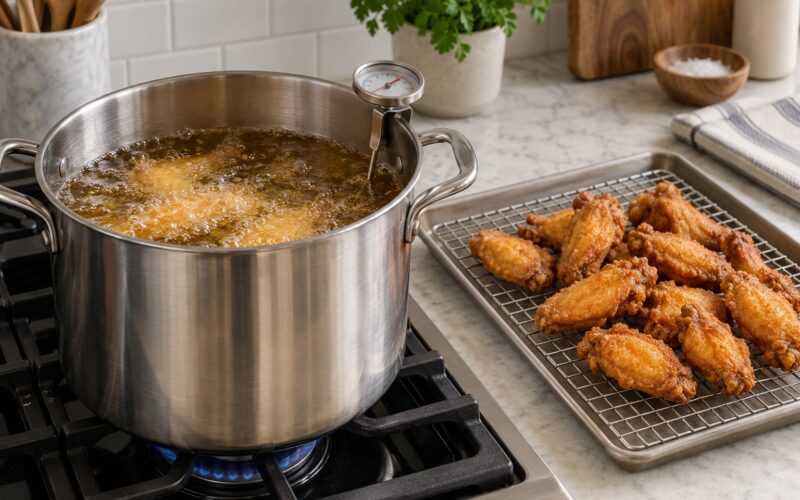
If you fry, the whole game is oil temperature and airflow. Heat a neutral oil to 350°F (175°C) in a heavy skillet, with about an inch of oil in the pan and no more than half full.
Fry in small batches so dropping the wings in does not crash the temperature. A crowded pan drops the oil below 300°F (150°C), the skin soaks instead of crisps, and the wings soak up exactly the grease you were trying to avoid.
Cook 8 to 10 minutes per side, turning once, until the skin is deep golden and the thickest piece reads 165°F (74°C). Pull each batch out and rest it on a rack set over a sheet pan. Wait until the oil climbs back to 350°F before the next batch goes in. A bubble of movement in the oil and a steady sound from the wings is the signal that heat is back.
Double-frying works too. The first pass at 350°F (175°C) for about 8 minutes cooks the meat and sets the shape. Rest the wings for 15 minutes, then fry again at 375°F (190°C) for a minute or two to drive out surface moisture and brown the skin hard.
6. Drain on a Rack and Serve the Sauce Separately
Drain fried wings on a wire rack, never on a stack of paper towels. A pile traps steam, the trapped moisture softens the skin, and the wings go greasy again within minutes.
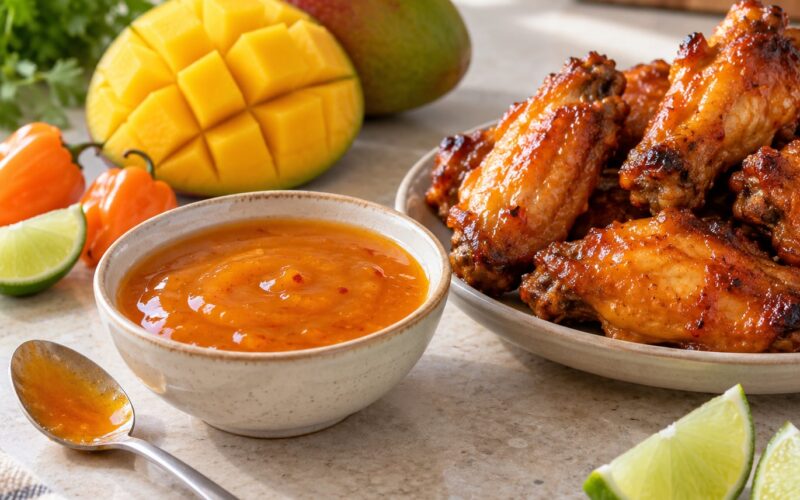
Sauce at the very end, or not at all. Tossing wings in sauce while the skin is still hot traps steam under the coating and softens everything you just made crisp. A better move for a group is to put the sauce in small bowls and let people dip.
For a game-day platter, set sauced wings in a single layer on a warm sheet rather than a bowl, and expect to refresh the batch partway through. Wings held for more than an hour lose their snap no matter how well you cooked them.
Common Mistakes That Make Wings Greasy
Crowding the pan is the most common one. Wings touching each other cook in their own trapped steam, so they turn soft and greasy while the exposed edges brown nicely and make you think the heat is right. Fix it with two batches instead of one.
Washing or rinsing wings before cooking puts water straight onto the skin. Pat them dry instead, every time, even after a quick thaw under warm water.
Frying at too low a temperature is next. Below about 300°F (150°C) the skin absorbs oil instead of repelling it, and it stays greasy even after draining. Use a thermometer on the oil, not a guess, and give the pan time to come back up between batches.
A heavy batter creates a thick shell that drinks oil and turns leathery. If you are coating, keep it to a teaspoon of baking powder or cornstarch per pound, tossed lightly, and skip the flour-and-egg dredge entirely.
Saucing too early, or drizzling sauce over hot wings to “melt it in,” puts moisture right back onto skin you spent an hour drying. Toss at the table instead.
Stacking wings on the plate finishes the job. The bottom wing steams the ones above it. Use a wide platter with everything in one layer, and skip the decorative paper lining if it collects grease underneath.
A couple of extras worth knowing. Cornstarch is what makes Chinese-style fried wings snap and shine, and it works equally well in an air fryer. Parboiling for seven minutes before a hot roast renders a surprising amount of fat and leaves the skin dry enough to blister.
Frequently Asked Questions
Are frozen wings greasy?
Frozen wings are not greasy by nature, but thawing them wrong makes them behave that way. Thaw in the fridge overnight, or under cold running water, then pat the skin until it looks matte. Wings cooked from frozen steam on the outside before the inside catches up, and that trapped moisture is what leaves skin soft and slick. A light baking powder coating helps the surface dry out faster once they hit the heat.
Does air-frying make wings less greasy than deep-frying?
Yes, and it is the biggest gap between methods. Air frying uses moving hot air instead of a bath of oil, so wings render their own fat and absorb almost nothing extra. Deep-frying leaves you with excellent skin but a fried surface and more grease in the pan. If greasiness is your main complaint, air frying at 400u0026deg;F (205u0026deg;C) for 20 to 25 minutes is the strongest switch you can make.
Should I remove the skin before cooking wings?
Keep the skin on. That layer holds most of the flavor and crisps into something worth eating, and the fat under it renders during cooking rather than soaking up oil. Removing skin reduces grease slightly but costs you texture, flavor, and the crackling skin that makes wings worth ordering. If you are strict about cutting fat, trimming the obvious loose bits before drying is a more reasonable compromise than peeling.
Why do my wings turn greasy when I add sauce?
Because sauce is mostly water and the wings are still hot. That moisture sits on skin you just made dry and starts turning it soft, and a heavy sauce adds its own fat on top. Wings keep their crispness for a few minutes after saucing, then soften fast. Toss wings at the very last moment, use a thinner sauce, or skip it entirely. To re-crisp sauced wings, spread them on a hot sheet and return them to a 400u0026deg;F (205u0026deg;C) oven for five minutes.
How should I store wings so they stay crisp?
Refrigerate them uncovered or in a single layer for up to two days, and skip the sauce until you reheat. Re-crisp on a rack over a sheet pan at 450u0026deg;F (230u0026deg;C) for 8 to 10 minutes, or in an air fryer at 400u0026deg;F (205u0026deg;C) for 5 to 6 minutes. Microwaving makes wings rubbery and wet, so skip it even when it is faster. Keep the thickest piece above 165u0026deg;F (74u0026deg;C) when reheating for food safety.
Does cornstarch really help wings absorb less oil?
Yes. Cornstarch pulls surface moisture away and leaves a dry film that browns before the skin does, which slows oil penetration during frying. Use about one to two teaspoons per pound, toss evenly, and shake off clumps. It also gives you the blistered, glossy finish you see on restaurant wings. Baking powder works through a different mechanism, raising the skin’s pH, and many cooks combine the two for extra-crisp results.
Conclusion
The whole job of how to make wings less greasy comes down to moisture and space. Pat the skin bone-dry, add a light baking powder or cornstarch coating, and cook the pieces with room around them so hot air can move.
Everything else on this list is a refinement of those three. Do them first, then decide whether you need to change your method at all.